

First Coast Property Experts
Pre-Owned NE Florida Home: Exterior Condition Checklist
BEFORE YOU BUY A PRE-OWNED NE FLORIDA HOME: A CHECKLIST FOR EXTERIOR CONDITION
A standard home inspection catches termites, wiring, and plumbing. It rarely catches a property-specific proposal worth of deferred exterior maintenance — the stuff that will bite you six months after closing. Here is the 9-point checklist we wish every NE Florida buyer ran before signing.
Florida homes punish deferred maintenance in ways that Northern-state homeowners do not fully appreciate until it is their own wallet. UV, salt air, hurricane-season humidity, and a water table that sits close to the surface combine to accelerate every exterior failure mode — and a previous owner who “didn’t get around to” resealing the pavers or softwashing the roof is passing a ticking maintenance bill to you.
With more than a century of combined expertise working on pre-owned homes across Ponte Vedra, Nocatee, St. Augustine, Jacksonville Beach, and the greater St. Johns County area, we have seen every variation of deferred-maintenance surprise. This is the checklist we walk when a realtor or a buyer hires us to do a pre-closing exterior assessment.
H2: 1. The Roof — Stains, Not Just Shingles
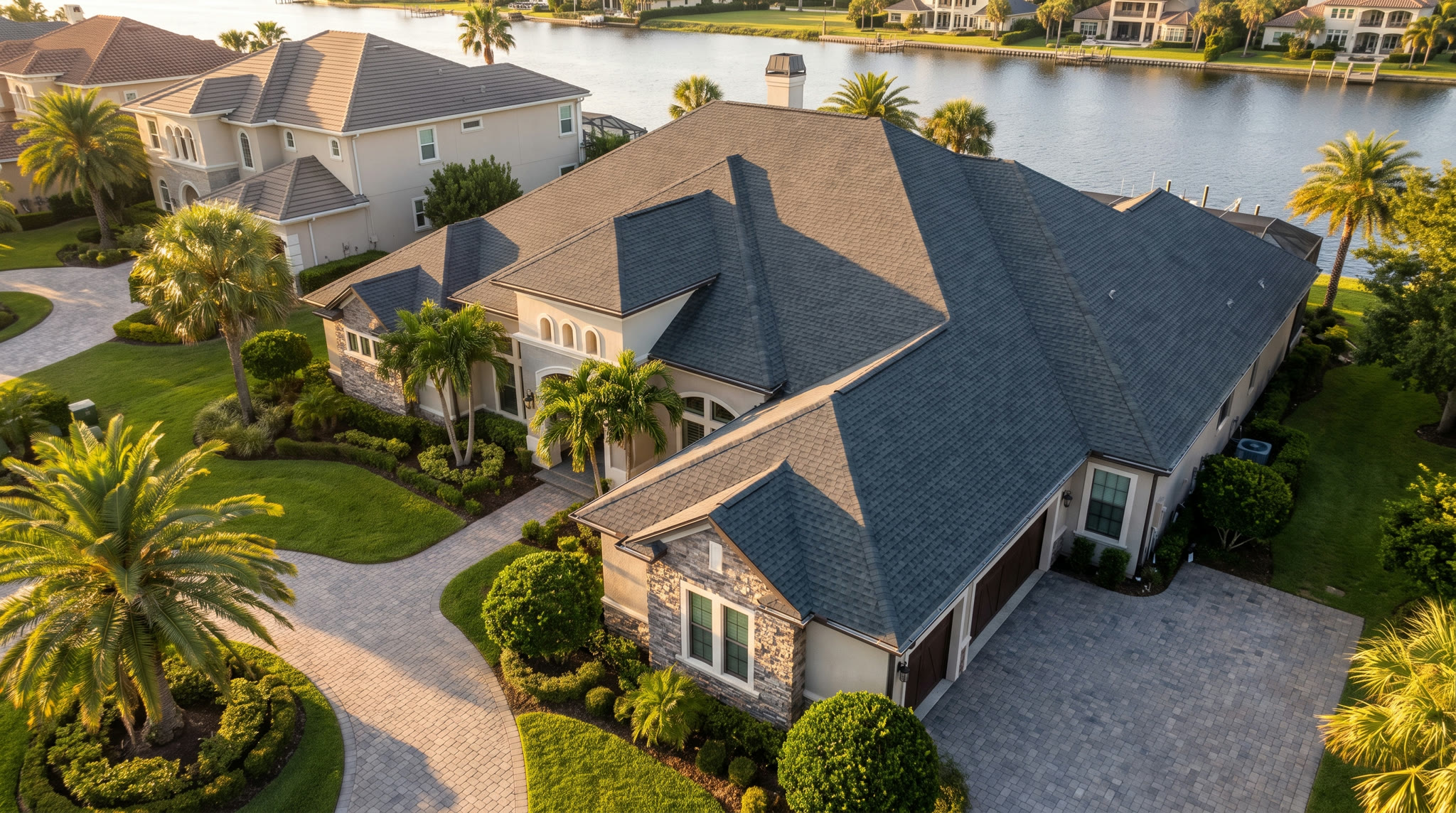
Your home inspector will check shingle condition, flashing, and attic ventilation. That is appropriate and necessary. What they will usually not flag is the black or green streaking that signals gloeocapsa magma (the roof algae that feeds on limestone filler in asphalt shingles) or the moss patches that indicate chronic shade and moisture retention.
These are not cosmetic issues. Roof algae and moss reduce shingle lifespan by 30-40% by holding moisture against the granules. A 15-year-old roof with heavy algae streaks may have 3-5 years of life left; the same roof softwashed and maintained would have 7-10. The American Society of Home Inspectors has flagged this specifically as a deferred-maintenance indicator in their Florida-specific inspection guidance.
H2: 2. The Siding — Mildew Bloom Behind Landscaping
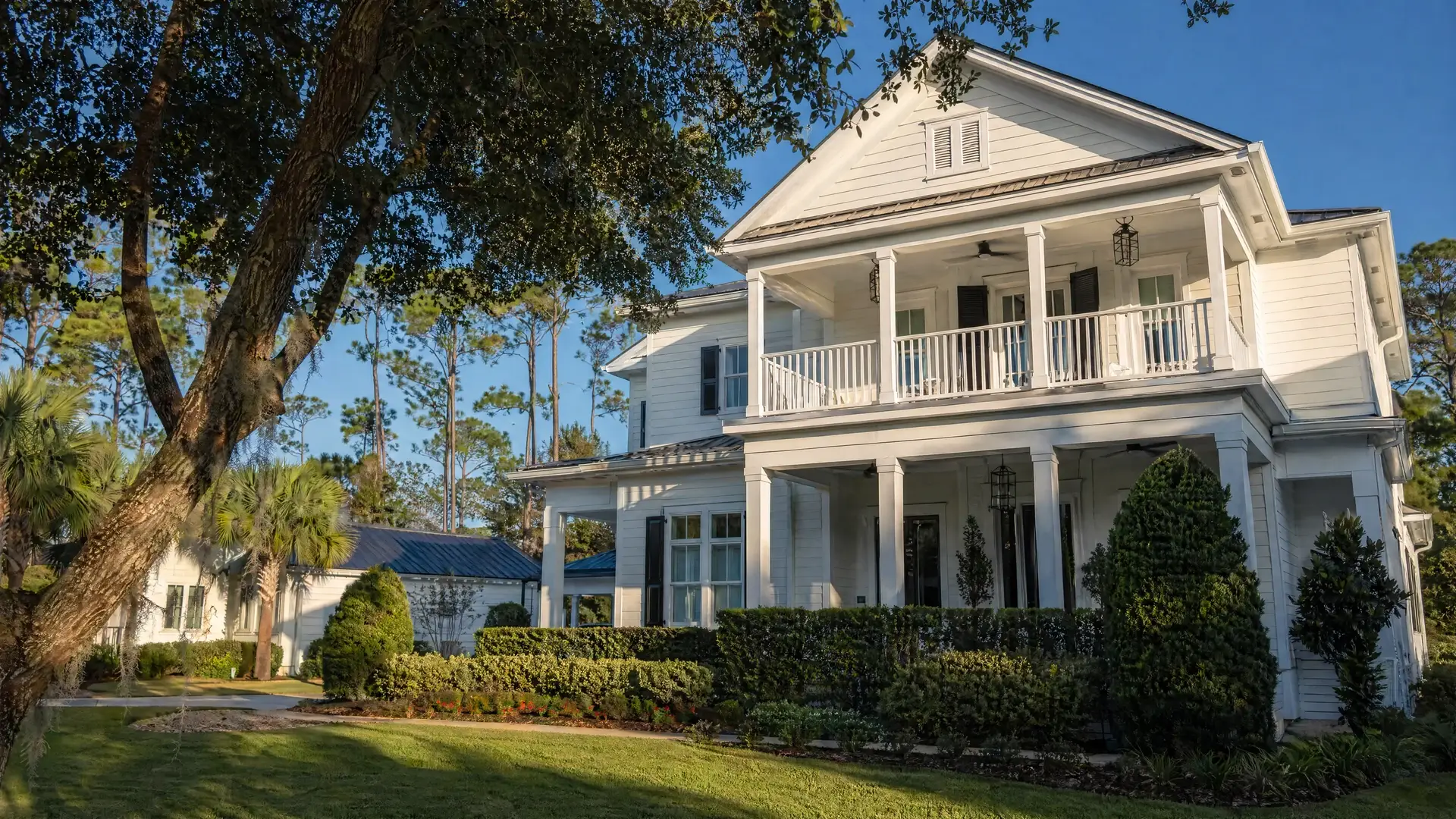
Walk the perimeter of the house slowly. Look at the siding where hedges, shrubs, or trees are within three feet of the wall. On 90% of pre-owned homes in NE Florida, you will find mildew bloom — a greenish-gray haze on the siding that is invisible from 20 feet but obvious when you stand next to it.
Mildew does not structurally damage vinyl or fiber-cement siding, but it does three bad things: it looks terrible once you notice it, it spreads to adjacent clean siding over time, and it signals poor drainage or landscaping too close to the wall (which is a separate, bigger problem).
What to look for: vertical streaking that matches the drip pattern from the soffit, greenish-gray haze on the north and east walls (less UV, more moisture retention), sooty black patches near downspout discharges.
H2: 3. Paver Driveways and Walkways — Joint Condition
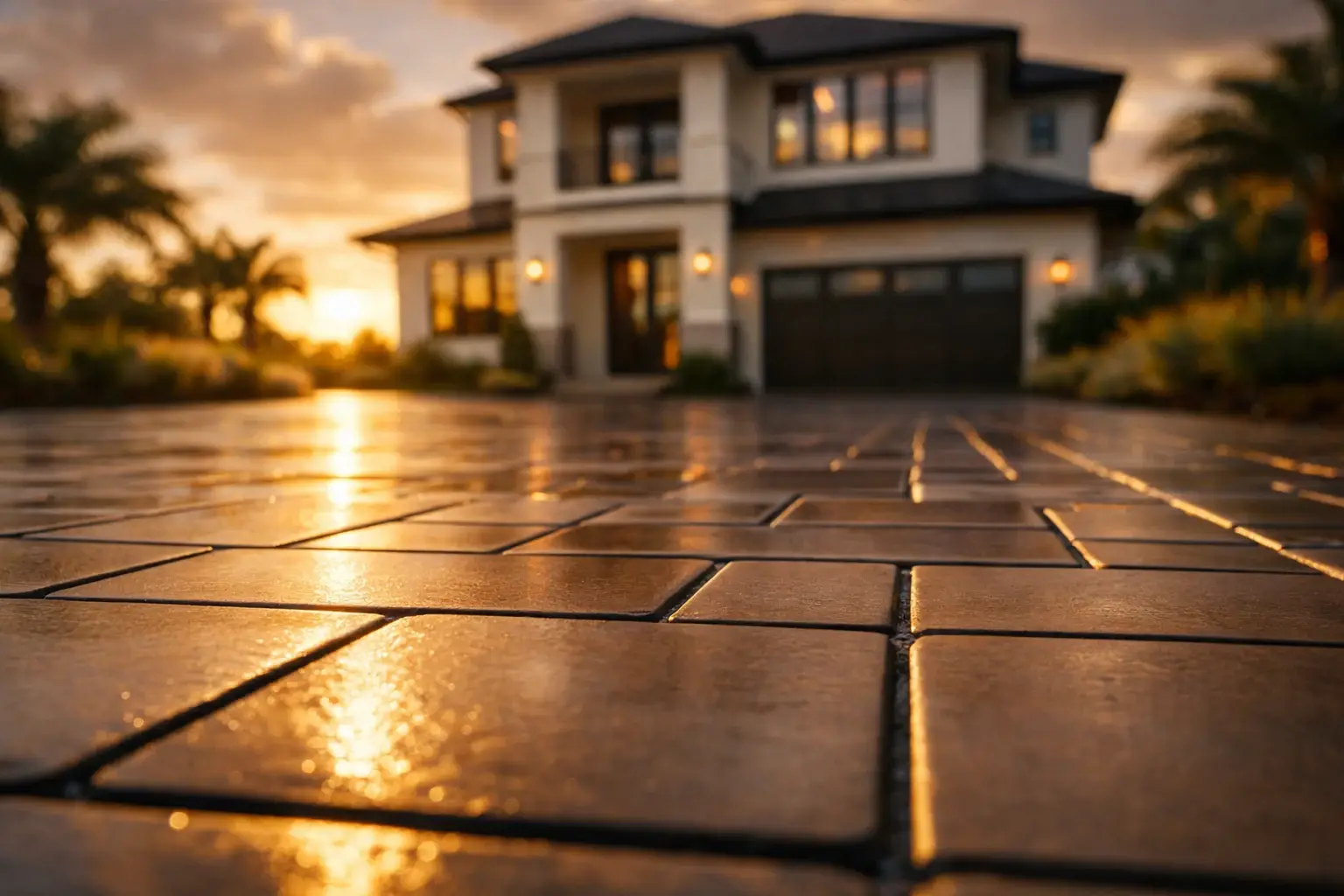
Pavers are a huge tell for overall maintenance culture. Look at the joints first — the sand between each paver.
If the joints are:
- Full and firm: Previous owner maintained the pavers, likely sealed within the last 3-5 years. Good sign.
We never use rigid binder-based in our jobs for exactly this reason — joint angular only, for joints of any width. rigid binder-based is a shortcut that fails on Florida UV exposure within 3-5 years.
H2: 4. The Pool Deck — The Hidden Money Pit
If the home has a pool, the pool deck deserves its own careful walk. Pool decks in NE Florida fail in predictable ways:
H2: 5. Softwashing History — Ask Directly
This is the single question most buyers do not think to ask, and it is the most telling answer you will get from a seller:
“When was the last time the exterior of the home was softwashed — not pressure washed, softwashed?”
See our softwashing service page for what a professional softwash actually entails.
H2: 6. Gutters — Not Just Whether They Are Clean
Look up at the gutters. You are checking three things:
- Are there staining streaks down the fascia below the gutter? Signals chronic overflow during heavy rain, meaning the gutter is either too small, clogged behind a downspout, or pitched wrong. More expensive to diagnose and fix.
- Are the downspouts discharging against the foundation? This is a drainage issue that can cause foundation settlement over years. Look for erosion, pooling stains on the concrete, or downspouts cut short.
We set the standard. We will not be the cheapest. The right scope is established on the property, then written around its material, condition, access, and the level of care it deserves. Request your quote.
H2: 7. Windows — Beyond Just Operation
Your inspector will test that windows open and close. They will likely not test:
- Whether the exterior frame is caulked properly (failed caulk lets water into the wall cavity — a huge problem).
- Whether there is mildew on the exterior window trim (visible from close range, invisible from the curb).
- Whether the screens have rust or tearing (cheap to fix but a tell for overall maintenance).
H2: 8. Garage Door and Front Entry — First-Impression Surfaces
The garage door is usually the largest single surface on the front of the house. In NE Florida, steel garage doors rust along the bottom panel (salt air plus standing water from afternoon rain), and painted garage doors chalk and fade from UV.
Same for the front entry: stone cladding that has gone porous, painted wood trim that has cracked and peeled, brass hardware that has oxidized to green. All fixable, all visible before closing, all negotiable in the deal if you catch them.
H2: 9. Overall Maintenance Culture — The Gestalt
Finally, step back. After walking all eight prior points, you should have a general sense of the previous owner’s maintenance culture. Homeowners who sealed their pavers on schedule also usually softwashed, cleaned their gutters, and caulked their windows. Homeowners who let one slip usually let them all slip.
If the home presents as “deferred across the board,” that is not necessarily a dealbreaker — but it is a negotiation lever, and it is a first-year budget reality. We regularly help new buyers prioritize a sequence of exterior restoration work in their first 12 months of ownership, often staged to coincide with the shoulder seasons (spring and fall) when pricing is most favorable.
For a structured walkthrough of the full exterior package, see our exterior cleaning services overview.
H2: The Gold Standard Guarantee
Buying a pre-owned home in NE Florida? Request a pre-closing exterior assessment and we will walk the property with you (or for you), document exterior condition, and give you a prioritized first-year maintenance budget you can take into your negotiation.
Questions? Email info@firstcoastpropertyexperts.com or call (904) 466-1622.
More from the FCPE Journal
The service behind this guide: House Soft Washing in Northeast Florida
