
First Coast Property Experts
When to Seal Pavers in Florida
WHEN TO SEAL PAVERS IN FLORIDA
Pavers in Northeast Florida live a hard life: afternoon thunderstorms, 90% July humidity, December temperature swings, and three pollen seasons per year. Timing the seal job matters as much as the sealer itself. First Coast Property Experts schedules paver seal jobs across St. Johns, Duval, and Nassau counties using a calendar built on more than a century of combined expertise.
The humidity and temperature window
Sealers cure through a chemistry cascade that needs surface temperature between 55°F and 90°F and relative humidity below 85% for at least 12 hours post-application. Northeast Florida hits that window reliably March-May and October-November. July and August are rarely cure-safe past mid-morning — surface temps on a west-facing paver driveway can hit 120°F by noon, and afternoon storms blow up the humidity ceiling.
Newly-laid pavers — wait 30 to 60 days
Fresh pavers need to cure and breathe before they take sealer. Calcium efflorescence (that white haze on new concrete pavers) has to leach out first, or the sealer traps it underneath. Industry practice is at least 30–60 days of weather exposure before the first seal — efflorescence can take up to 60 days after installation to reach its peak. In Florida’s humidity we lean toward 60. Sealing early voids most manufacturer paver warranties.
The resealing cycle
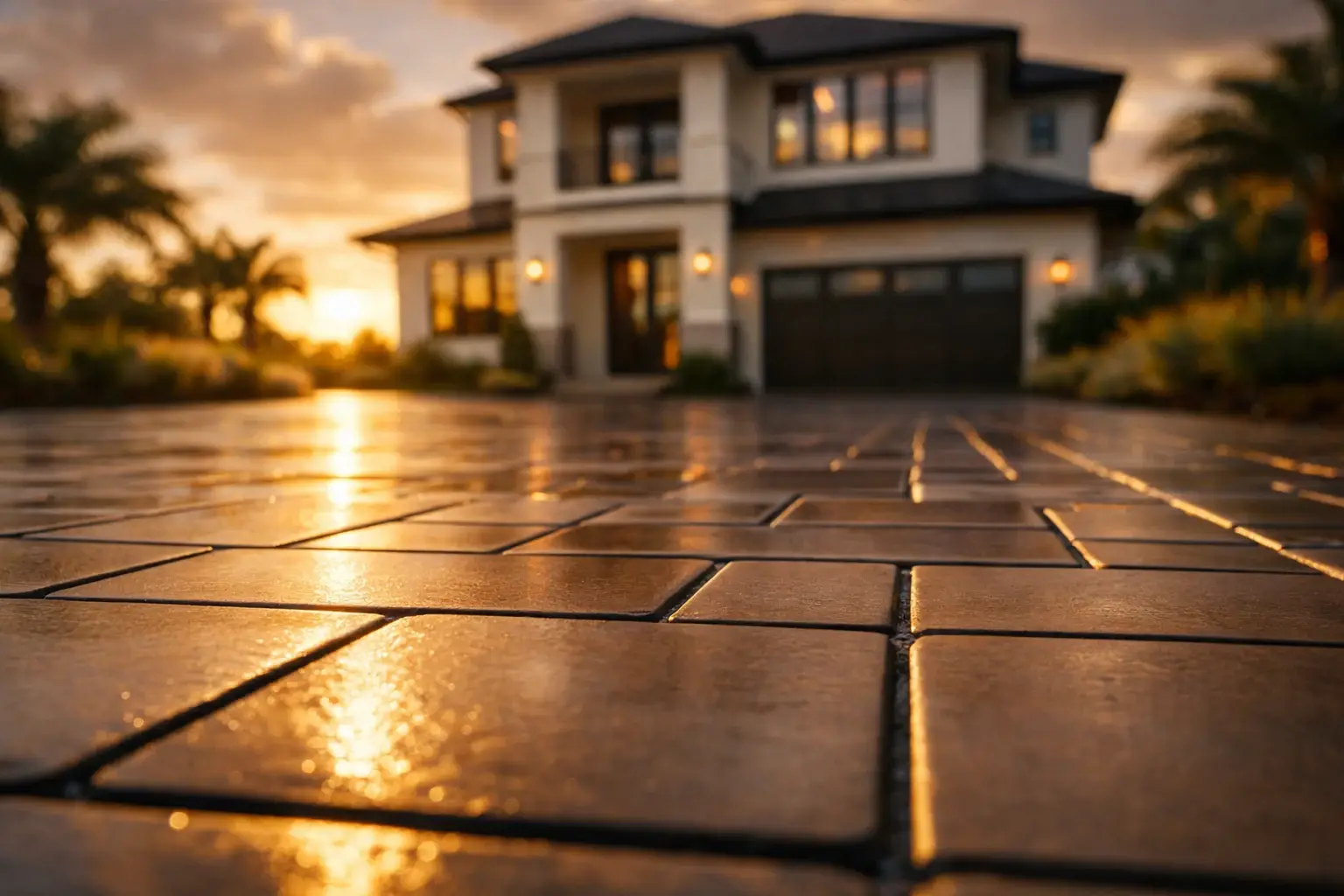
A properly sealed paver driveway or pool deck in Northeast Florida holds 3–5 years between reseals, with a maintenance wash at the 18–24 month midpoint. Shorter cycle for full-sun driveways and coastal homes; longer cycle for shaded patios. We track each customer’s last reseal date and reach out at month 30 to schedule the next appointment before the seal visibly fails.
The rainy-season rule
Northeast Florida’s rainy season runs June through September. We do NOT schedule new seal jobs during those months except in very tight weather windows. The 12-hour post-application dry window is too fragile when the radar shows 60% afternoon storm probability five days running. Maintenance wash can still happen in rainy season — the wash doesn’t need a cure window.
FCPE’s booking calendar
Our best paver-seal months, in order: March, April, May, October, November. Second-tier: February and early June before storms start, early September between storm systems. Reach out any time — we keep a waitlist and call customers as weather windows open. NOAA forecasts drive our two-week window check on every booked job.
Request your free paver sealing estimate.
Related: paver sanding & sealing, paver maintenance wash, paver sealing cost guide, how often seal pavers (blog).
Paver Sealing Timing FAQ
Can pavers be sealed in Florida summer?
Occasionally, in early-morning windows when the surface is still cool and the forecast is clear. It’s not our preferred season.
What’s the shortest safe wait for new pavers?
30 days at the absolute earliest; we recommend 60 in Northeast Florida to let efflorescence fully leach.
How do I know my pavers need resealing?
Color looks washed out, water no longer beads, joint sand is visibly loose. All three mean it’s time.
Does FCPE guarantee the seal through storm season?
Yes once cured. Our two-year workmanship warranty stands through any Florida weather pattern.
How do I book during the best months?
March and October fill first. Book 4–6 weeks ahead for peak weeks.
More from the FCPE Journal
The service behind this guide: Paver Sanding & Sealing in Northeast Florida
