
Surface-Cleaner Discipline · Hot-Water Units · Right Pressure For The Right Surface
Power Washing — Used Surgically, Never As A Default.
The Gold Standard, Every Time.
Pressure has its place — concrete flatwork, properly-bonded brick, hot-water grease cleanup, parking-lot work. We bring it out for those jobs and keep it away from siding, roofs, and pool decks. The trick to good power-washing isn't more PSI; it's the discipline to know when to put the wand down.
Where Pressure Belongs
The right tool, for the right surface, at the right setting.
"Pressure washing" and "power washing" are often used interchangeably; the technical distinction is that power washing uses heat. Both belong on hard surfaces — concrete driveways, sidewalks, parking lots, properly-bonded brick, dumpster pads, fuel-island concrete, restaurant grease pits — where the surface is dense, the bond is solid, and the dirt is mineral or hydrocarbon. They do not belong on roofs, vinyl siding, Hardie, stucco, painted wood, or pool decks. We carry both 2,500–4,000 PSI cold-water units and 200°F hot-water units in the truck — but we use them where they make the surface better, not where they damage it.
Where Pressure Earns Its Keep
- Concrete driveways, sidewalks, garage floors
- Surface-cleaner work on flatwork (no streaks, even pass)
- Properly-bonded brick walkways
- Restaurant grease pits and dumpster pads (hot water)
- Parking-lot striping prep and cleaning
- Heavy hardscape that pre-treatment can't fully lift
Where We Refuse To Pressure-Wash
- Asphalt-shingle, tile, or metal roofs
- Vinyl, Hardie, stucco, painted wood, cedar
- Pool deck surfaces (travertine, paver, stamped, pebble)
- Window glass, screens, pool cages
- Soft-bond brick or any mortar in poor condition
- Wood decks except by detailed manual control
Tools We Bring
Match the equipment to the surface.
Surface Cleaner
A 16–20" rotating-bar cleaner used on every flatwork job. Even pressure, even pass — eliminates the "zebra striping" that wand-only operators leave on driveways.
Hot-Water Unit
200°F output for grease, oil, and stubborn organic stains. The temperature does most of the work — we don't need to crank PSI when the heat is right.
Surfactant Pre-Treat
A pre-treatment soak with the right detergent loosens the dirt before pressure does the lift. Less PSI, more chemistry — the FCPE method on every flatwork job.
Most Common Power-Wash Jobs
What we typically pressure-wash on a residential property.
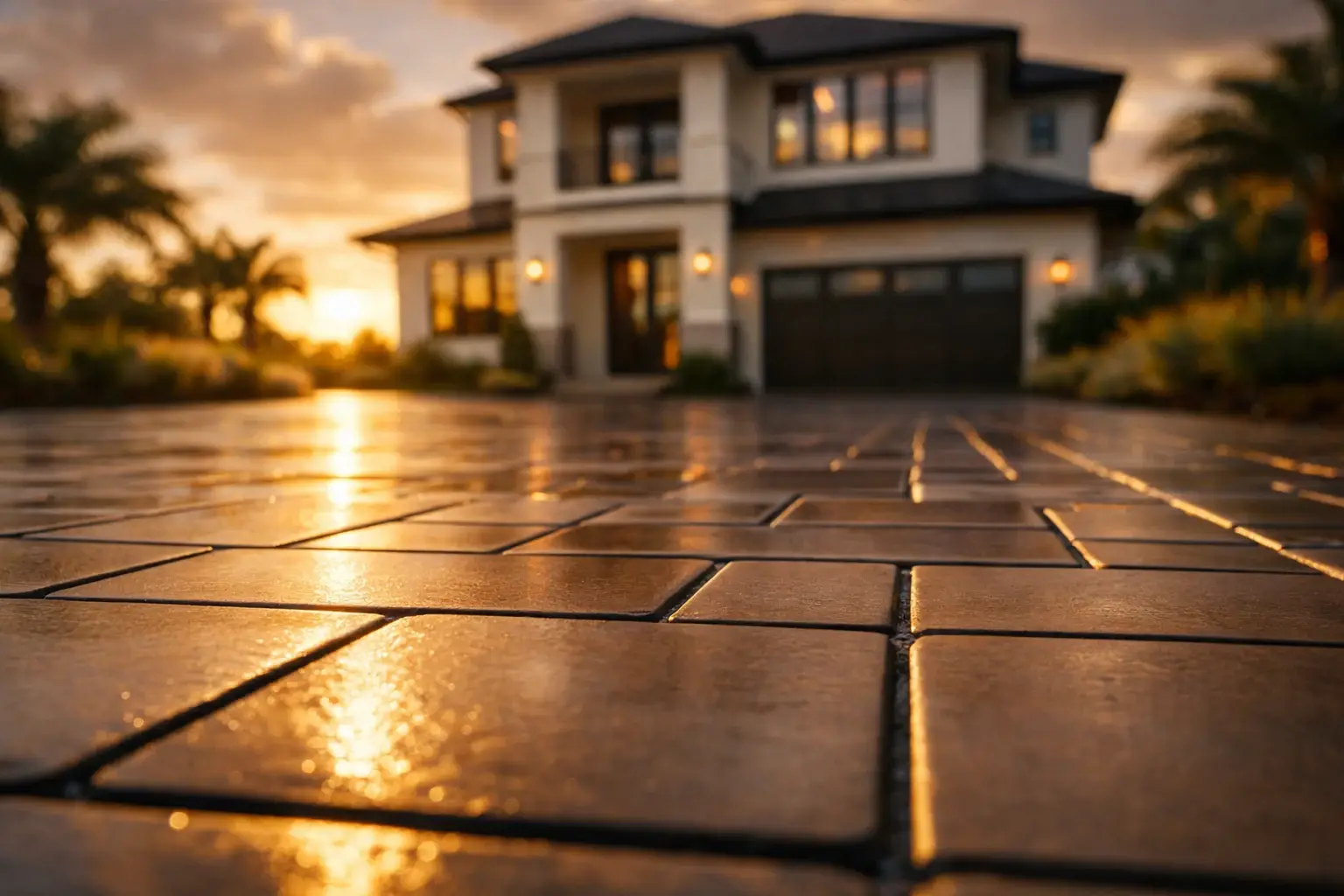
Driveway & Garage Apron
Concrete flatwork — surface-cleaner pass, post-treatment for organic stains, optional rust treatment for irrigation iron. See Driveway Cleaning.
Pool Deck (Concrete-Only)
If the deck is concrete (not paver, travertine, or stamped), we surface-clean at moderate pressure. Decorative pool decks get soft-wash treatment instead.
Brick Walkways & Walls
Properly-bonded brick takes pressure on flatwork-grade nozzles, but we soft-wash mortar joints and use measured pressure on brick faces only.
Pricing
Flatwork is the most price-competitive exterior service we offer.
We set the standard. We will not be the cheapest. The right scope is established on the property, then written around its material, condition, access, and the level of care it deserves. Request your quote.
Common Questions
What homeowners ask before booking power washing.
Will pressure-washing my driveway hurt the concrete?
Not when it's done right. A surface cleaner at 2,500–3,000 PSI cleans concrete without etching. We pre-treat for organic load (mildew, mold, oak tannin) so the pressure is doing less work, more evenly. The damage we see on concrete almost always comes from a wand held too close at too high a setting.
Why is pressure-washing wrong for my house?
Because what looks dirty on your house is almost always organic — mold, mildew, algae, bacteria — and pressure doesn't kill those. It moves them. Soft-wash chemistry kills them at the cellular level, then a low-pressure rinse carries the dead material off. The "after" looks the same on day one — the difference is on day 30, day 90, and day 365. Soft-wash stays clean. Pressure-wash doesn't.
Do you do driveway sealing too?
Yes — see concrete sealing for plain-concrete drives, and sanding & sealing for paver and natural-stone drives. The sealer goes on after a thorough flatwork clean. We typically clean and seal in two visits scheduled 5–10 days apart.
Can you handle commercial pressure-washing?
Yes — restaurant grease pits, dumpster pads, parking lots, fuel islands, drive-thru lanes, sidewalk concrete. See commercial & property management. Hot-water units, certificate-of-insurance on file, scheduled overnight or pre-open windows.
What should I look for in a pressure-washing company?
Ask for the method, the chemistry, and the documentation. We surface-match every job — hot water and controlled pressure where the substrate can take it, a dwell-and-rinse soft wash where it cannot — carry active general liability and workers’ compensation, and hand back written scope with before-and-after photography on every visit. Compare that line by line with anyone. Start with Request your quote so you know which method your home actually needs.
Ready When You Are
Pressure where it belongs. Chemistry where it doesn't.
The Gold Standard, Every Time.
Resources & Standards
FCPE pressure washing operates within EPA stormwater rules and PWNA / UAMCC best practices. Runoff management, PSI, and chemistry are matched to the substrate.