EXTERIOR · PATIO & LANAI
PATIO & LANAI CLEANING
The Gold Standard, Every Time.
The room you actually live in six months of the year. We treat it like the interior space it is — carefully, fully, and on your schedule.
Get A Free EstimateOur Process
How We Deliver The Gold Standard
Prep & Protect
Move furniture, cover outlets and electronics, pre-wet plants, and identify surfaces that need different pressure.
Deck & Screen Wash
Soft-wash the screen enclosure, then surface-clean the patio floor with matched pressure.
Detail Pass
Corners, grill pad, fan blades, and sliding-door tracks hand-detailed.
Dry Walk-Through
Furniture back, trash out, you approve before we leave.
Real Work, Real Results
Before & After
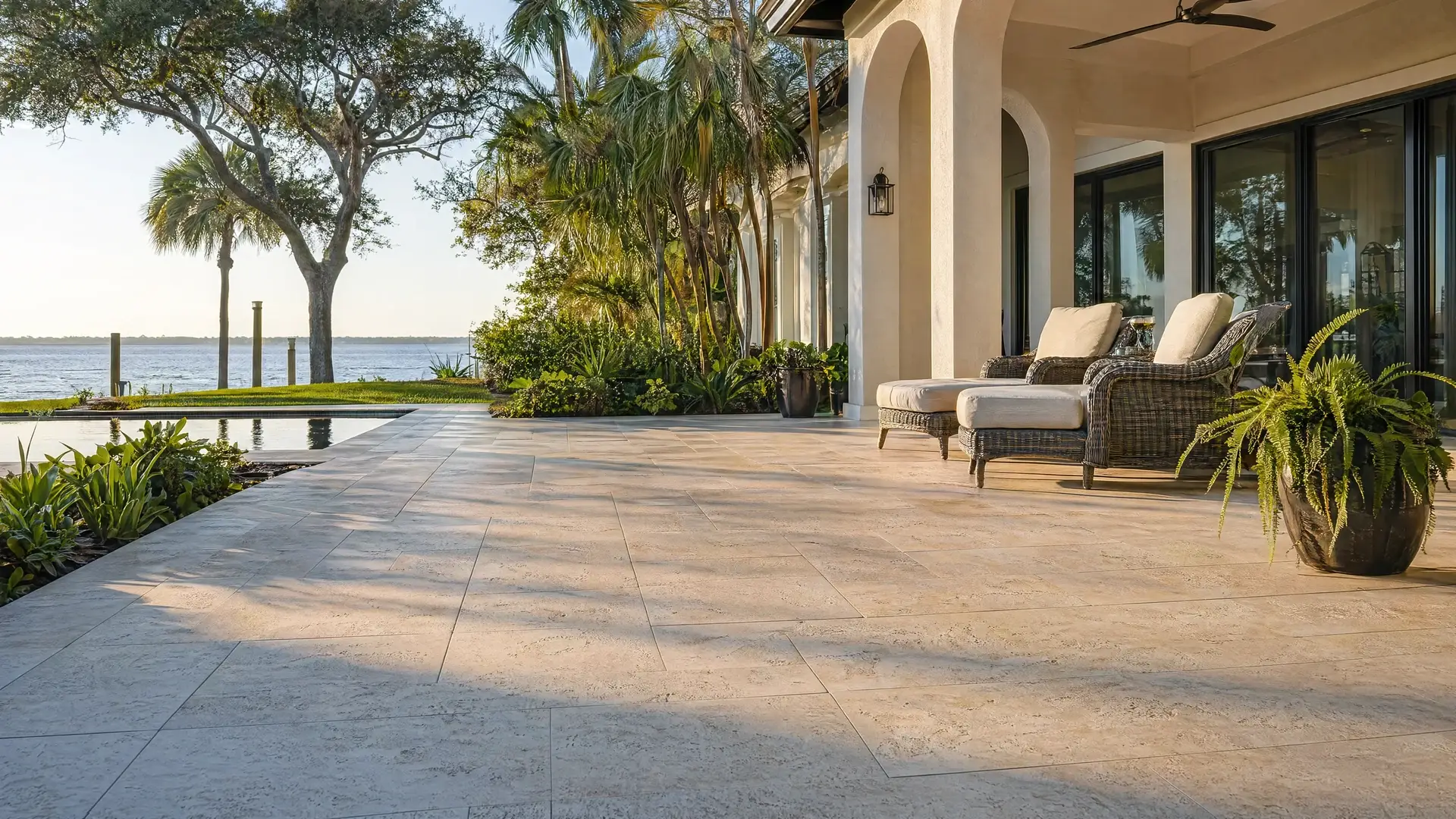
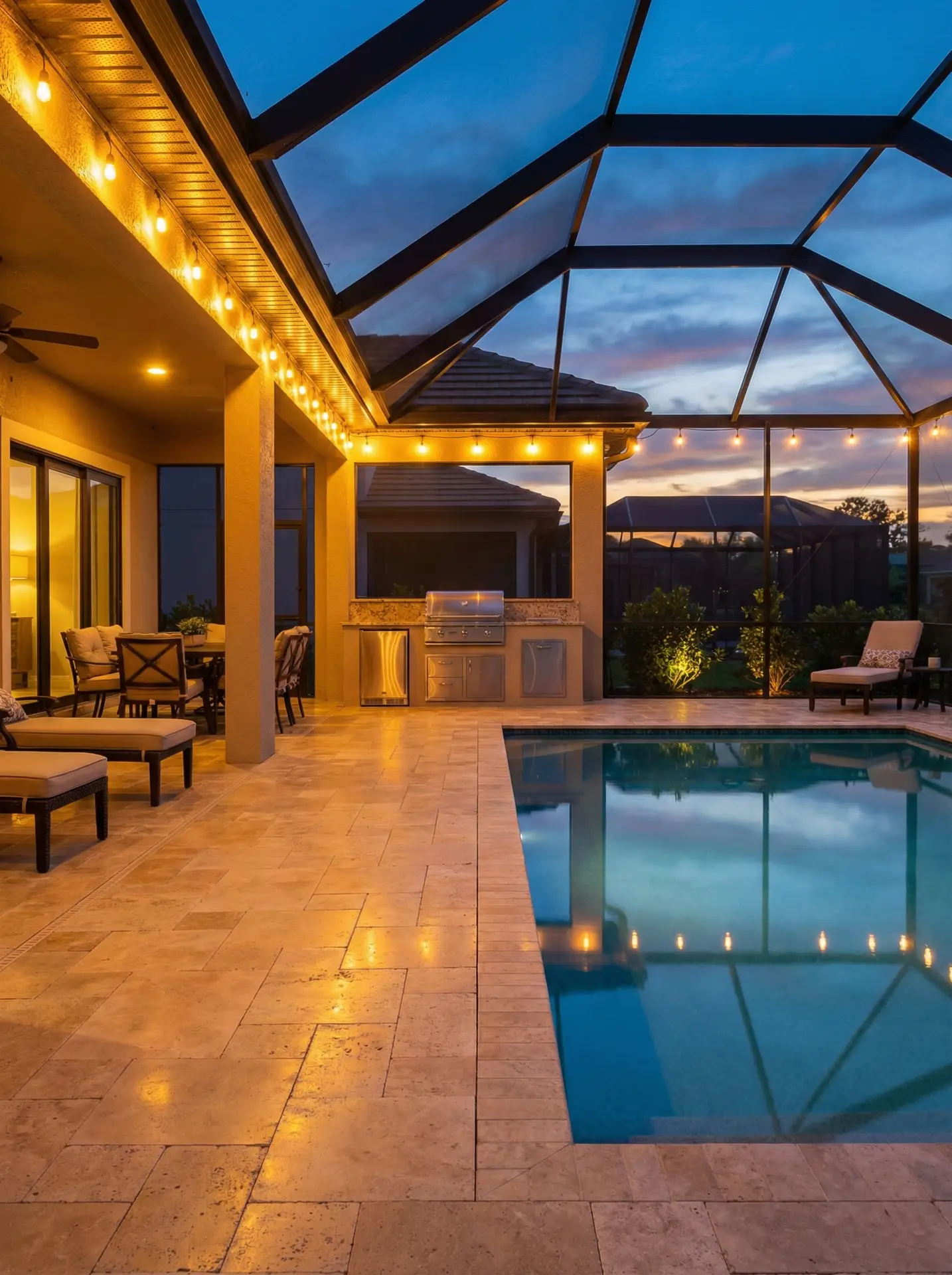
NE Florida Context
Lanai vs. Patio: Why the Distinction Matters Here
In Northeast Florida, the word "lanai" almost always refers to a screened outdoor living space — a Florida room — with a concrete or paver floor enclosed by an aluminum screen cage. That enclosure changes everything about the cleaning approach. The screen traps humidity year-round, creating an accelerated biological growth environment inside the cage. Algae, mildew, and mold colonize patio surfaces faster inside a lanai than on an open patio exposed to sun and airflow. Open patios face their own challenges from oak canopy shade and irrigation overspray, but the cage magnifies the problem significantly.
The practical difference: a screened lanai requires soft-washing the cage fabric first (high pressure tears fiberglass mesh), then cleaning the floor surface at a pressure matched to the floor material. An open patio goes straight to the floor. Both need pre-treatment with the correct biological chemistry — but the sequence, the equipment, and the time required differ.
Surface Types and Their NE Florida Challenges
| Surface | NE Florida Challenge | FCPE Approach |
|---|---|---|
| Travertine | Porous stone with natural voids; calcium-reactive — acid-based cleaners etch and pit the surface permanently. | pH-neutral chemistry only, low-pressure rinse, void inspection before treatment. |
| Concrete (bare) | Absorbs biological staining quickly in shade; efflorescence common near pool areas. | Sodium hypochlorite at appropriate dilution, rotary surface cleaner at medium pressure. |
| Concrete (painted) | Paint seals the surface but lifts under aggressive pressure — once lifted, water infiltrates and accelerates future peeling. | Low pressure only, never rotary surface cleaner on painted concrete. Chemical dwell does the work. |
| Pavers | Joint sand integrity degrades with age and biological growth in the joints; cleaning without assessing joint condition can displace remaining sand. | Joint assessment before cleaning. Low pressure to preserve sand. Re-sand with joint angular sand where needed. |
| Flagstone | Irregular surface creates pooled water zones where black algae establishes fastest. Natural stone variation means no single pressure is safe across the whole surface. | Soft-wash chemistry dwell, low pressure variable-pattern rinse matched to each stone section. |
Furniture, Grill, and Landscape Protection
Before any chemical application, FCPE's standard patio prep moves or covers all outdoor furniture, protects grills with a drop cloth, covers any potted plants within the work area, and pre-soaks all landscape beds adjacent to the patio. This is not optional prep — sodium hypochlorite at cleaning concentrations will bleach fabric and stress plant roots if it contacts them without pre-dilution. Grills in particular retain heat and absorb chemical faster than surrounding surfaces. The drop cloth goes on before the first sprayer opens, every time.
HOA Compliance in Nocatee, Palencia, and World Golf Village
Screened lanai cleaning is explicitly addressed in several NE Florida HOA standards documents. Homeowners in communities like Nocatee, Palencia, and World Golf Village receive written violation notices when mold, algae, or dark biological staining is visible on the exterior face of the screen cage — because neighboring properties can see it. These violations are time-limited: most HOA enforcement letters give 30–45 days to cure before fines begin. If you have received an HOA notice, or if you want to stay well ahead of one, a professional lanai cleaning eliminates the issue at the source rather than masking it with a garden hose rinse that leaves biological roots intact and allows regrowth within weeks.
Questions & Answers
Frequently Asked
Can you clean the pool cage screens?
Yes — soft-wash screen cleaning is included on most lanai jobs. The mesh is cleaned at low pressure so the fiberglass fabric is not damaged.
Will you move my furniture?
We move what we can safely handle. Very heavy pieces we ask you to move or we'll clean around them. Grills and potted plants are covered with drop cloth before any chemistry is applied.
Can you clean the ceiling fans?
Yes — we wipe the blades as part of the detail pass on covered lanais.
My travertine has pitting — will cleaning make it worse?
Only if the wrong chemistry is used. We never apply acid-based products to travertine. pH-neutral treatment and low-pressure rinse are safe for calcium-based stone.
I received an HOA violation notice — how fast can you come?
Call (904) 466-1622 and mention the notice. We prioritize HOA-deadline jobs and can usually schedule within the week.
Ready When You Are
Book Your Patio & Lanai Cleaning Quote
St. Johns, Duval, and Nassau counties. Same-day callback if you reach us before 5pm weekdays.
Prefer to submit online? Our estimate form takes 60 seconds and you’ll get a same-day response.
Start My Free EstimateOr call (904) 466-1622
Exterior Vetting
What to ask your exterior cleaning contractor
Exterior cleaning around Northeast Florida homes requires the right method for each surface, not one pressure setting for everything.
When do you soft wash versus pressure wash?
Siding, stucco, painted trim, screens, and roofs need soft washing. Concrete and some hardscape can handle controlled pressure when the operator knows the surface.
How do you protect plants, pools, and runoff paths?
Ask about pre-wetting, controlled application, rinsing, and water movement around landscaping, pool decks, and drainage areas.
What chemistry do you use for organic growth?
The answer should be specific to algae, mildew, tannins, rust, or irrigation staining. One generic cleaner is not a property-care system.
Are the exterior specialists trained only for exterior scope?
FCPE keeps exterior discipline separate so the tools, chemistry, safety expectations, and surface knowledge stay focused.
Do you document the finished work?
Before and after photos, scope notes, and surface observations create accountability after the truck leaves.