
EXTERIOR · WALKWAYS
WALKWAY CLEANING
The Gold Standard, Every Time.
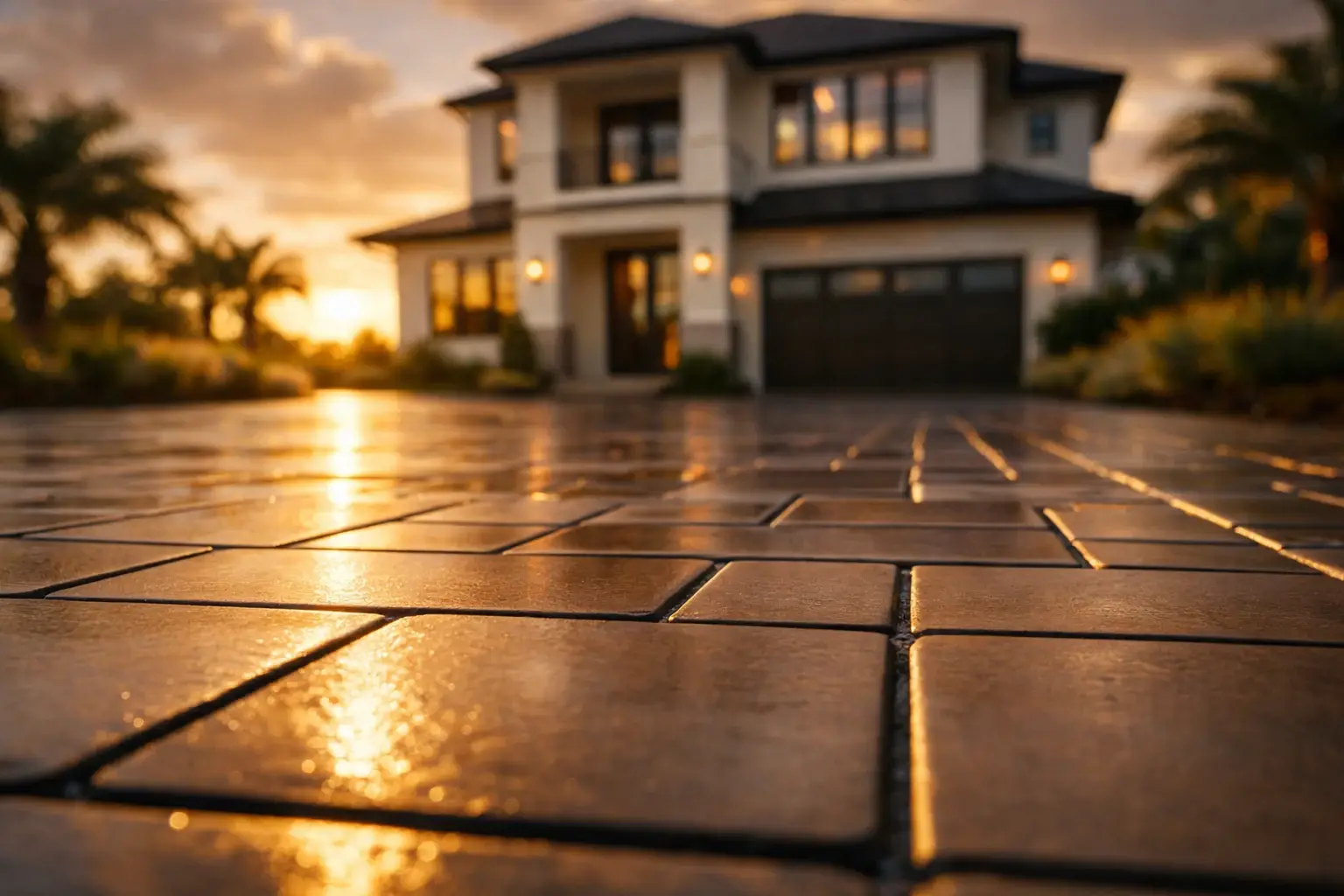
First impression is made at the curb. We clean the path from the sidewalk to your front door so every guest walks in wondering how you keep it looking new.
Get A Free EstimateOur Process
How We Deliver The Gold Standard
Survey
Walk the pathway. Flag lifted pavers, settling, or weed bloom that needs hand-work.
Surface Clean
Rotary surface cleaner for pavers, flagstone, or stamped concrete — matched to substrate.
Joint & Weed Detail
Joint sand assessed, weed growth treated, edges hand-detailed.
Rinse & Joint Refresh
Rinse the walkway, sweep in fresh joint sand where needed (we use joint angular sand, joint angular sand).
NE Florida Context
Why Walkways in This Climate Need Professional Attention
Northeast Florida's combination of live oak and palm tree canopy, year-round warmth, and wet-season humidity creates ideal conditions for biological growth on walkways. Shade prevents surfaces from drying between rain events. Heat accelerates spore germination. In most NE Florida neighborhoods, walkways show visible biological growth within 6 to 12 months of installation if they sit under tree canopy. The wet season — June through October — is when the growth cycle accelerates most aggressively. What starts as a faint green film in May is a slick, dark-stained surface by August.
The Three Growth Patterns
Algae
Green slippery film, the first to appear on any shaded hard surface. Responds well to sodium hypochlorite treatment with proper dwell time. The slip hazard begins here — algae on wet concrete is one of the most common causes of walkway injuries during NE Florida's rainy season.
Lichen
Flat gray-brown crust that penetrates porous surfaces. Requires longer chemical dwell time than algae because the lichen organism bonds mechanically to the substrate. Pressure washing alone does not remove lichen — chemistry must do the work first.
Moss
Soft green buildup in shaded corners and low-drainage zones. Retains moisture underneath, which accelerates both biological growth and surface deterioration beneath it. Common in north-facing walkway sections under established tree canopy.
The Safety and Liability Dimension
Algae on concrete and paver walkways creates a genuine slip hazard during the wet season. HOAs increasingly flag biological growth on walkways in their property inspection rounds — not only for curb-appeal reasons but because of the liability exposure for the association and the homeowner if a visitor slips. Insurance carriers who write homeowner policies in Florida are paying attention to this. A professionally cleaned and documented walkway is a defensible record that the hazard was addressed.
Surface Materials and Cleaning Approach
| Surface | NE Florida Challenge | FCPE Approach |
|---|---|---|
| Concrete | Absorbs biological staining readily in shaded zones; oil staining near outdoor cooking areas. | Chemical pre-treatment, medium-pressure rotary rinse. Degreaser pre-treatment for oil staining before SH application — petroleum stains do not lift with sodium hypochlorite alone. |
| Pavers | Joint sand displacement is the primary risk — aggressive pressure blows out remaining sand and leaves joints open to weed infiltration. | Low pressure to preserve joint integrity. Joint angular sand replacement where needed. Never high-pressure rotary on paver joints. |
| Brick | Mortar joints are more sensitive than paver joints; old brick is more porous and absorbs growth faster. | Medium pressure after chemical dwell. No acid washes — acid etches mortar permanently. |
| Travertine | Calcium-reactive stone; acid-based chemistry causes permanent pitting and etching on travertine walkways. | pH-neutral chemistry only, very low pressure, careful edge detail to avoid acid contact from any adjacent chemical runoff. |
Oil Stains: What Actually Works
Driveways and walkways near outdoor cooking areas accumulate oil staining from grill drips and, where they connect to the driveway, automotive fluid spills. A common mistake is treating oil stains with the same sodium hypochlorite chemistry used for biological growth. SH chemistry is designed for organic biological material — it does not break down petroleum. The correct sequence is an alkaline degreaser applied first with adequate dwell time, followed by a medium-pressure rinse, and then a standard biological treatment pass if organic growth is also present. Skipping the degreaser step leaves oil stains untouched even after a full cleaning visit.
Questions & Answers
Frequently Asked
Will my pavers shift when you clean them?
Not at the pressure we use. We clean at the pressure manufacturers specify, and we assess joint condition before starting so we know what we are working with.
Can you re-sand the joints?
Yes — we use joint angular sand for a stable, clean finish. We use joint angular sand.
What about moss growing between stones?
We treat organic growth at the root with appropriate chemistry and dwell time. A garden hose will not kill moss — the organism must be chemically treated or it regrows within weeks.
I have oil stains from the grill near my walkway — can you treat those too?
Yes. Oil stains require a degreaser pre-treatment step that we incorporate into the walkway service when petroleum staining is present. Standard SH chemistry alone does not lift oil.
How soon after cleaning before I can walk on it?
Typically 30 to 60 minutes once the surface is rinsed and drying. We'll confirm before we leave based on the surface and conditions that day.
Ready When You Are
Book Your Walkway Cleaning Quote
St. Johns, Duval, and Nassau counties. Same-day callback if you reach us before 5pm weekdays.
Prefer to submit online? Our estimate form takes 60 seconds and you’ll get a same-day response.
Start My Free EstimateOr call (904) 466-1622
Exterior Vetting
What to ask your exterior cleaning contractor
Exterior cleaning around Northeast Florida homes requires the right method for each surface, not one pressure setting for everything.
When do you soft wash versus pressure wash?
Siding, stucco, painted trim, screens, and roofs need soft washing. Concrete and some hardscape can handle controlled pressure when the operator knows the surface.
How do you protect plants, pools, and runoff paths?
Ask about pre-wetting, controlled application, rinsing, and water movement around landscaping, pool decks, and drainage areas.
What chemistry do you use for organic growth?
The answer should be specific to algae, mildew, tannins, rust, or irrigation staining. One generic cleaner is not a property-care system.
Are the exterior specialists trained only for exterior scope?
FCPE keeps exterior discipline separate so the tools, chemistry, safety expectations, and surface knowledge stay focused.
Do you document the finished work?
Before and after photos, scope notes, and surface observations create accountability after the truck leaves.