

The Gold Standard, Every Time.
Commercial Restaurant Exterior Cleaning for Northeast Florida Properties
Patios, dumpster pads, drive-throughs, drive-up windows, awnings, and grease-impacted slabs reset for service. Health-code-aware methodology, hot-water capability, scheduled around your operating hours, and photo-documented every visit.
Restaurant exteriors are a different surface category — we treat them that way.
Generic commercial pressure washing does not work on restaurant exteriors. Cold-water blasting smears grease film instead of lifting it. Skipping the dwell-and-degrease step means the surface looks marginally better for a week, then settles back to baseline. And ignoring the surfaces health inspectors actually walk — dumpster pads, grease-trap zones, drive-through lanes, the apron under the order window — lets a violation accrue in the background while the front patio looks acceptable.
FCPE built the restaurant exterior program around what actually shows up on a health inspection report and what a guest’s phone camera will catch on the patio table. The trained exterior discipline runs hot-water surface cleaners, applies food-grade-aware degreaser chemistry, and works the entire envelope — front-of-house dining patios, drive-up windows, drive-through lanes, side approaches, dumpster pads, and the back-of-house slab where deliveries happen and grease lives.
Every visit is photo-documented and logged to the property record. That gives the operator a paper trail before a health-department visit, gives a regional manager an audit-ready report, and gives the franchisor evidence that brand-standard exterior maintenance is happening on schedule. Most of our restaurant accounts are weekly or bi-weekly — the cadence Northeast Florida humidity and grease cycles actually demand.
Health inspectors walk the back too.
Front-of-house cleanliness is half the picture. Inspectors walk dumpster pads, grease-trap zones, drive-up window aprons, and back-of-house slabs. We clean those surfaces with the same standard as the patio, because that is where violations come from.
Grease vapor is a real coating.
Awnings, stucco, soffits, and exterior wall surfaces near hood vents accumulate an actual grease-vapor film. That film is what makes restaurant facades look dingy compared to neighboring tenants. It comes off only with the right chemistry — not with higher pressure.
Customers photograph patios.
Outdoor dining is now a Google-photo, Yelp-photo, and Instagram-photo surface. Sticky tables, beverage-stained concrete, and a worn approach drag down review-photo aesthetics. Recurring patio resets pay back faster than most operators expect.
Every restaurant exterior visit covers the full envelope.
Front-of-house, back-of-house, drive lanes, and the surfaces inspectors actually flag. No selective cleaning, no “just hit the front” shortcuts.
- Front-of-house patio reset — flatwork, table-zone slabs, planter perimeters, and railings cleaned and rinsed for opening service.
- Drive-up window apron and drive-through lane detailed — beverage staining, tire-track grime, and order-board splash addressed with surface-appropriate chemistry.
- Dumpster pad hot-water clean — grease, leachate, and odor-causing buildup lifted with degreaser pre-treat and hot-water surface-cleaner pass.
- Grease-trap zone slab cleaning around back-of-house clean-out points — the surfaces health inspectors check first.
- Awning and facade soft-wash — grease-vapor film and weather staining lifted with low-pressure soft-wash chemistry, not high-pressure blasting.
- Side and rear approach detailing — delivery aprons, employee-entry slabs, and any “back of house” surface a regional manager would walk on a site visit.
- Drive-through window glass and trim hand-cleaned for clear order-window visibility.
- Photo documentation — before and after — logged against your property record for franchisor reporting, regional audit support, or pre-inspection paper trail.
How FCPE handles restaurant exteriors differently.
Hot water on grease, soft-wash chemistry on awnings, surface-cleaner discipline on flatwork, and a documented inspection-ready paper trail. The combination is what makes the program inspection-defensible.
Degreaser pre-treat & dwell
Food-grade-aware degreaser chemistry is applied to grease-impacted zones — dumpster pads, grease-trap aprons, back-of-house slabs, drive-through lanes — and given dwell time so the chemistry emulsifies the grease film before any pressure is introduced.
Hot-water surface-cleaner pass
Pressure-fed rotary surface-cleaner is run hot across grease-impacted flatwork. Heat is what actually emulsifies the grease that cold-water blasting only smears. The difference is visible the first visit and undeniable by the third.
Soft-wash on awnings & facades
Awnings, stucco, soffits, and EIFS facades get low-pressure soft-wash chemistry — never high-pressure blasting. Grease-vapor film and weather staining lift with surfactant chemistry; pressure would damage finishes and seams.
Patio detail work
Front-of-house patio surfaces — flatwork, planter perimeters, railing bases, table-zone slabs — get a finishing detail pass. This is where the “customer photograph” cleanliness lives. The surface-cleaner sets the field; hand-detail finishes the read.
Drive-through & window glass
Drive-up window aprons get surface-cleaner passes, the drive-through lane gets full-length attention, and the order-window glass and trim are hand-cleaned for clear visibility. Order-board surfaces are wiped down to remove fingerprint film.
Rinse, photo, log
Full post-rinse of all worked surfaces, building-face wipe-down for any overspray, and before-and-after photos logged against your property record. That documentation is what makes the program defensible to franchisors, inspectors, and regional auditors.
Restaurant exterior programs across the First Coast.
FCPE restaurant exterior programs run from independent waterfront operations on Amelia Island to drive-throughs along JTB to brewery taprooms in San Marco. The methodology adapts to the operation type, but the standard does not change.
- Independent RestaurantsOwner-operated dining rooms, neighborhood concepts, and chef-driven kitchens that compete on presentation.
- Small ChainsTwo- to ten-unit regional brands needing brand-standard exterior maintenance across multiple Northeast Florida sites.
- Drive-Throughs & QSRQuick-service brands where drive-up window aprons, drive-lane flatwork, and dumpster pads define the customer impression.
- Bar & GrillSports bars, tavern concepts, and casual dining with high-traffic patios that need pre-shift resets multiple times a week.
- Breweries & TaproomsTap-room patios, beer-garden flatwork, and outdoor stage zones that get heavy weekend use.
- Waterfront RestaurantsMarina-side, Intracoastal, and oceanfront operations contending with salt-air staining alongside food-service exterior load.
- Hotel F&BHotel-attached dining rooms, lobby cafés, and resort poolside food-and-beverage venues.
- Coffee & CaféDrive-up coffee, cafe patios, and bakery storefronts where milk-and-syrup spillage is part of the daily exterior load.
- Food Halls & MarketsMulti-vendor food halls, public markets, and shared-dining destinations with high-volume patio surfaces.
Most restaurants run weekly to monthly — here’s the cadence breakdown.
Restaurant exterior cadence depends on volume, food-type, drive-through traffic, and patio-use intensity. We’ll recommend a frequency after a walk-through, then adjust as we see how the surfaces hold.
High-Volume Operations
Best for high-volume drive-throughs, oceanfront dining, breweries with heavy weekend patios, and operations where Monday-morning openings need to look like the brand standard.
Standard Restaurant
The default cadence for most independent and small-chain restaurants. Two-week spacing matches Northeast Florida grease-cycle and humidity load; the surface stays presentable between visits.
Lower-Volume Concepts
Good fit for breakfast-only, bakery, light-volume cafe, or limited-patio concepts. Monthly cadence holds back-of-house and drive-through surfaces without overserving front-of-house.
Pre-Inspection / Pre-Event
Pre-health-inspection deep cleans, grand-opening exterior resets, pre-photography detail visits, and post-storm exterior recovery. Can be quoted as a one-time visit with optional recurring program afterward.
What separates the FCPE restaurant program.
Six things restaurant operators tell us actually matter when they pick an exterior vendor — and what we do differently on each one.
Health-code-aware methodology
The trained exterior discipline knows what inspectors flag — dumpster pads, grease-trap zones, drive-up apron leachate — and cleans those surfaces to that standard. Photo documentation gives operators an inspection paper trail.
Hot-water capability for grease
Hot-water surface-cleaning is how grease films actually lift. Cold-water blasting smears grease across the slab and leaves a film that re-stains within days. Hot water is non-negotiable for restaurant exteriors.
Branded uniforms, on-property professionalism
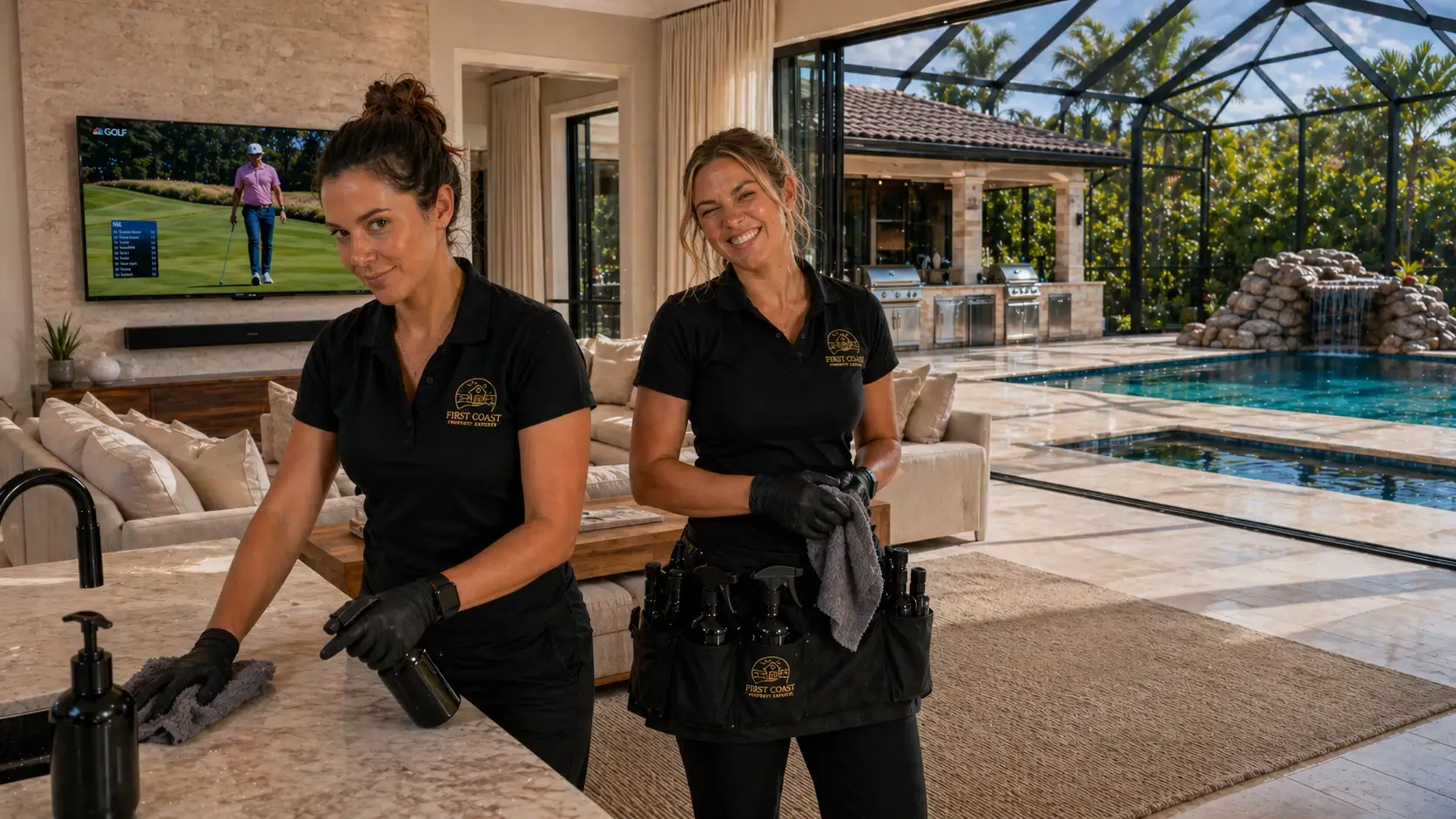
The crew arrives in branded uniforms and a marked truck, checks in with the manager on shift, sets containment around active doors, and leaves the surface dry and walkable for opening. Customers see a vendor that fits the brand.
Scheduled around your service times
Most restaurant exterior work runs before opening, after closing, or during weekend overnights. We work with your kitchen prep schedule, your delivery windows, and your patio service hours — not the other way around.
Photo-documented every visit
Every visit logs before-and-after photos against your property record. That gives the operator, regional manager, franchisor, and health inspector immediate evidence the brand standard is being maintained on schedule.
Multi-unit ready
Single-unit independents and multi-unit operations are both routine. We’re comfortable building a master scope for a regional operator and just as comfortable starting with one location to prove the program first.
Every restaurant exterior scope is custom-quoted.
Restaurant exterior pricing depends on patio size, drive-through configuration, dumpster-pad count, awning surface area, frequency, and grease-load. We don’t publish a single rate because no two restaurant exteriors match. The fastest path to a real number is a walk-through — in person or via video — so the trained exterior discipline can scope the patio, drive lane, dumpster zone, and back-of-house slabs together.
Multi-unit operators typically request a master-services agreement so each location can be activated under shared insurance, billing, and reporting. We’re comfortable building those, and we’re comfortable starting with a single property to prove the program first.
Restaurant exterior questions, answered clearly.
Straight answers on health-code, scheduling, insurance, and the questions operators and regional managers ask most.
Can you work overnight or before service opens?
Yes — most restaurant exterior work runs before opening, after closing, or during weekend overnights. The trained exterior discipline is comfortable in those windows, and we coordinate with the manager on shift so the property is dry and guest-ready before doors open.
Do you provide a COI and additional-insured endorsement?
Yes. Certificate of insurance is available on request, and additional-insured endorsements are supported for landlords, property managers, and franchisors that require them. W9 and updated insurance documents are provided at policy renewal.
Will the cleaning impact food-prep operations?
No — we schedule around your prep and service times, set containment around active doors, and use food-grade-aware degreaser chemistry. The kitchen never closes for our visit, and the exterior is dry and ready before service.
How do you handle dumpster pads and grease zones?
Dumpster pads and grease-trap aprons get a degreaser pre-treat with extended dwell time, then a hot-water surface-cleaner pass to lift the grease film cold-water blasting only smears. The surface is then rinsed and any remaining odor-causing residue is treated with a sanitizing follow-up.
How often should restaurant exteriors be cleaned?
It depends on volume and concept. High-volume drive-throughs and oceanfront dining typically need weekly visits. Standard independents run bi-weekly. Lower-volume concepts run monthly. We’ll recommend a cadence after a walk-through and adjust as we see how the surfaces hold.
Do you handle multi-unit accounts?
Yes. Multi-unit operators frequently set up a master-services scope so each location runs under shared insurance, billing, and reporting. We can also start with a single location to prove the program before activating additional sites.
Can you work with a franchisor brand-standard checklist?
Yes. If your franchisor publishes an exterior-maintenance checklist or brand-standard inspection rubric, share it and we’ll align our scope and documentation to it. The photo-record we keep makes franchisor audits noticeably easier.
How do I report a missed area or schedule change?
Same-day, by email or phone. Email info@firstcoastpropertyexperts.com or call (904) 466-1622. We respond same-day during business hours and run a corrective visit at no additional cost when the issue is on us.
Bundle restaurant exterior with the rest of the scope.
Most restaurant operators bundle exterior cleaning with one or two other recurring services. One vendor, one scope, one schedule, one invoice.
Request your restaurant exterior estimate.
Tell us a little about the property — concept type, patio square footage, drive-through configuration, dumpster-pad count, and frequency target — and we’ll build a written scope around recurring restaurant exterior care. Most estimates back within one business day, and we’re happy to schedule a no-cost walk-through for multi-unit programs.
The Gold Standard, Every Time.
Commercial restaurant exterior cleaning for independent restaurants, drive-throughs, breweries, hotel F&B, and multi-unit operators across St. Johns, Duval, and Nassau counties. Licensed, insured, COI-on-request, BBB Rated A, and health-code-aware.