


![Spring Cleaning Checklist for Northeast Florida Homeowners [2026]](https://firstcoastpropertyexperts.com/wp-content/uploads/2026/04/spring-cleaning-checklist-florida-2026.webp)
Spring Cleaning Checklist for Northeast Florida Homeowners [2026]
Last updated: April 18, 2026 by Justin Logan, President, First Coast Property Experts
Spring cleaning in Northeast Florida is not the same job it is in Ohio or Pennsylvania. Our winters are not frozen — they are wet and mild, which means instead of snow melt revealing a dirty house, we get four months of ideal growing conditions for mold, mildew, and algae on every exterior surface. Meanwhile, the interior has been running AC nearly year-round, recirculating dust, pet dander, and whatever managed to grow in the dark, humid places we do not look at often enough.
This is the 2026 checklist we put together based on what our crews see inside and outside homes across St. Johns, Duval, and Nassau counties every spring. Some of this you can handle yourself. Some of it needs professional equipment. All of it needs to happen before the summer heat and daily storms make everything harder.
The Timing: Why March Through May Is the Window
In Northeast Florida, spring cleaning is not a weekend project in April because a magazine said so. It has a strategic timeline:
- Late February – March: Interior deep cleaning. The house has been closed up through the cool months. Dust, allergens, and moisture-related growth have accumulated. Get the inside clean before oak pollen season peaks in March and April.
- March – April: Exterior cleaning. Winter’s biological growth is at its worst. Temperatures are warm enough for cleaning solutions to work effectively but not so hot that crews are battling heat exhaustion. Rain is less frequent than summer.
- April – May: Hardscape maintenance. Paver cleaning, joint sand inspection, sealer evaluation. This falls within the ideal October-May sealing window if re-sealing is needed.
- May: Hurricane prep. Before June 1 — the official start of hurricane season, inspect, repair, and secure anything that heavy wind and rain would damage or turn into a projectile.
Trying to cram everything into one weekend does not work. Spread it across 6 to 8 weeks and you will actually finish.
Interior Deep Cleaning Checklist
Kitchen
The kitchen builds up grease film, crumb deposits, and food residue in spots that weekly cleaning misses entirely. Spring is when you go behind, under, and inside everything.
- Pull the refrigerator out. Vacuum the condenser coils. Wipe the floor and wall behind it. Dusty coils force the compressor to work harder, in a state where the fridge runs constantly, this hits your electric bill.
- Degrease the range hood and filters. Soak the metal filters in hot water with dish soap and baking soda. Wipe the hood body and vent duct opening.
- Deep clean the oven. Self-clean cycle or baking soda paste left overnight. Pull the racks and soak them separately.
- Empty every cabinet. Wipe shelves. Check for moisture damage, Florida’s humidity warps shelving and breeds mold behind items that have not moved in months. Discard expired items.
- Sanitize the dishwasher. Empty cycle with white vinegar on the top rack, then baking soda short cycle.
- Scrub tile grout. Kitchen floor and backsplash grout darkens over time. Baking soda and hydrogen peroxide paste with a stiff brush makes a noticeable difference.
- Clean under the sink. Check for leaks, moisture, and mold. This is a common problem area in Florida homes because plumbing connections sweat in high humidity.
Bathrooms
Florida bathrooms are ground zero for humidity damage. Even with exhaust fans, moisture penetrates grout, degrades caulk, and colonizes corners.
- Inspect and replace caulk around tubs, showers, and toilets. If it is discolored, pulling away, or shows dark spots, strip it and re-apply. Mold behind failing caulk spreads fast in our climate.
- Deep clean shower glass with a 50/50 white vinegar and Dawn solution. Let it sit 30 minutes, then squeegee.
- Scrub all grout lines, floor, walls, shower. For severe discoloration, an oxygen bleach grout cleaner is more effective than standard scrubbing.
- Clean exhaust fan covers and blades. Remove the cover, vacuum dust from blades, wipe, and reinstall. A clogged fan does nothing against humidity.
- Descale showerheads and faucets. Northeast Florida has hard water. Soak showerheads in a bag of white vinegar overnight to dissolve mineral buildup. You will notice the water pressure difference immediately.
- Check under vanities for leaks or mold growth.
Bedrooms and Living Areas
- Flip or rotate mattresses. Vacuum the mattress surface to remove dust mites.
- Wash all bedding, including pillows. Pillows collect sweat, oils, and allergens. Most go in the washer on gentle with an extra rinse.
- Clean ceiling fans. A pillowcase slipped over each blade catches dust instead of spreading it across the room. Florida ceiling fans run year-round and build up significant layers.
- Vacuum under all furniture, beds, couches, entertainment centers, bookshelves.
- Wipe every baseboard in the house with a damp microfiber cloth.
- Clean window blinds slat by slat, or soak removable blinds in the tub.
- Clean all air vents and returns. Remove covers, wash them, and vacuum as far into the ductwork as you can reach.
- Dust light fixtures, chandeliers, and ceiling fan light housings.
Whole-Home Tasks
- Replace HVAC filters. If it has been more than 90 days, change them now. Florida AC systems run 8-10 months per year, clean filters are not optional.
- Clean the dryer vent. Lint buildup is a fire hazard. The National Fire Protection Association recommends annual cleaning.
- Test smoke detectors and CO detectors. Replace batteries.
- Flush the water heater. Sediment buildup reduces efficiency. Open the drain valve and flush until the water runs clear.
- Deep mop all hard flooring, tile, LVP, hardwood, with appropriate cleaners for each surface type.
- Check closets, particularly walk-ins, for mildew on leather goods and stored clothing. Florida closets trap humidity.
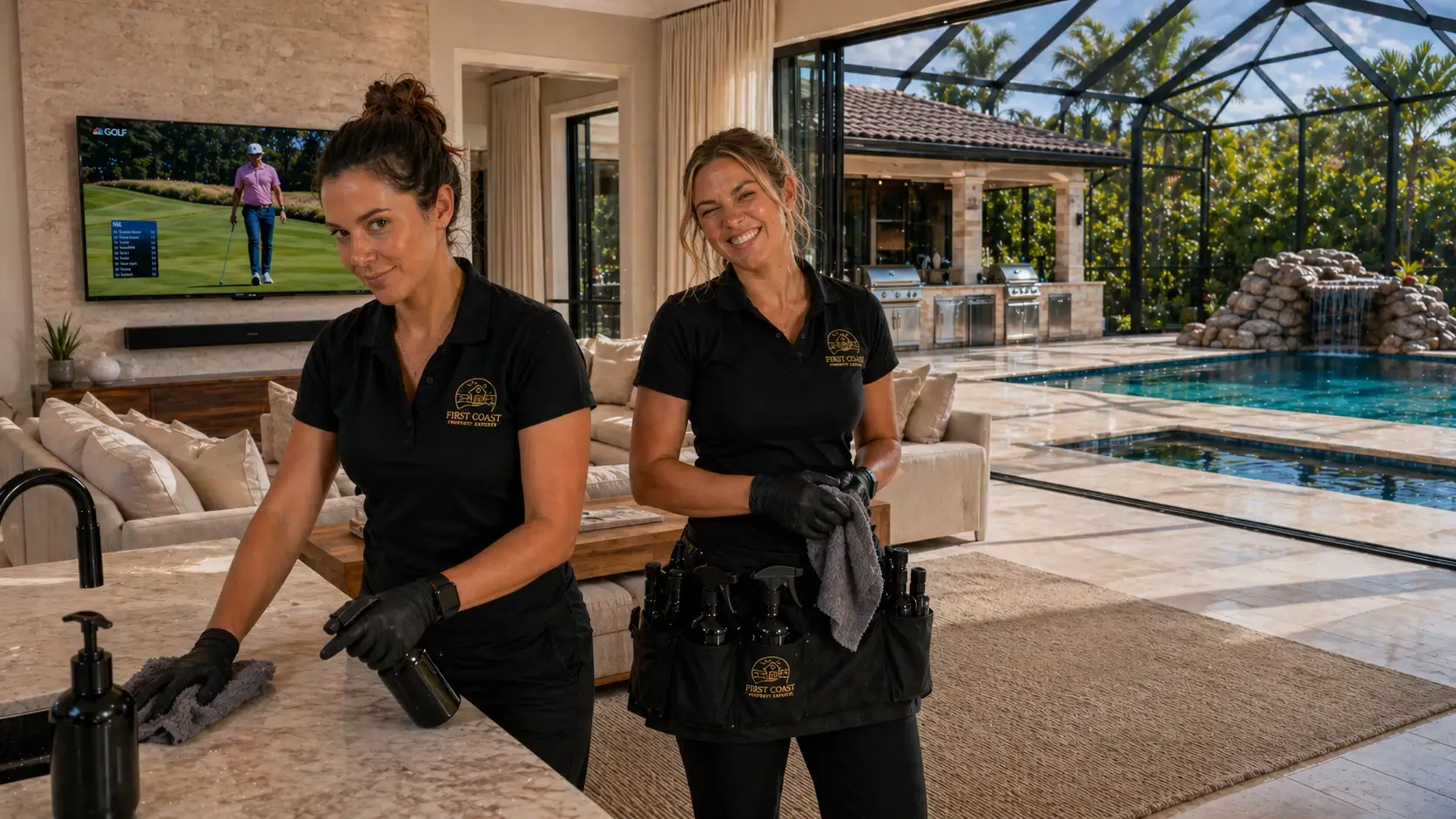
If you would rather hand the interior off entirely, our deep cleaning service covers every room on this list and then some. Our interior discipline works from a detailed checklist that includes the behind-appliance, inside-cabinet, and grout-level work that separates a real deep clean from a surface wipe-down.
Exterior Cleaning Checklist
This is where Florida spring cleaning diverges completely from what you read in national publications. Our mild, wet winters create ideal conditions for biological growth, and by March most homes in NE Florida have visible mold, mildew, or algae on at least one surface.
House Exterior
- Soft wash all siding, stucco, and trim. This is the highest-impact exterior task. Soft washing kills mold, mildew, and algae at the root using a low-pressure cleaning solution. It is safe for every siding type, vinyl, stucco, Hardie board, painted wood, and the results last 12-18 months because the growth is killed, not just rinsed off.
- Clean soffits and fascia. These horizontal surfaces trap moisture and grow mold faster than vertical walls. They should be included in any house wash.
- Inspect for damage while surfaces are clean. Cracked stucco, peeling paint, gaps in caulking around windows and doors, damaged siding, these are easier to spot on a freshly cleaned house.
Roof
- Look for black streaks. Dark streaks on shingle roofs are Gloeocapsa magma, a cyanobacteria that feeds on the limestone filler in shingles. It is cosmetic at first but degrades the shingle over time. Professional roof soft washing removes it safely.
- Clean gutters and downspouts. Live oaks, pines, and palms drop debris year-round. Clogged gutters overflow against the fascia and foundation. Pull the debris, flush the downspouts, confirm drainage is moving away from the house.
- Inspect flashing, boots, and seals. Hurricane season starts June 1. Loose or damaged flashing, cracked pipe boots, and deteriorating ridge cap sealant are problems you want to find and fix in spring, not during a tropical storm.
Driveways, Walkways, and Hardscaping
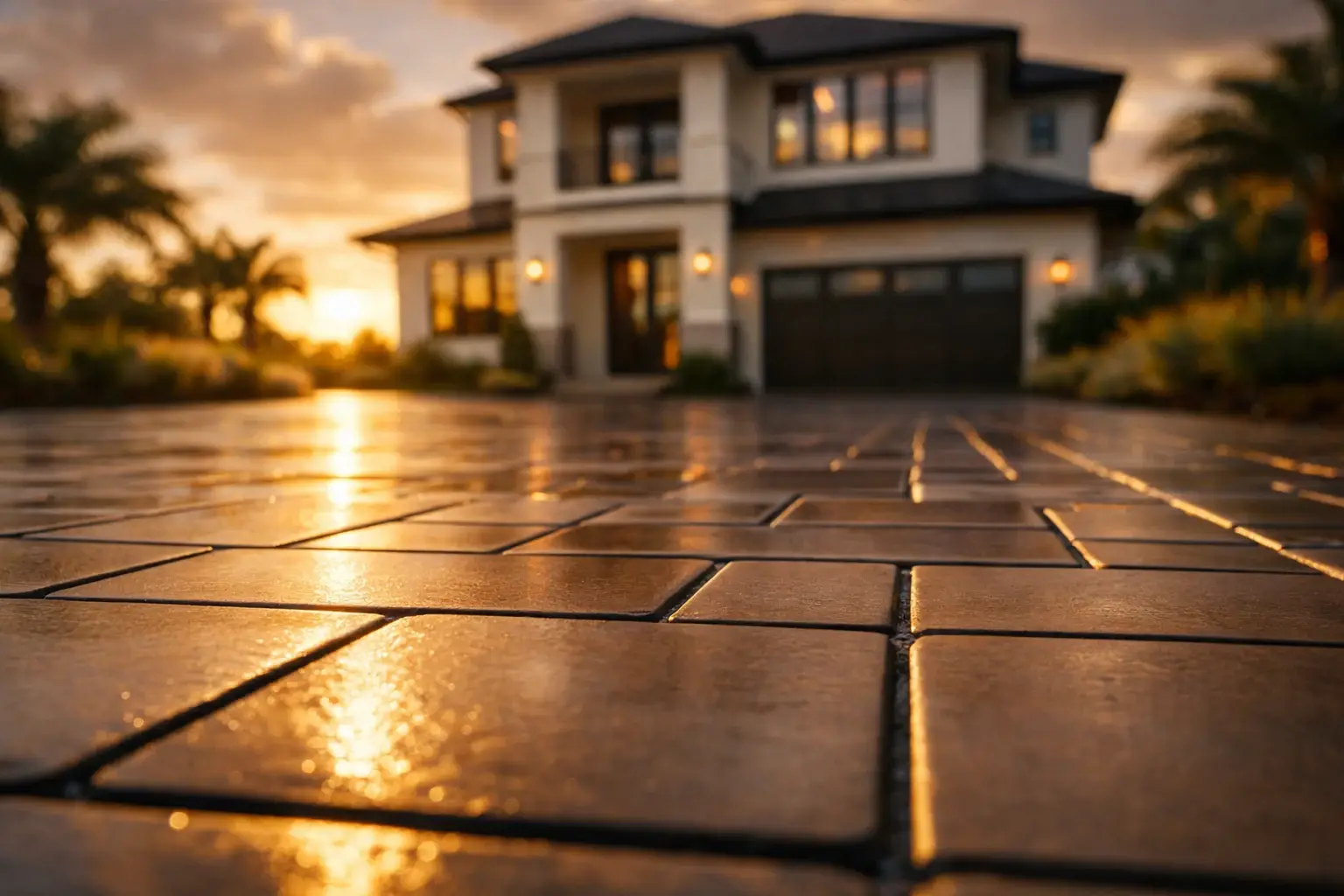
- Pressure wash all concrete and paver surfaces. Driveway and walkway cleaning removes tire marks, oil stains, algae, and general grime. In shaded areas, growth makes surfaces dangerously slippery, especially relevant for walkways where guests and deliveries approach your front door.
- Check paver joint sand. If sand has eroded and you see gaps between pavers, weeds growing in joints, or ant hills forming, the sand needs replenishing with fresh joint angular sand.
- Test paver sealer. Pour water on the paver surface. If it beads, you are fine. If it soaks in and darkens the paver, the sealer has worn through and it is time for re-sealing. Spring falls within the ideal October-May sealing window.
Pool Deck and Outdoor Living
- Clean the pool deck. Algae thrives on pool decks year-round thanks to constant moisture. A clean deck is also a safety issue, biological growth on wet concrete or pavers is a slip hazard.
- Wash outdoor furniture. Wipe down or low-pressure wash tables, chairs, and frames. Mildew on fabric cushions can be treated with a mild bleach solution and rinsed thoroughly.
- Detail the outdoor kitchen. Grease buildup, food residue, spider webs, and weather exposure accumulate through the winter entertaining season and the months the kitchen sat idle. Our outdoor kitchen and grill detailing service handles burner tubes through countertop stains.
- Clean the screen enclosure. Pollen, dust, cobwebs, and mildew coat screens through winter. A gentle soft wash from the inside out clears them. Inspect all panels for tears, you want screens intact before mosquito season ramps up in May.
Florida-Specific Items Every National Checklist Misses
- Termite inspection. Subterranean termites swarm in NE Florida in spring. Look for mud tubes on foundation walls, discarded wings near windows and doors, and soft spots in wood trim. If you see signs, call a pest professional immediately.
- Exterior weatherstripping. Check all exterior door seals. Florida’s humidity degrades weatherstripping faster than dry climates. Good seals keep conditioned air inside and moisture outside, your AC does not need to fight a leaky envelope.
- Irrigation audit. Walk every zone while it runs. Replace broken heads, adjust spray patterns that are hitting the house instead of the lawn, and check for pooling. Over-irrigation against the foundation promotes termites, mold, and foundation issues.
- Pest perimeter treatment. Fire ants, palmetto bugs, and spiders become active in spring. Get a perimeter treatment down before they establish territory around your home.
- AC service. Schedule your annual HVAC tune-up in March or April, before summer demand makes technicians impossible to book. In NE Florida, your AC is the most important mechanical system in the house.
The Realistic Schedule
Do not try to do this in a weekend. You will burn out halfway through the kitchen and the rest will not get done until next year. Spread it out:
- Weeks 1-2: Interior deep cleaning, kitchen, bathrooms, bedrooms, living areas
- Week 3: Whole-home tasks, HVAC filters, dryer vent, water heater, flooring, closets
- Week 4: Exterior inspection and scheduling, walk the property, document what needs professional attention, book services
- Weeks 5-6: Exterior cleaning, soft wash, pressure wash, paver work (schedule professionals for this stretch)
- Weeks 7-8: Hurricane prep, irrigation audit, pest treatment, final walkthrough
Or do what many of our clients across Ponte Vedra, Nocatee, Palencia, and Jacksonville Beach do: handle the organizing and decluttering yourself, and let professionals handle everything that involves cleaning products, pressure equipment, or ladders.
Frequently Asked Questions
When is the best time to spring clean in Florida?
Start interior work in late February or March. Schedule exterior cleaning for March through May. Hardscape maintenance (paver cleaning and sealer evaluation) fits best in April or May. Hurricane prep should be complete before June 1. This staggered approach spreads the work across 6-8 weeks instead of cramming everything into a single overwhelming weekend.
What spring cleaning tasks are unique to Florida homes?
Mold checks in closets and behind furniture, soft washing exterior siding to remove winter algae, screen enclosure cleaning and inspection, termite swarm evidence checks, paver sealer evaluation, hard water descaling, and hurricane season preparation. National checklists do not include these because they are climate-specific to our region.
How much does professional spring cleaning cost in Jacksonville?
We set the standard. We will not be the cheapest. The right scope is established on the property, then written around its material, condition, access, and the level of care it deserves. Request your quote.
Should I clean my pavers in the spring?
Yes. Pressure wash to clear winter growth, check joint angular sand levels and replenish where needed, and test sealer condition with the water bead test. If re-sealing is due, spring falls within the ideal sealing window and gets it done before summer storms complicate scheduling.
What should I do to prepare my Florida home for hurricane season in spring?
Clean gutters and verify drainage. Inspect the roof for loose flashing, damaged shingles, and cracked tile. Trim trees and remove dead branches. Check screen enclosures for weak points. Verify outdoor furniture can be secured quickly. Soft wash the house so you can see and address any structural issues, cracked stucco, loose soffits, damaged fascia, before storm season tests them.
Check It All Off, Or Let Us Handle It
First Coast Property Experts covers both sides of the spring cleaning equation. Our interior discipline handles the deep cleaning that reaches behind appliances, inside cabinets available as add-ons, and into every grout line. Our exterior specialists delivers soft washing, pressure washing, roof cleaning, and paver sealing across St. Johns, Duval, and Nassau counties.
Request a free estimate or call (904) 466-1622. The Gold Standard, Every Time.
Spring cleaning crews serve Nocatee, Ponte Vedra Beach, Jacksonville, and the broader First Coast.
More from the FCPE Journal
- Airbnb & Vacation Rental Cleaning Guide for Florida Hosts
- Clean Homes, Happy Clients- Trusted by First Coast Families
The service behind this guide: The Gold Standard Deep Clean