
ARMA-Method Soft-Wash · Shingle · Tile · Metal
Roof Cleaning, Done Right.
The Gold Standard, Every Time.
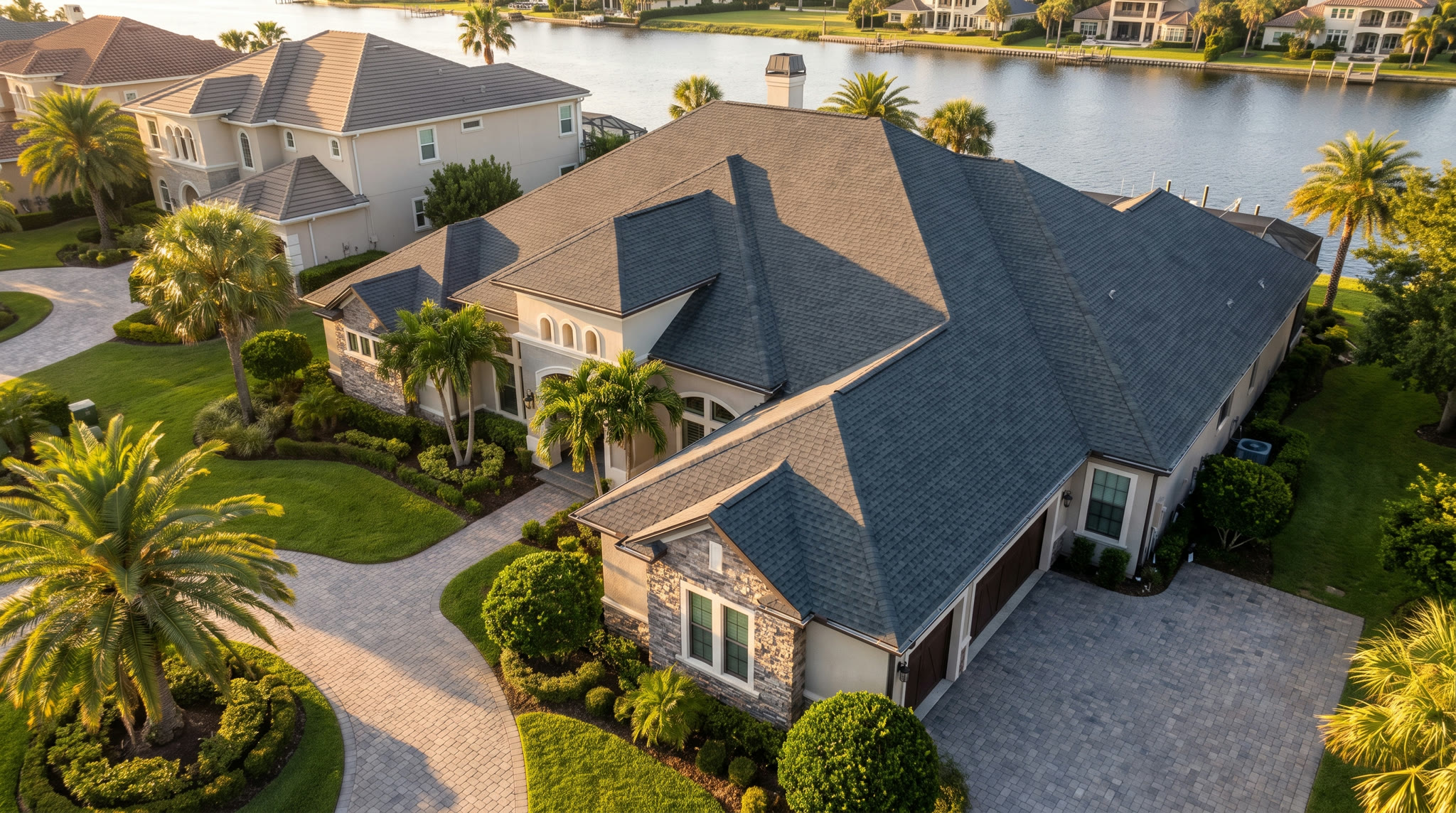
Black streaks on a Northeast Florida roof are not dirt. They’re a living organism feeding on your shingles. We kill it at the root with low-pressure soft-wash chemistry — the method the Asphalt Roofing Manufacturers Association recommends — applied from the ground, never with a pressure washer.
What You’re Actually Looking At
The black streak has a name. Gloeocapsa magma.
It’s a cyanobacteria — sometimes called blue-green algae — that thrives in the warm, humid, occasionally-rainy climate of Northeast Florida. It feeds on the limestone filler that manufacturers blend into asphalt-shingle granules to slow UV degradation. The longer it lives on your roof, the more granules it consumes, and the faster your shingles age. Once you can see the streak from the street, the bacteria has been working for one to three years.
Shingle manufacturers (GAF, CertainTeed, Owens Corning) and the Asphalt Roofing Manufacturers Association (ARMA) all publish the same recommendation: clean the roof with a low-pressure chemical method, never with a high-pressure water spray. Pressure-washing strips granules, voids most warranties, forces water under the shingle course, and leaves the bacterial colonies alive in the porous substrate — so the streak comes back fast and worse.
Soft-Wash Chemistry (FCPE Method)
- Sodium hypochlorite at 1–3% solution — the active ingredient that kills the organism
- Surfactant added for dwell — keeps chemistry on the roof long enough to work
- Applied from the ground with a soft-wash pump — gentler than a garden hose
- Optional neutralizing rinse for landscape protection
- ARMA Technical Bulletin 218 compliant
- Warranty-friendly with GAF, CertainTeed, Owens Corning
Pressure-Washing a Roof (Why You Don’t)
- 2,500–4,000 PSI strips ceramic granules off the shingle face
- Forces water under shingle course — leak risk
- Voids most asphalt-shingle warranties
- Only removes the visible streak — leaves bacteria alive in pores
- Streaks return in 6–12 weeks, often darker
- Manufacturer position: “Do not pressure-wash”
The Process
Eight steps. No shortcuts. No surprises.
Pre-Inspection
We verify roof material — shingle, tile, metal, flat — and identify problem zones, vent stacks, skylights, and chimney flashing from ground level and aerial imagery. Any pre-existing condition is noted in writing before chemistry.
Landscape Pre-Saturation
Every plant, shrub, and bed within drift range gets fresh-water saturation. Wet leaves dilute any chemistry mist. Tarps deployed on delicate plantings.
Mix at Spec
Sodium hypochlorite blended on-site to a 1–3% solution depending on bloom severity, with the appropriate roof-specific surfactant. Mix ratio is logged on the job ticket.
Low-Pressure Application
A soft-wash pump applies chemistry from the ground using calibrated extension equipment — even passes, top to bottom of each roof plane. Pressure stays under 60 PSI throughout. No walking, no scrubbing, no ladders on the roof surface.
Dwell
Chemistry works for 8–15 minutes. Streaks visibly fade in real time. We do not rush dwell — under-dwelling is the #1 reason cheap operators leave streaks behind.
Neutralizing Rinse
Roof rinsed with low-pressure fresh water. Gutters and downspouts flushed. Beds re-rinsed if any drift is detected. Any rust streaks on metal flashing get oxalic post-treatment.
Walkaround & Documentation
Before/after photos taken from the same ground vantage points. Job ticket signed off. Recommendations made in writing for the next service interval.
Guarantee on File
Streaks back within 12 months from a measurable cyanobacteria return on a properly-treated plane? We come back at no charge. Logged in our system the day we leave.
Roof Materials We Treat
Same chemistry family. Different chemistry math.
Asphalt Shingle
The most common Northeast Florida roof. Standard ARMA-method soft-wash with 1–3% hypo solution. Watch the granules — well-treated shingles do not lose them. Re-treat interval: 3–5 years.
Concrete & Clay Tile
Tile is porous, holds bacteria deep, and requires longer dwell — sometimes a lower hypo concentration to protect the color. Treated entirely from the ground; pressure stays at hose-level. Re-treat interval: 4–6 years.
Standing-Seam Metal
Metal roofs streak from oxidation as much as from algae. We use a brightener-style chemistry (oxalic + surfactant blend) on metal — a different product family from shingle work. Salt-air metal roofs near the coast get a chloride-neutral final rinse.
Why Now
A clean roof is cosmetic. A treated roof is structural.
Most Northeast Florida homeowners replace asphalt shingles between year 18 and year 22 — well short of the 30-year manufacturer rating. The reason isn’t the asphalt. It’s the granule loss caused by twenty years of Gloeocapsa grazing on the limestone filler. A roof that gets a soft-wash treatment every 3–5 years can hold its granules and its color all the way to the manufacturer’s life. That’s the real ROI on roof cleaning — not the curb appeal, but the years of life you keep on the roof itself.
Common Questions
What homeowners ask before booking a roof clean.
Will the chemistry damage my roof?
No. Sodium hypochlorite at 1–3% solution is the same active chemistry approved by ARMA, GAF, CertainTeed, and Owens Corning. It kills Gloeocapsa without harming asphalt, ceramic granules, or metal flashing. The damage to roofs comes from pressure, not from this chemistry.
What about my landscaping under the eaves?
Pre-saturation of every plant before chemistry, monitored drift during application, and a fresh-water rinse on every bed at the close of the job. We treat Northeast Florida roofs without plant loss. Where an issue does arise — rare and always with a hidden vulnerability we couldn’t see — we’re insured against it.
My roof has black streaks AND green moss. Is that the same fix?
No. Streaks = cyanobacteria. Moss = a true plant with rhizoids that anchor into the shingle. We treat both with hypo chemistry, but moss requires longer dwell. Heavily-mossed roofs in shaded oak canopies (common in Mandarin, Riverside, parts of Atlantic Beach) get a custom plan.
How long should I expect a roof clean to last?
3–5 years on shingle in our humidity, 4–6 on tile, 5–8 on properly-finished metal. Heavy-canopy lots and homes near salt water see slightly faster bloom return. The annual exterior plan re-checks every visit and triggers a re-treat at the right interval — not just on the calendar.
Do you get on the roof?
No. Our entire soft-wash treatment is delivered from the ground with low-pressure extension equipment — no walking, no scrubbing, no foot traffic on your shingles or tile. Ground-level application is safer for your roof, safer for our specialists, and it’s exactly the method the manufacturers and ARMA recommend.
What does roof soft-washing cost?
Pricing scales with roof square-footage, pitch, and material. We quote from the county appraiser footprint plus an aerial view — no on-site walkthrough required for most homes — and annual-plan clients receive their standing loyalty rate. Request a consultation and we’ll return an exact investment for your roof the same day.
Ready When You Are
Stop the granule loss before it costs you a roof.
The Gold Standard, Every Time.