



The Complete Guide to Hurricane Season Home Prep in Northeast Florida
Hurricane season in Northeast Florida is not a maybe. It is June 1 through November 30, every year, and the question is never whether storms will threaten our coast but when. The 2024 and 2025 seasons reinforced what long-time Jacksonville, Ponte Vedra, and St. Augustine residents already know — tropical storms and hurricanes cause the most damage to homes that were not prepared before the forecast cone appeared on the evening news.
This guide focuses on the exterior preparation that most homeowners overlook: the cleaning, maintenance, and protection of roofs, gutters, siding, driveways, screen enclosures, and hardscaping that makes the difference between a home that sheds a hurricane and a home that absorbs one. These are the tasks that need to happen before June 1 — not during the 48-hour scramble before a storm makes landfall.
Roof Maintenance: Your First Line of Defense
Your roof is the single most important structural element during a hurricane. It takes the full force of wind, rain, and debris impact. A compromised roof during a storm means water intrusion, structural damage, and potentially catastrophic failure. Pre-season roof work is the highest-priority item on this list.
Professional Roof Cleaning
A dirty roof is a vulnerable roof. Biological growth — algae, moss, lichen — retains moisture in and on the roofing material. This matters during a hurricane for two reasons: retained moisture adds weight to the roof structure (a significant load multiplier across thousands of square feet), and persistently damp roofing material has weakened adhesion. Asphalt shingles with algae colonies are measurably easier to lift than clean, dry shingles. Tile roofs with moss growth in the overlaps have reduced interlock strength.
Professional roof cleaning via soft washing kills and removes all biological growth without damaging the roofing material. High-pressure washing is never used on roofs — it strips shingle granules and cracks tiles. Soft washing uses biodegradable cleaning solutions at low pressure to treat the growth at the organism level. The result is a clean, dry roof surface with full structural integrity heading into storm season.
Roof Inspection
A clean roof is also an inspectable roof. Biological growth hides cracked tiles, missing shingles, deteriorated flashing, and failed sealant around roof penetrations (vents, pipes, satellite mounts). Once the roof is cleaned, these issues become visible and repairable before a storm tests every weak point.
Key inspection points after cleaning:
- Ridge cap and hip shingles/tiles. These are the most wind-vulnerable elements on the roof. Loose or cracked ridge cap components lift first in high winds, opening the roof deck to rain intrusion.
- Flashing at penetrations. Every pipe, vent, skylight, and chimney penetration is sealed with flashing and roofing sealant. UV degradation and thermal cycling break down sealant over time. Failed flashing leaks during any rain event, not just storms.
- Valley transitions. Where two roof planes meet, the valley channels water at high volume. Debris accumulation in valleys restricts flow, and damaged valley flashing creates leak points under heavy rainfall.
- Shingle/tile condition. Missing, cracked, curling, or loose roofing material creates wind entry points. A single missing shingle can lead to progressive peel-off during sustained hurricane winds.
- Soffit and fascia. These components seal the transition between the roof deck and the exterior wall. Damaged soffit or fascia allows wind-driven rain and wind pressure into the attic space. Once wind enters the attic, it creates uplift pressure that can separate the entire roof structure.
Gutter and Downspout Cleaning
Gutters are the drainage system that moves water off the roof and away from the foundation. During normal rain, they handle 1,000-2,000 gallons per hour depending on roof area. During a tropical storm, that volume can triple. Clogged gutters cannot handle normal volume, let alone storm volume.
What happens when gutters fail during a storm:
- Water overflows along the fascia board, saturating the wood and potentially entering the soffit.
- Overflow pools at the foundation, creating hydrostatic pressure against the slab or basement wall.
- Backed-up water travels under shingles at the eave, soaking the roof deck and causing interior water damage.
- Heavy, water-filled gutters pull away from the fascia, creating additional damage and debris during high winds.
Professional gutter cleaning before hurricane season means clearing all debris, flushing all downspouts to confirm clear drainage, inspecting gutter hangers and attachment points, and verifying that downspout discharge directs water at least 4 feet from the foundation.
Exterior Walls: Clean, Inspect, Seal
Your home’s exterior walls take direct wind and rain impact during a storm. Preparation starts with cleaning — not because aesthetics matter during a hurricane, but because a clean surface reveals damage that a dirty surface hides.
House Washing
Professional house washing via soft wash removes mold, mildew, algae, and accumulated grime from stucco, siding, brick, and trim. Once the surface is clean, cracks in stucco, gaps in siding joints, failed caulking around windows and doors, and deteriorated trim become visible. Every one of those defects is a water entry point during wind-driven rain.
In Northeast Florida, stucco is the dominant exterior wall material. Stucco cracks from settling, thermal cycling, and age. Hairline cracks that are invisible under a layer of algae and grime become repair targets once the surface is clean. Addressing stucco cracks with proper patching and sealant before storm season closes water entry points that hurricanes exploit.
Window and Door Seals
While cleaning the exterior, inspect every window and door frame for caulking condition. Exterior caulk degrades under Florida’s UV exposure — what was a solid bead two years ago may now be cracked, pulling away, or missing entirely. Failed caulking around windows and doors is one of the most common sources of water intrusion during storms. Recaulking with a high-quality, paintable exterior sealant is a straightforward repair that prevents costly water damage.
Screen Enclosures
Screen enclosures are not designed to withstand hurricane-force winds. But a well-maintained enclosure handles tropical storm conditions and moderate wind events far better than a neglected one. Pre-season screen maintenance includes:
- Frame cleaning. Soft washing the aluminum frame removes corrosion-promoting deposits, especially salt residue on properties near the coast in Ponte Vedra Beach, Jacksonville Beach, and St. Augustine Beach.
- Screen panel inspection. Tears, separating spline, and loose panels reduce the enclosure’s wind resistance and create debris hazards. Replace damaged panels before storm season.
- Hardware check. Door hinges, latches, and closing mechanisms should operate smoothly. Doors that do not latch securely can open under wind pressure and act as wind sails that stress the entire frame.
- Pool cage attachment points. Where the enclosure frame meets the deck or home, inspect the anchor bolts and base plates. Corrosion or loose anchors compromise the structural connection.
Hardscaping: Protect Your Ground-Level Investment
Driveways, pool decks, patios, and walkways face two hurricane threats: intense rainfall that erodes joint sand and dislodges loose material, and standing water that tests drainage and sealer integrity.
Pressure Wash and Seal Pavers
Sealed pavers with full joint angular sand are significantly more resistant to storm damage than unsealed pavers with depleted joints. During a tropical storm delivering 6-12 inches of rain in 24 hours, unsealed paver joints can lose substantial sand volume, leading to shifting, settling, and weed establishment after the storm passes. Sealed joints with compacted joint angular sand locked under a sealer bond resist washout even under heavy rainfall.
If your pavers are due for resealing (the water absorption test is the quick check), getting that project completed before June 1 protects both the pavers and the joints through the entire storm season.
Drainage Assessment
Walk your property during or immediately after a rain event and observe where water goes. It should flow away from the home, away from the foundation, and into designated drainage channels, swales, or storm drains. Problem indicators:
- Water pooling against the foundation or garage slab
- Low spots in the driveway or patio that collect standing water
- Downspout discharge flowing toward the home instead of away
- Swales or drainage channels that are blocked with debris or sediment
Correcting drainage issues before hurricane season prevents the cascading water damage that post-storm homeowners deal with — foundation erosion, slab undermining, and landscape washout.
Landscaping and Loose Items: The Projectile Audit
During a hurricane, anything not secured becomes a projectile. The exterior audit should include everything on or near the property that could become airborne or cause damage in sustained high winds.
Tree and Vegetation Maintenance
Dead branches, crossing limbs, dense canopy sections that catch wind like sails, and trees leaning toward the home or power lines are all pre-season priorities. Professional arborist evaluation is recommended for mature oaks, pines, and palms — the dominant species across St. Johns County, Duval County, and Nassau County. Selective pruning reduces wind resistance and removes the most likely failure points.
For palm trees: remove dead fronds and seed pods. In high winds, dead fronds detach and become heavy projectiles. Live, healthy fronds flex with wind. Dead fronds break off and fly.
Outdoor Furniture and Accessories
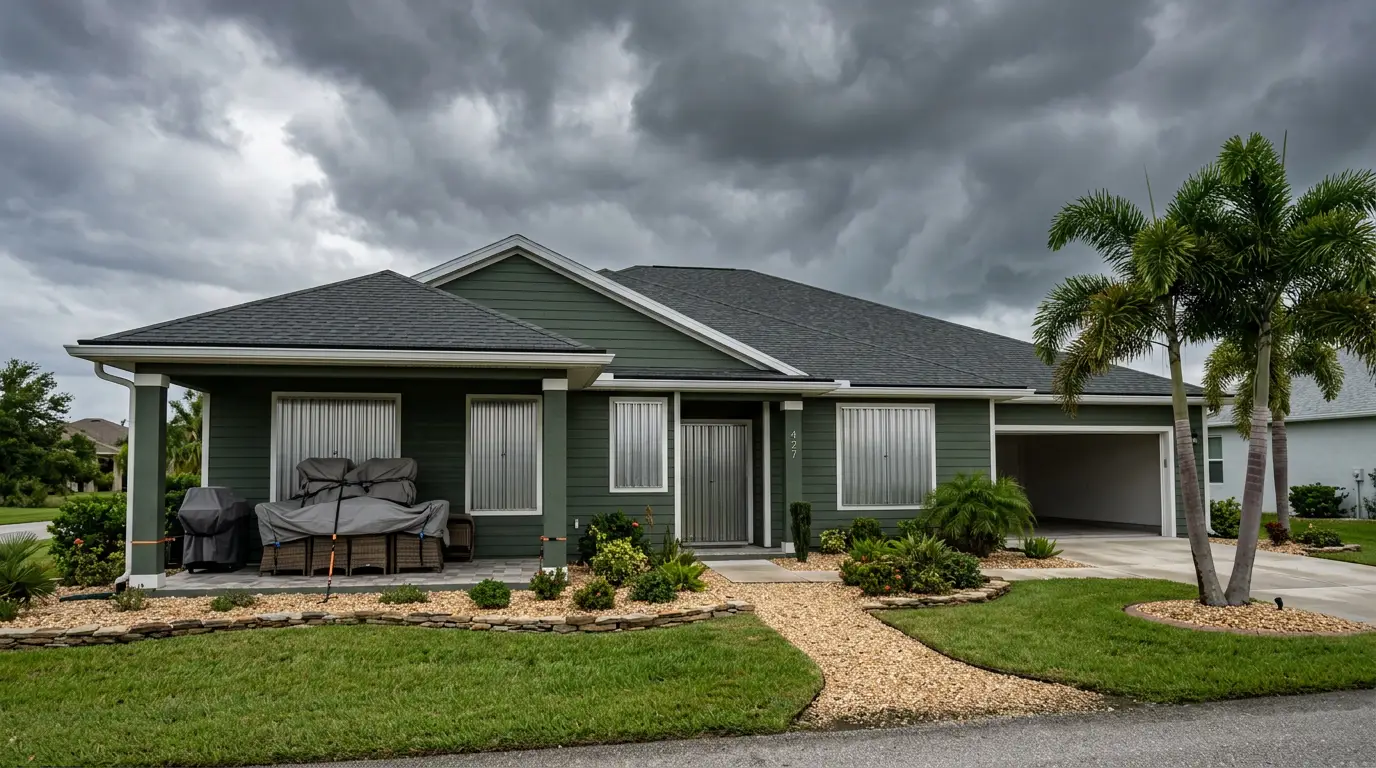
Inventory every item on your exterior: patio furniture, grills, planters, decorative objects, outdoor rugs, pool toys, trash cans, garden equipment, hanging plants, outdoor speakers, and any other removable item. Your pre-storm plan should identify where every item goes — indoor storage, garage, or secured storage structure. Do not wait until a storm is 48 hours out to figure out where your outdoor sectional fits.
Pool Equipment
Pool pumps, heaters, automation systems, and filter units are bolted to equipment pads. Verify that all anchor bolts are tight, that the pad is stable, and that electrical connections are weatherproof. The pool itself is generally fine during a storm — drain it to the mid-tile line per manufacturer recommendation, remove automatic cleaners, and shock the water chemistry to compensate for the incoming rainwater volume.
The Pre-Season Timeline: What to Do and When
This timeline puts all exterior preparation on a schedule that ensures everything is complete before June 1:
April
- Schedule professional roof soft washing and inspection
- Schedule gutter and downspout cleaning
- Schedule house exterior soft washing
- Schedule paver sealing if due (check with the water test)
- Contact arborist for tree evaluation and trimming
May (First Two Weeks)
- Complete all exterior cleaning and sealing projects
- Complete tree trimming
- Inspect and repair screen enclosure
- Recaulk windows and doors as needed
- Complete drainage assessment and corrections
- Test and repair irrigation system
May (Last Two Weeks)
- Inventory outdoor furniture and confirm storage plan
- Verify pool equipment anchoring
- Check all exterior lighting for function
- Photograph the entire exterior (documentation for insurance)
- Review homeowner’s insurance coverage and confirm hurricane deductible
Why Exterior Cleaning Before Storm Season Saves Money
The exterior cleaning and maintenance items in this guide are not storm-specific expenses — they are standard property maintenance that should happen regardless. Scheduling them before hurricane season means your home is both well-maintained and storm-ready from the same investment. A roof that was soft washed for appearance also drains better during a storm. Gutters cleaned for curb appeal also handle storm volumes. Pavers sealed for aesthetics also resist washout during heavy rain.
The cost of pre-season maintenance is a fraction of the cost of post-storm repairs. Insurance claims for preventable damage — roof leaks through clogged drainage, foundation water intrusion from failed gutters, paver washout from unsealed joints — are expensive, deductible-heavy, and premium-increasing. Prevention is the better investment.
At First Coast Property Experts, we provide comprehensive exterior cleaning and maintenance services across St. Johns County, Duval County, and Nassau County. From roof cleaning and house washing to paver sealing and gutter cleaning, we handle every exterior surface on your property with the precision and care that premium properties require.
Schedule your pre-hurricane season exterior maintenance — call (904) 466-1622 or request a consultation at firstcoastpropertyexperts.com/estimate/
More from the FCPE Journal
- Our Family’s Journey Featured in The Ponte Vedra Connection
- Spring Exterior Prep for Northeast Florida Estates — A 12-Point Plan
- St. Johns County Luxury Home Trends: 2026 Outlook
The service behind this guide: The Seasonal Exterior Cleaning Calendar