The Gold Standard, Every Time

Travertine Sealing

Breathable, impregnating sealer protection for travertine pool decks, patios, lanais, and walkways — water-based systems that shield natural stone from moisture, staining, and Florida’s relentless UV exposure without altering its finish.

LicensedInsuredFamily-OwnedGoogle GuaranteedNatural Stone Specialists
100+Years Combined Experience
4.9★Google Rating
2,500+Properties Served
100%Satisfaction Guaranteed
✔ GoogleGuaranteed
ABBB Accredited
Google Guaranteed
BBB A Rated
Fully Insured
Background Checked
Why Travertine Sealing Matters

The protection natural travertine needs in Florida’s climate

Travertine is one of the most popular natural stone choices for pool decks, patios, and lanais across Northeast Florida — and for good reason. Its cool surface temperature, natural slip resistance, and timeless aesthetic make it the preferred hardscape material in communities from Nocatee to Ponte Vedra Beach. But travertine is also a porous, calcium-based stone that absorbs moisture, stains, and organic contaminants rapidly when left unprotected.

In Florida’s subtropical environment, unprotected travertine faces constant assault from chlorinated pool water, iron-rich irrigation, tannin runoff from oak trees, and daily UV radiation. The Natural Stone Institute recommends regular sealing with breathable, impregnating sealers that penetrate below the surface to block moisture and stains from within — without trapping vapor or creating a film that peels, whitens, or becomes slippery when wet.

First Coast Property Experts uses water-based, breathable impregnating sealers that meet ASTM International standards for natural stone protection. These systems allow the stone to breathe while creating an invisible barrier against water, oil, and biological staining — preserving both the appearance and the structural integrity of every travertine surface we treat across the First Coast.

Porous stone demands breathable protection

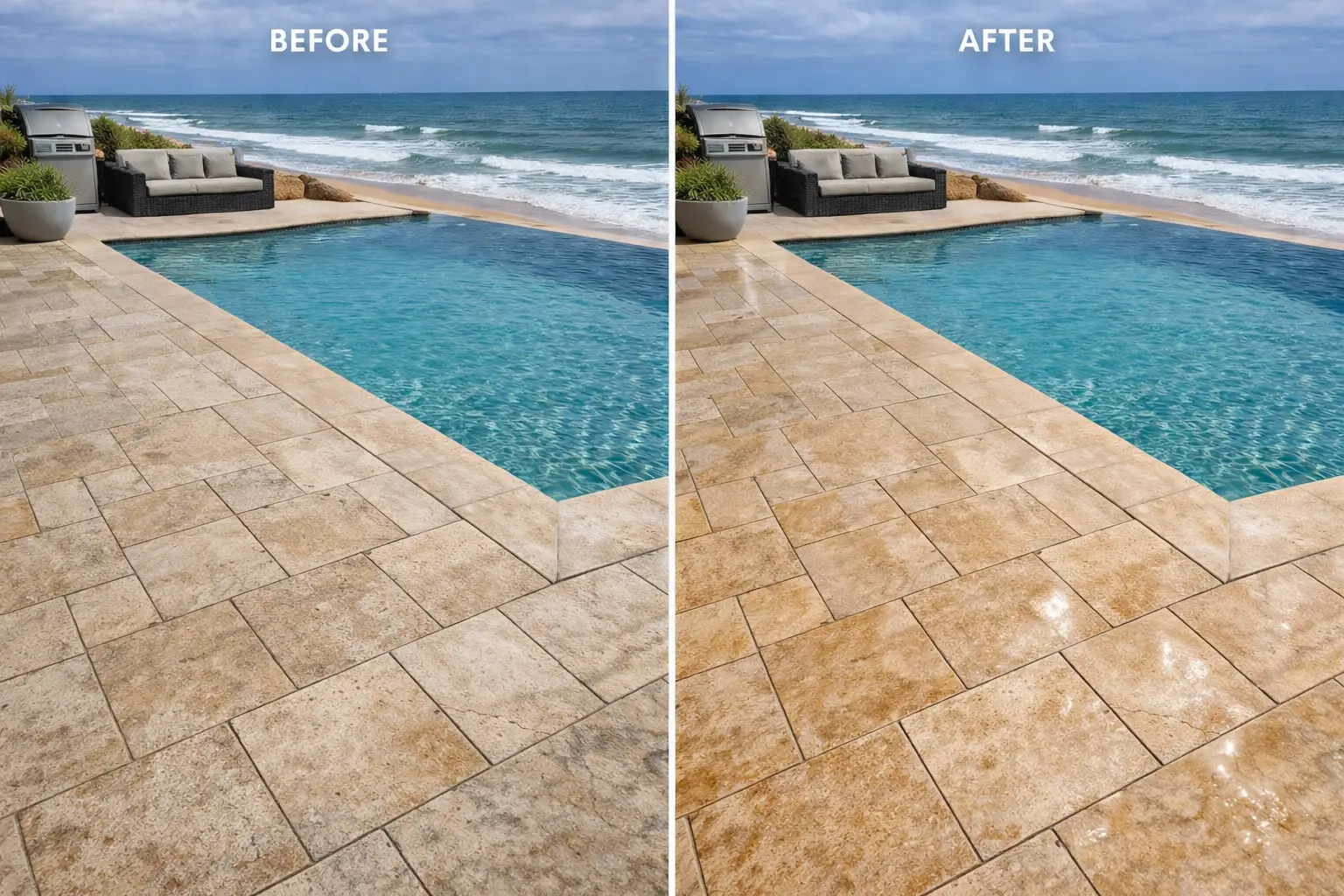
Travertine absorbs water like a sponge. Film-forming sealers trap moisture inside the stone, causing spalling, white hazing, and efflorescence. Impregnating sealers protect from within while allowing vapor to escape naturally.
Florida exposure accelerates deterioration

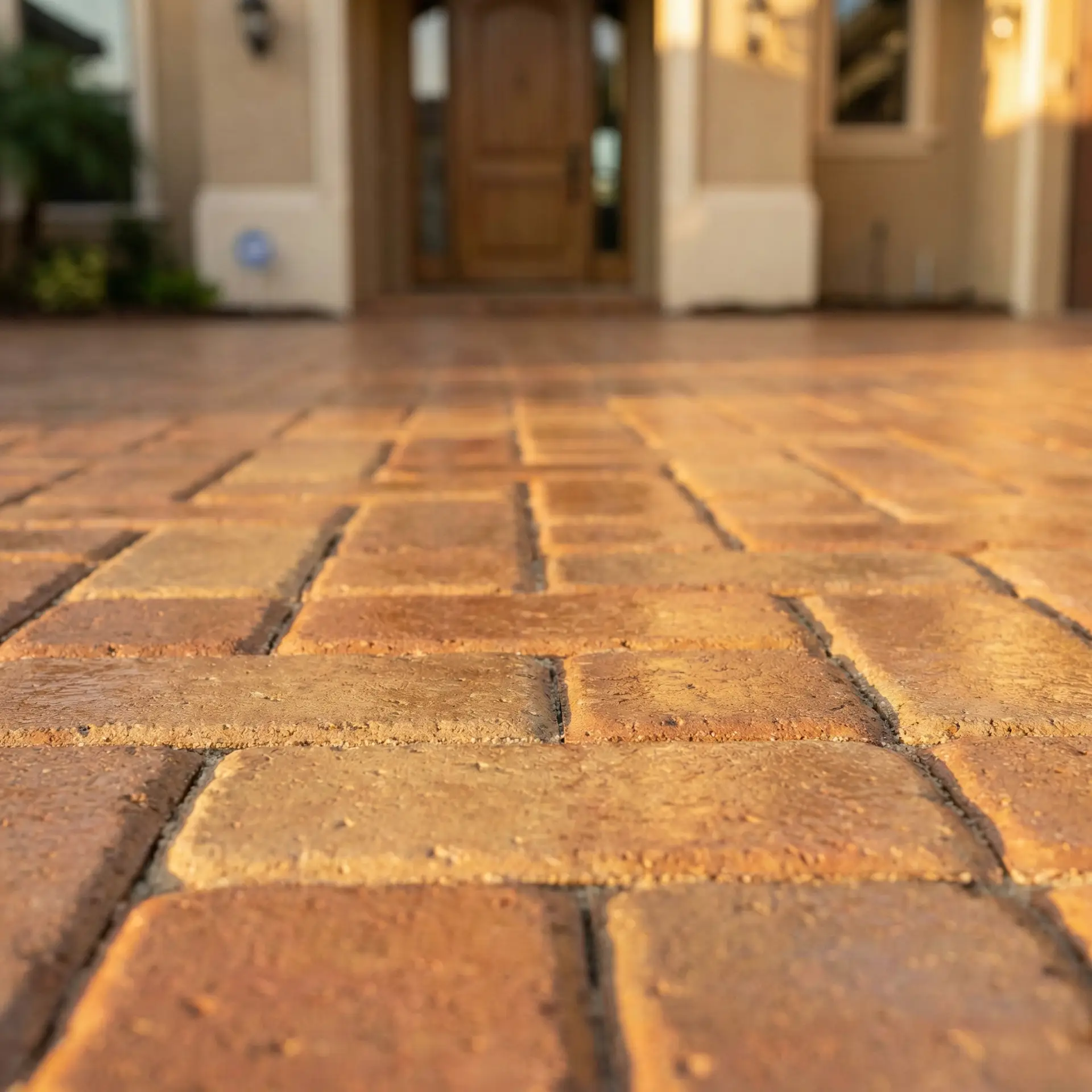
Chlorine splash, iron staining from well water, tannin drip from live oaks, and year-round UV break down unprotected travertine faster than in any other region. Sealing slows that cycle dramatically.

Proper sealing preserves the natural finish

A correctly applied impregnating sealer does not change the color, sheen, or texture of travertine. It protects the stone invisibly so the natural beauty homeowners invested in remains exactly as intended.

What’s Included

Full-scope travertine sealing for every application

Each travertine sealing project is tailored to the stone type, installation method, exposure conditions, and level of existing wear.

🏊

Pool Deck Sealing

Travertine pool surrounds are sealed with breathable impregnating systems that repel chlorine splash, sunscreen oils, and iron staining while maintaining the stone’s natural slip resistance and cool surface temperature.

🌞

Patio & Lanai Sealing

Outdoor living areas are sealed to defend against tannin drip, food and beverage staining, mold growth, and UV fading — keeping entertainment spaces looking clean and protected year-round.

🚶

Walkway Sealing

Travertine walkways and pathways receive full impregnating sealer coverage to prevent darkening from irrigation overspray, organic staining from landscape runoff, and surface erosion from foot traffic.

🏠

Entryway & Portico Sealing

Front entries, covered porches, and portico areas are sealed to protect against tracked-in moisture, leaf staining, and the heavy foot traffic that wears down unprotected stone at access points.

💧

Deep Clean Pre-Treatment

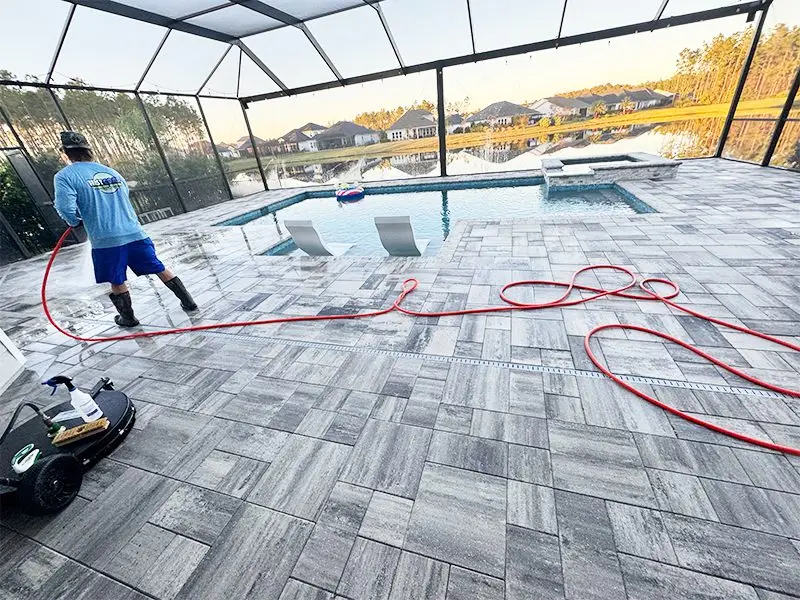
Every travertine surface is pressure-cleaned at stone-safe PSI levels to remove embedded dirt, algae, and biological film before sealer is applied — ensuring maximum penetration and adhesion.

🔥

Torch Treatment

After cleaning, a flame torch pass kills any remaining organic spores embedded in the stone’s pores and natural voids, eliminating growth that cleaning alone cannot reach before sealer locks the surface.

🛠

Joint Stabilization

Degraded or missing joint sand between travertine pavers is replenished with ASTM C144 angular washed joint sand (Trident Joint Sand) that locks joints, prevents weed intrusion, and resists washout from rain and pool water.

🛡

Sealer Application

Water-based impregnating sealer is applied in controlled, even coats across the fully prepared surface. The sealer penetrates into the stone rather than sitting on top, creating long-term invisible protection.

Our Work

The gold standard in action

Our Process

How professional travertine sealing works

A five-step system designed to deliver deep, lasting protection without altering the natural character of your travertine.

1

Deep Clean

The entire travertine surface is pressure-cleaned at stone-safe PSI levels to remove embedded dirt, algae, mold, and biological film. This step opens the pores of the stone so the sealer can penetrate fully.

2

Torch Treatment

A controlled flame pass eliminates organic spores, root structures, and microbial growth embedded in the stone’s natural voids and pores that cleaning alone cannot reach.

3

Joint Sand

ASTM C144 angular washed joint sand (Trident Joint Sand) is swept into all joints between travertine pavers, compacted, and activated to lock the hardscape, prevent weed growth, and resist washout from rain and pool water.

4

Surface Drying

The stone is allowed to dry completely before sealer application. Moisture trapped beneath a sealer causes hazing, white discoloration, and adhesion failure — so proper drying time is non-negotiable.

5

Sealer Application

A water-based, breathable impregnating sealer is applied in even, controlled coats. The sealer penetrates below the surface to create an invisible barrier against water, oil, and staining without changing the stone’s appearance, texture, or slip resistance.

Ideal For

Properties that benefit most from travertine sealing

Travertine sealing is essential anywhere natural stone is exposed to Florida’s moisture, chlorine, UV, and organic staining.

🏊

Pool Deck Homes

Travertine pool surrounds face constant chlorine splash, sunscreen drip, and standing water. Sealing prevents absorption, staining, and the salt crystallization that causes surface spalling over time.

🏝

Luxury Estates

Premium properties across Nocatee, Ponte Vedra, and Marsh Landing invest in travertine for its beauty. Sealing protects that investment by keeping the stone looking as refined as the day it was installed.

🌞

Outdoor Living Spaces

Lanais, outdoor kitchens, and covered patios with travertine flooring benefit from sealing that blocks food stains, grease, wine, and organic debris from penetrating the porous stone surface.

🏘

HOA Communities

Planned communities with shared travertine amenity decks, pool areas, and walkways need consistent sealing programs that maintain appearance standards and extend the life of common-area hardscapes.

Why First Coast Property Experts

Why homeowners trust us with their travertine

A licensed, insured, family-owned team with natural stone expertise, breathable sealer systems, and a proven reputation across the First Coast.

Natural Stone Specialists

We understand the porosity, composition, and care requirements of travertine at a material level. Every sealing project is approached with stone-specific knowledge, not a one-size-fits-all method.

Breathable Sealer Systems

We use water-based, impregnating sealers that allow the stone to breathe while blocking moisture and stains from within. No film-forming products that peel, whiten, or trap moisture inside the stone.

Full Five-Step Process

Clean, torch, sand, dry, seal. Every step is completed in sequence because skipping any one of them compromises the longevity and effectiveness of the sealer.

Family-Owned Accountability

You work with a local, family-run company that lives and operates in the same First Coast market it serves. Communication stays direct, fast, and accountable.

One Team, Full Property

Travertine sealing, paver restoration, exterior cleaning, window care, and housekeeping can all be coordinated under one written scope instead of pieced together across vendors.

Written Scope First

Pricing, stone area, sealer type, and timeline are clarified up front so expectations are aligned before any work begins on your travertine surfaces.

Insured — COI Available

For homeowners, property managers, and HOA boards who need documentation, a certificate of insurance can be provided on request before work begins.

5-Star Momentum

Consistent five-star reviews, a growing referral base, and verified trust credentials reflect the standard clients experience on every travertine sealing project.

LicensedInsuredBackground-CheckedWritten Scope FirstGoogle GuaranteedCOI on Request
Reviews

What homeowners say about our travertine sealing

Real feedback from First Coast families who trust us with their natural stone surfaces.

Ponte Vedra Connection cover featuring the Logan family
Featured Story

Meet the Logan family behind First Coast Property Experts

When Ponte Vedra Connection featured the Logan family, it highlighted what clients already knew — FCPE is a local, family-run company built on hands-on accountability and premium workmanship.

From travertine sealing to paver restoration, exterior cleaning, and full-property maintenance programs, the same family-owned commitment that earned the feature drives every service we deliver across the First Coast.

First Coast Property Experts gift card
Gift Cards Available

Give the gift of a gold-standard clean

Surprise a homeowner, new neighbor, or loved one with a First Coast Property Experts gift card. Available in any amount and redeemable for any service we offer — from luxury housekeeping to travertine sealing and full exterior restoration.

Order online and we’ll email a digital copy or mail a physical card — directly to you or straight to whoever you’re gifting.

FAQ

Travertine sealing questions, answered clearly

The answers homeowners ask most before scheduling travertine sealing with First Coast Property Experts.

Why does travertine need to be sealed?

Travertine is a porous, calcium-based natural stone that absorbs moisture, chlorine, oils, tannins, and organic stains rapidly when left unprotected. In Florida’s subtropical climate, unprotected travertine darkens, stains, and grows algae much faster than sealed stone. A breathable impregnating sealer blocks contaminants from penetrating the stone while allowing trapped moisture to escape naturally, preserving both the appearance and structural integrity of the surface.

What type of sealer do you use on travertine?

We use water-based, breathable impregnating sealers specifically formulated for natural stone. These sealers penetrate below the surface rather than forming a film on top, which means they do not peel, whiten, become slippery when wet, or trap moisture inside the stone. The result is invisible protection that maintains the travertine’s natural color, texture, and slip resistance exactly as the homeowner expects.

Will the sealer change the color or appearance of my travertine?

No. A properly applied impregnating sealer is invisible once cured. It does not darken, gloss, or alter the natural look of the stone. The travertine will look exactly the same as it did before sealing — just protected from within against moisture, staining, and biological growth.

How often should travertine be resealed?

In Northeast Florida’s climate, most travertine pool decks and patios benefit from resealing every two to three years depending on sun exposure, pool chemistry, foot traffic, and how aggressively the stone is cleaned between sealings. High-traffic areas around pools may need attention sooner than covered lanai surfaces that receive less direct UV and moisture exposure.

Do you clean the travertine before sealing?

Yes. Every travertine sealing project begins with a full deep clean at stone-safe PSI levels to remove embedded dirt, algae, mold, and biological film. Sealing over a dirty surface traps contaminants beneath the sealer, which causes discoloration and reduces the sealer’s ability to bond with the stone. Proper cleaning is essential for long-lasting results.

What is the torch treatment step?

After cleaning, we pass a controlled flame torch across the travertine surface to kill any organic spores, root structures, and microbial growth embedded in the stone’s natural pores and voids. Cleaning removes surface-level contamination, but the torch step eliminates what cleaning alone cannot reach — ensuring the stone is completely sterile before sealer locks the surface.

Is travertine sealing safe for pool areas?

Yes. The breathable impregnating sealers we use are specifically designed for pool deck applications. They do not create a slippery surface film, they repel chlorinated water, and they allow the stone to maintain its naturally cool surface temperature. The sealer is fully cured before the pool area is returned to use.

What happens if I skip the joint sand step?

If the angular washed joint sand between travertine pavers is degraded, missing, or washed out, the joints become pathways for weed growth, ant colonies, and water infiltration that undermines the base material beneath the hardscape. Replenishing joint sand before sealing locks the pavers in place, prevents organic intrusion, and ensures the sealed surface performs as a unified system rather than individual loose stones.

Can you seal travertine that has existing stains?

Our deep cleaning process removes most surface stains, algae, mold, and organic discoloration before sealing. Deep-set rust stains, oil penetration, or chemical etching that has physically damaged the stone surface may not be fully reversible through cleaning alone, but sealing after cleaning prevents those areas from worsening and protects the rest of the surface from developing similar issues.

How long does the sealing process take?

A full travertine sealing project — including deep clean, torch treatment, joint sand, drying, and sealer application — typically takes one to three days depending on the total square footage, weather conditions, and how much drying time the stone requires. We provide a detailed timeline during your consultation so scheduling expectations are clear before work begins.

Do you seal travertine on vertical surfaces like walls or columns?

Yes. Travertine used on outdoor fireplace surrounds, retaining walls, columns, and vertical accent features benefits from the same impregnating sealer protection as horizontal surfaces. Vertical applications are sealed using the same breathable, water-based systems to prevent moisture intrusion, staining, and biological growth on all exposed stone.

Can I walk on the travertine after sealing?

We recommend keeping foot traffic off freshly sealed travertine for a minimum of 24 hours to allow full cure time. Pool water contact should be avoided for 48 to 72 hours depending on the sealer system used. We provide specific care instructions at the completion of every project so homeowners know exactly when each area can be returned to normal use.

Get Started

Get Your Gold Standard Quote

Tell us about your travertine surfaces, the level of staining or wear you are seeing, and the areas that need attention. We will respond with a clear written scope and transparent pricing — no pressure, no surprises.

First Coast Property Experts The Gold Standard, Every Time

Serving St. Johns County, Duval County, Nassau County, and communities across the First Coast with premium interior and exterior property care.