
Travertine · Paver · Stamped · Pebble · Substrate-Aware Cleaning
Pool Deck Cleaning, By Substrate.
The Gold Standard, Every Time.
A pool deck is not a driveway. Travertine is not a paver. Stamped concrete is not stamped overlay. We identify the substrate first, calibrate chemistry and pressure to it, then clean — never the same recipe for every deck. The result is a refreshed surface that holds its color and its texture.
Why Pool Decks Need Their Own Playbook
Decorative finishes are softer, more porous, and more expensive to ruin.
Pool deck materials in Northeast Florida — travertine, brick paver, stamped concrete, exposed-aggregate, Kool Deck, pebble — were all chosen for one reason: they look better than plain concrete. They also share another property: they are softer, more porous, and far less forgiving of high pressure than the slab on your driveway. A 3,500 PSI surface cleaner that does no harm to a concrete drive will pit travertine, etch sealer off pavers, blow out joint sand, and gouge stamped overlay in one stroke. We treat every pool deck as its own substrate problem, identify the material on arrival, and pick the right pressure-and-chemistry combination from there.
By Substrate
Six common pool deck materials in NE Florida — six different protocols.
Travertine
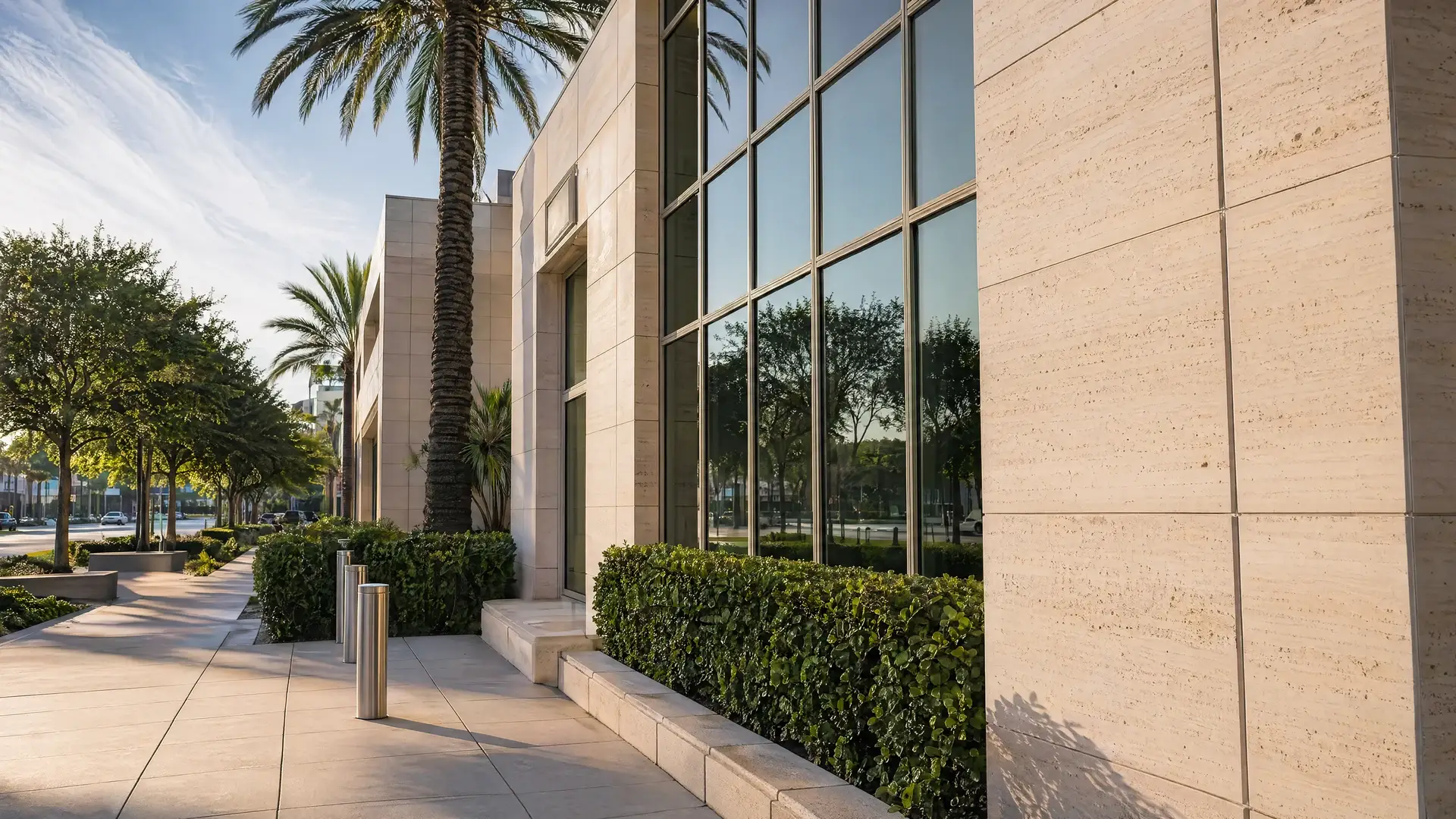
Calcium-based natural stone. Acid-sensitive — never acidic chemistry. Hypochlorite + surfactant at low pressure (under 1,500 PSI), neutral rinse. Sealing afterward — see travertine sealing — restores the rich color.
Brick Pavers
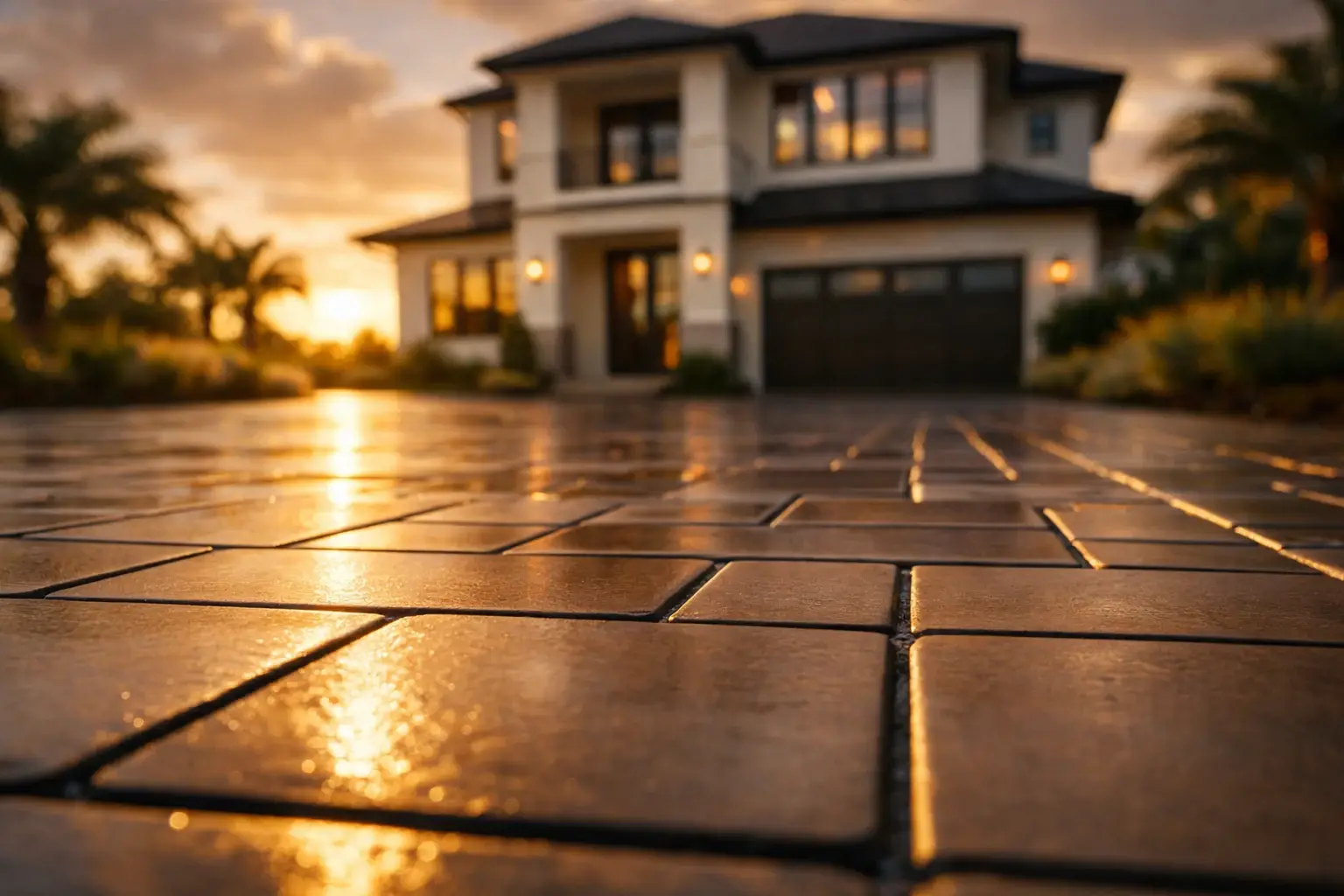
Concrete or clay paver. Surface-cleaner at moderate pressure (1,500–2,500 PSI), then re-sand joints with joint angular sand if jet washes joints out. Sealer assessed at close — see paver sanding & sealing.
Stamped Concrete
Patterned, integrally-colored concrete. Pressure capped at 1,500 PSI — never surface-cleaner directly on stamped color. Hypo + soft brush, low-pressure rinse. Color sealer reapplied as needed.
Exposed Aggregate
Pebble-style decks with aggregate exposed at the surface. Surface cleaner OK at moderate pressure but never wand work — the variable pressure pits the cement matrix between aggregates.
Kool Deck
Acrylic-cement coating on concrete. Pressure capped at 1,000 PSI — Kool Deck is shockingly fragile. Hypo + manual brush. Damaged Kool Deck typically needs a refresh recoat.
Plain Concrete
Standard concrete pool decks (often older homes) get treated like driveways — surface-cleaner pass at full pressure, post-treat for organic stains, optional sealing afterward.
What Most Pool Decks Need
Three problems show up on almost every deck.
Mildew & Algae Bloom
Shaded poolside walls + high humidity = algae growth in the textured surface. Chemistry kills it; pressure alone moves it.
Calcium & Pool-Chemistry Splash
Pool water chemistry — chlorine, calcium, salt — splashes onto deck and dries with mineral residue. Light acid wash on tolerant substrates only; pH-neutral approach on travertine.
Sealer Failure
If the deck was previously sealed and the sealer is peeling, milky, or worn, cleaning is only half the job — see sanding & sealing for strip + reseal options.
Pricing
Pool deck cleaning starts at a property-specific proposal
We set the standard. We will not be the cheapest. The right scope is established on the property, then written around its material, condition, access, and the level of care it deserves. Request your quote.
Common Questions
What pool-deck owners ask.
Will pressure damage my travertine?
High pressure will. Travertine is calcium-based and porous — a 3,500 PSI surface cleaner pits the surface and exposes the unsealed cells beneath. We work travertine at under 1,500 PSI with chemistry-led cleaning, then we recommend re-sealing afterward to restore the color and protect against future bloom.
Should I seal my deck after cleaning?
For travertine and pavers — yes. A breathable sealer protects against staining, slows bloom return, and richens the color. We typically clean and seal in two visits scheduled 5–10 days apart so the substrate fully dries before sealing. See sanding & sealing for the full sealer playbook.
My deck is cracking — does cleaning fix that?
No. Cleaning + sealing slows further degradation but doesn't repair structural damage. We'll flag any cracks on the walkthrough and refer you to a hardscape contractor for repair work. We can clean the deck before or after the repair depending on sequence.
How often should I clean my pool deck?
Once a year for most homes. Decks under heavy oak canopy or near brackish-water canals trend toward twice yearly. The annual exterior plan handles cadence; many estate clients book quarterly.
Ready When You Are
Right pressure, right chemistry, right substrate.
The Gold Standard, Every Time.