
Travertine sealing, done the way the stone was made for.
Travertine is calcium carbonate — a beautiful, breathable, naturally porous stone that needs the gentlest chemistry, the lowest pressure, and a stone-safe penetrating sealer. We seal travertine pool decks, lanais, patios, and walkways across Northeast Florida using ICPI-aligned methodology and a manufacturer-aligned product system. Five-year protection. Fully guaranteed.
Calcium-based stone needs calcium-safe chemistry.
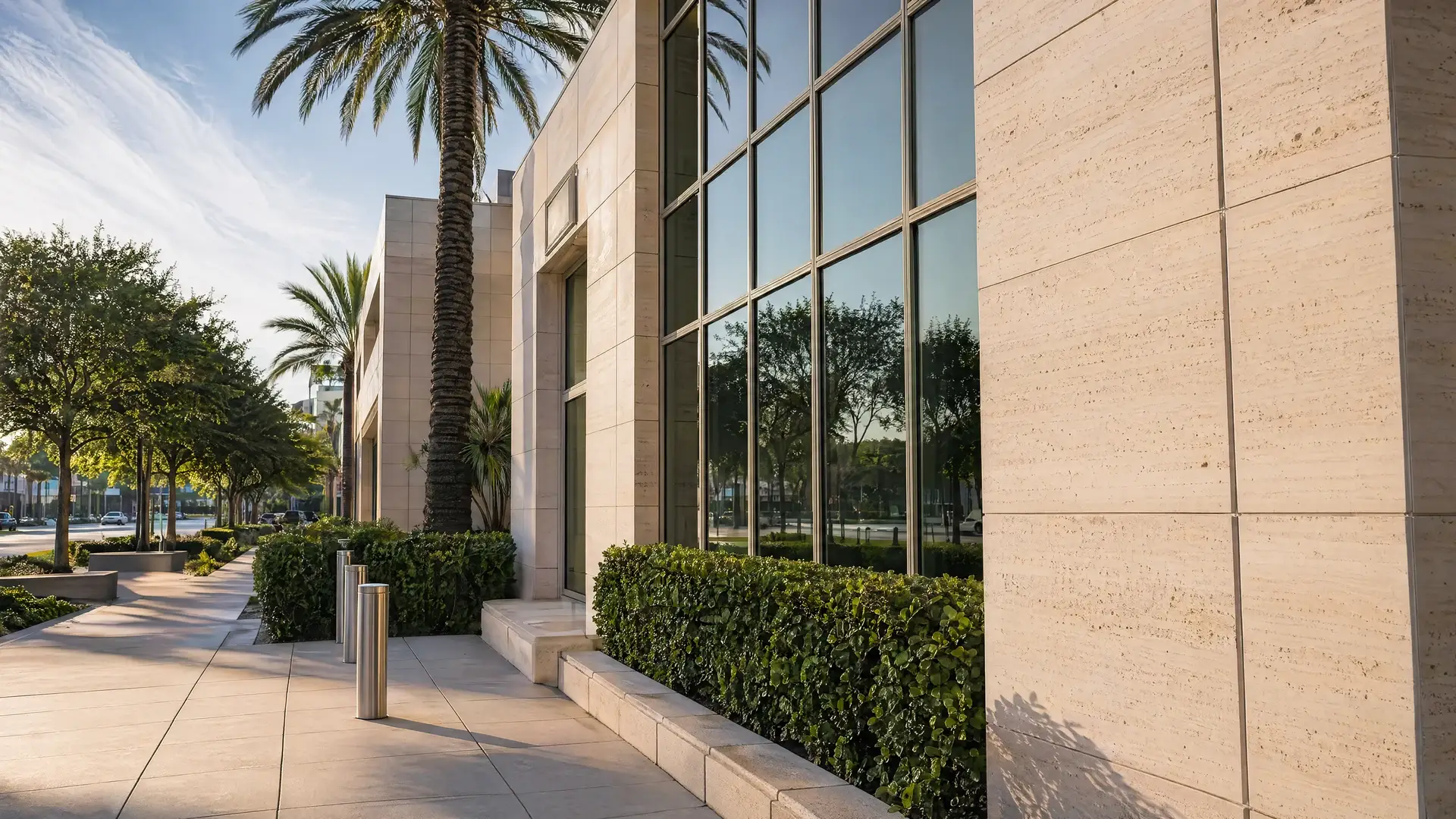
Travertine is the most common natural-stone hardscape in Northeast Florida pool decks because it stays cool underfoot, drains well through its natural porosity, and ages beautifully under proper care. But that same porosity is what makes it failure-prone in the hands of a contractor who treats it like a paver. Travertine etches under acid (which dissolves the calcium structure), spalls under high-pressure cleaning (which fractures the surface layer), and traps moisture under non-breathable sealers (which causes blistering and milky haze within months). FCPE’s travertine protocol uses pH-buffered cleaners exclusively, soft-wash equipment under 1,200 PSI, and a breathable penetrating sealer that locks pigment without sealing the stone’s natural pores shut.
Eight days. One surface. Done right.
Same process for every material we seal — with material-specific chemistry adjustments at the prep, strip, and seal stages. Read the full process →
Assess
Walk-through, surface ID, sealer-presence test.
Prep
Pre-soak, joint-sand removal, stain treatment.
Strip
If previously sealed: solvent strip, neutralize.
Dry verify
Moisture meter readings, hot-mop if humid.
Joint sand
Joint angular sand supports stable drainage and a consistent finish.
Seal
Two-coat breathable, perpendicular passes.
Cure
Foot 4–6 hr / vehicle N/A / pool reentry 48 hr / full cure 72 hr.
Guarantee
Workmanship + sealer-failure callback.
What we do that nobody else does on travertine.
Travertine arrives from quarry with natural surface holes (the “honed-and-filled” finish you see in 90% of FL pool decks). Over time, the original cementitious fill cracks, falls out, or stains differently than the surrounding stone. Before sealing, we identify every failed fill, document the count, and offer fill-restoration as an add-on. Sealing over failed fills locks the failure in place — we’d rather restore them first.
Travertine etches under any cleaner with pH below 6 or above 9. We use pH-neutral biocide for organic kill, pH-buffered detergent for grease and traffic film, and oxygen-bleach (never chlorine) for stain treatment. After cleaning, we monitor surface pH with test strips to confirm we’ve neutralized any residual chemistry before drying.
Wand-cleaning travertine creates “orange-peel” surface texture — thousands of tiny fractures from impact pressure. Permanent. Visible. Once the stone is fractured, no sealer can hide it. We use soft-wash equipment exclusively on travertine, under 1,200 PSI through fan-tip nozzles, with chemistry doing the cleaning work, not pressure.
Travertine should be sealed with a penetrating sealer that absorbs into the stone matrix and locks pigment from below the surface, not a topical film that sits on top. Topical sealers on travertine create the failure mode you’ve seen on neighbors’ pool decks: glossy plastic look, milky haze when humidity rises, peeling at the corners. Our penetrating system enhances color slightly without changing the natural matte finish — the stone still looks like stone.
Travertine is naturally slip-resistant when properly maintained, but a wet-look sealer can compromise that — and most pool deck installations are in zones where slip resistance matters legally and practically. We default to a satin-finish penetrating sealer (no slip change), or apply a clear anti-slip aggregate to the second coat for projects where you want a slight wet-look enhancement without the slip risk.
Five things our crews do that nobody else does
Joint angular sand
ICPI-aligned silica that locks joints with controlled drainage and long-term stability.
Two-coat breathable
Penetrating base + finish film, perpendicular application. One-coat work fails.
Hot-mop dry
Moisture meters and propane surface dryers. We verify dry before we seal.
ICPI-aligned method
Process follows the Interlocking Concrete Pavement Institute’s published guidelines.
Photo-documented
Before/during/after photos and warranty paperwork in your project folder.
More from the FCPE Sanding & Sealing family
Tell us your hardscape. We’ll tell you the investment.
Sqft, surface type, current condition. We come back with a fixed-price proposal — no estimator games, no day-of upcharges.
Request a Consultation Call (904) 466-1622The Gold Standard, Every Time.