
Paver Care,
Engineered to Last.
Three Quiet Failures. One Correct Answer.
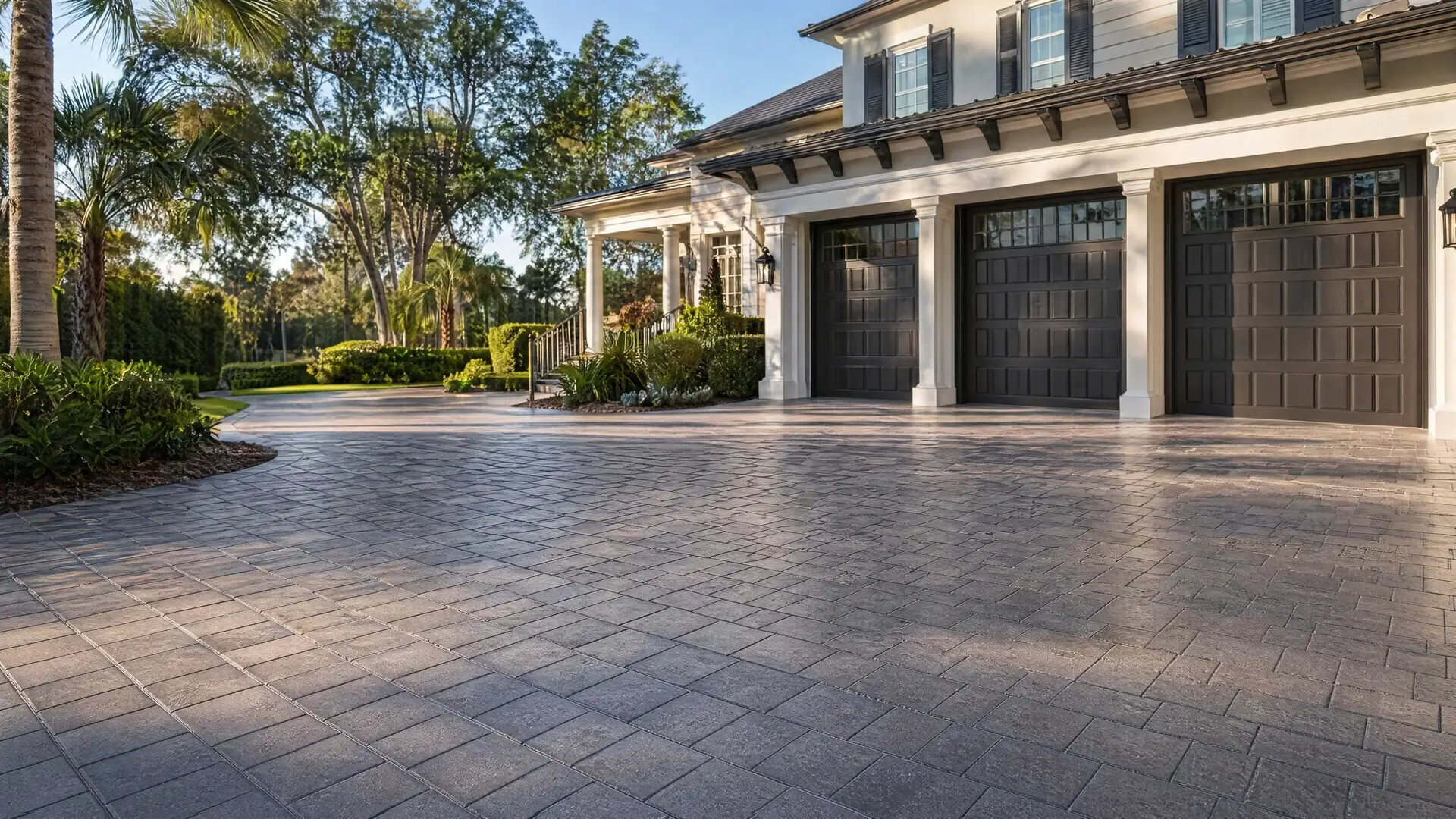
A paver driveway, walkway, or pool deck rarely fails all at once. It fails slowly — one wet season, one rinse, one summer at a time — until the surface you once loved reads tired from the street. The causes are nearly always the same three.
- 01 Sand LossRain, irrigation, and routine cleaning wash joint material out. Pavers begin to shift. Weeds move in because the joints are no longer full.
- 02 Biological GrowthOur humidity hosts algae, moss, and mildew. They root into compromised joints and pit the paver face.
- 03 UV FadeFlorida sun bleaches concrete and clay paver pigment. Without a penetrating sealer, color drifts toward chalk within a few seasons.
Why We Install Joint Angular Sand.
The single most important decision on a paver project is not the sealer — it is the sand. The wrong material locks moisture beneath the surface, traps efflorescence, and fails in ways you cannot see until the damage is permanent. We install joint angular sand on every paver we touch. Here is why it is the only material we trust with your home.
Mechanical Lock
Angular grains interlock under compaction. Round-grain sands slip under load and wash out. Angular sand holds the joint tightly, visit after visit, season after season — a behavior documented in industry-grade paver joint-stabilizer specifications.
Washout Resistance
A properly compacted angular joint stands up to pressure washing, heavy rain, and the pool decks that get rinsed weekly. The joint stays full — which is what keeps pavers from moving.
Supports Proper Drainage
Pavers are engineered to let water pass through the joints to the base below. Angular sand preserves that drainage path, keeping the sub-base dry and the pavers stable.
Breathability
Sealed paver systems need to release moisture from below. An angular-sand joint breathes — which is why you do not see efflorescence clouding, white haze, or sealer failure six months after the work is done.
Other contractors may recommend a harder jointing material that sets like mortar. We have seen what it does to pavers three, five, seven years later — trapped moisture, cracked joints, sealer delamination, and restoration work that costs more than the original install. On your home, we use joint angular sand. Always.
Five Steps. No Shortcuts.
Paver sanding and sealing is not a single visit — it is a sequence. Each step depends on the one before it being done correctly. This is exactly how we work every driveway, walkway, and pool deck in our care.
-
Step 01
Low-Pressure Wash & Biological Treatment
We open the joints, lift embedded soil, and apply a targeted biological treatment to kill algae, moss, and mildew at the root. Pressure is calibrated to the paver — never aggressive enough to scour the face.
-
Step 02
Full Dry — A Full 48 Hours
Pavers and their bases hold moisture far longer than the surface suggests. We allow the system to fully release that water before sand installation, based on weather, shade, and material conditions. Shortcut this step and the sealer will fog within weeks.
-
Step 03
Joint Angular Sand Installation
Sand is installed and compacted to full joint depth in measured passes. Compaction, not appearance, determines whether the joint holds — so we compact, top off, and compact again until the joint is engineered-tight.
-
Step 04
Broom Sweep & Detail Blow
Every surface grain is removed before sealer touches the paver. A single stray grain caught under sealer becomes a permanent blemish. We broom, we blow, and we inspect one last time — on hands and knees if the light requires it.
-
Step 05
Two-Coat Penetrating Sealer Application
We apply a manufacturer-aligned penetrating sealer in two methodical coats. The first binds the joint and primes the paver. The second locks color, blocks UV, and repels moisture — without the plastic sheen that cheaper topical sealers leave behind.
Three To Five Years. Longer Under Screen.
A correctly sanded and sealed paver surface holds color, joint, and traction for three to five years on open driveways and walkways — and often longer on screened-in lanais, covered walkways, and shaded pool surrounds that are spared direct sun. When the sealer eventually tires, a restoration visit re-opens the system and resets the clock. You should never need to replace the pavers themselves.
Five Layers. One Surface That Holds.
A sealed paver looks like a single decision. It is five — subgrade, base, bedding sand, joint sand, and sealer film. Each layer holds the one above it. Get the bottom wrong and the top will tell on you within a year.
Why the joint matters most
The joint is where pavers transfer load to each other. Joint angular sand interlocks under traffic; hardening additive sand crusts and voids in Florida heat. Voids let the surface shift. Once it shifts, the seal cracks.
Why two coats of sealer
First coat penetrates the paver and binds the joint sand from above. Second coat builds the protective film. One coat without the other is half a job — and most jobs you see are exactly that.
Why the base wins long-term
Pavers that sink, tilt, or wave aren’t a paver problem — they’re a base problem. We can’t fix bad base from the top. We can document it before sealing so you know what you’re paying for.
Priced Openly. Quoted As One Number.
We set the standard. We will not be the cheapest. The right scope is established on the property, then written around its material, condition, access, and the level of care it deserves. Request your quote.
Half of the project is collected as a deposit to reserve your install window and order sand, sealer, and site materials. The balance is due at completion, after your final walkthrough.
Where a project lands depends on the paver material, surface condition, staining, joint depth, and pool-deck complexity — and above all on how much failed sealer has to come off, which is why we will not price a reseal from a photograph. Your estimator confirms the final number on site after measuring and inspecting the hardscape.
The FCPE 5-Step Paver Restoration Process for Northeast Florida
NE Florida's humidity, salt air, and subtropical rainfall create specific challenges for paver sealing. FCPE's process:
- High-pressure pre-clean to strip organic growth common in humid climates.
- Joint inspection — if sand is displaced, joint angular sand is packed and compacted before any sealer is applied.
- 24–48 hour cure window before sealer application.
- Single-direction wet-edge sealer roll to prevent lap marks.
- 72-hour cure verification before vehicle traffic.
The joint angular sand step — omitted by most contractors — is what separates a seal that lasts three years from one that fails in the first rainy season. This is non-negotiable on every FCPE paver project. This method is applied identically on projects in Nocatee, Ponte Vedra Beach, and throughout our sanding and sealing service area.
Regular Pavers vs. Natural Stone: Different Sealers, Different Science
Not all paver surfaces take the same sealer. Concrete pavers (the most common in Nocatee and Ponte Vedra subdivisions) use a penetrating acrylic or polyurethane sealer that enhances color without film buildup. Natural stone pavers — travertine, limestone, flagstone — require a penetrating, non-film-forming sealer that does not trap moisture below the surface.
Applying a film sealer to travertine is the single most common mistake in NE Florida, resulting in milky whitening and efflorescence within one wet season. FCPE stocks and applies only material-appropriate sealers on every project.
Local Evidence: What FCPE Paver Projects Look Like in St. Johns County
The majority of FCPE paver sealing projects are in St. Johns County, where HOA standards require clean, consistent hardscape appearance and where salt-air from the Intracoastal accelerates sealer breakdown. Typical driveway project: 1,200–1,800 square feet. Typical pool deck: 400–800 square feet. Typical turnaround time: one day for prep, one day for seal, 72-hour cure. Most of our recurring sealing clients reseal every three to five years — faster if the property is directly on the water.
Paver Sanding & Sealing: Questions We Hear Every Week
- How long does paver sealing last in Florida's climate?
- In NE Florida's subtropical conditions, a quality penetrating sealer applied over correctly packed joint angular sand typically lasts three to five years. Properties with direct water or ocean exposure (Ponte Vedra Beach oceanside, Marsh Landing, Sawgrass) see faster degradation and often need resealing every 3–5 years.
- Do I need to strip the old sealer before resealing my pavers?
- Only if the existing sealer is failed, milky, or peeling. A standard-wear sealer (faded color, minor whitening at joints) can be cleaned and recoated. A film-forming sealer that has cracked or trapped moisture requires stripping before new sealer is applied — attempting to seal over it will lock in the failure. FCPE assesses every surface before quoting to give you an honest answer.
- Does FCPE use joint angular sand?
- FCPE uses joint angular sand exclusively. It compacts correctly under foot and vehicle traffic without creating a brittle top crust, which allows for natural thermal expansion of the paver surface. Hardening joint products can crack during Florida's seasonal temperature swings, creating new joint gaps within 12–18 months.
Bring Your Pavers Back.
Send us a few photos and the approximate square footage. We will bracket the work within the hour during open hours.
Request a Consultation →The Difference Between Sealed and Sealed Right.
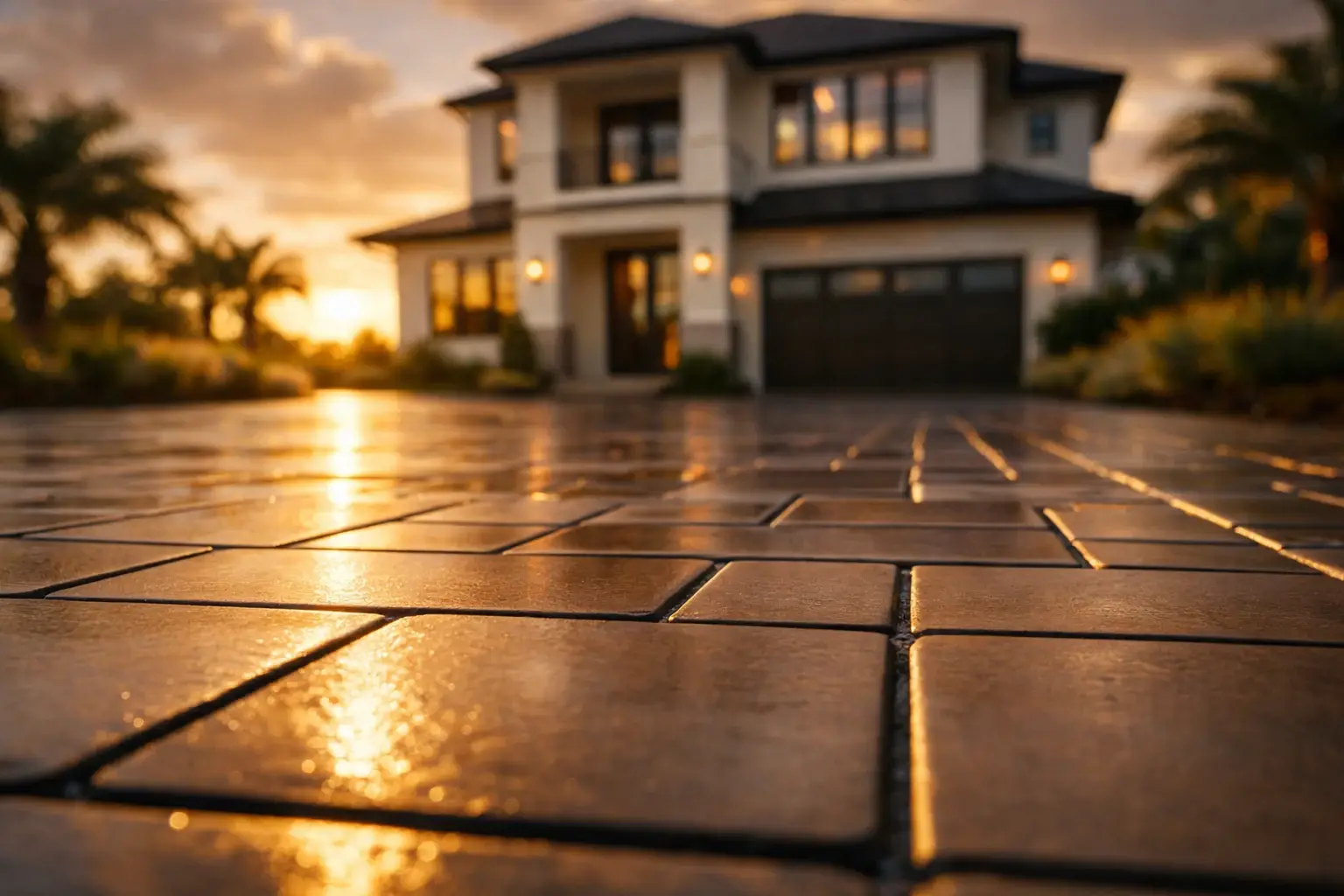
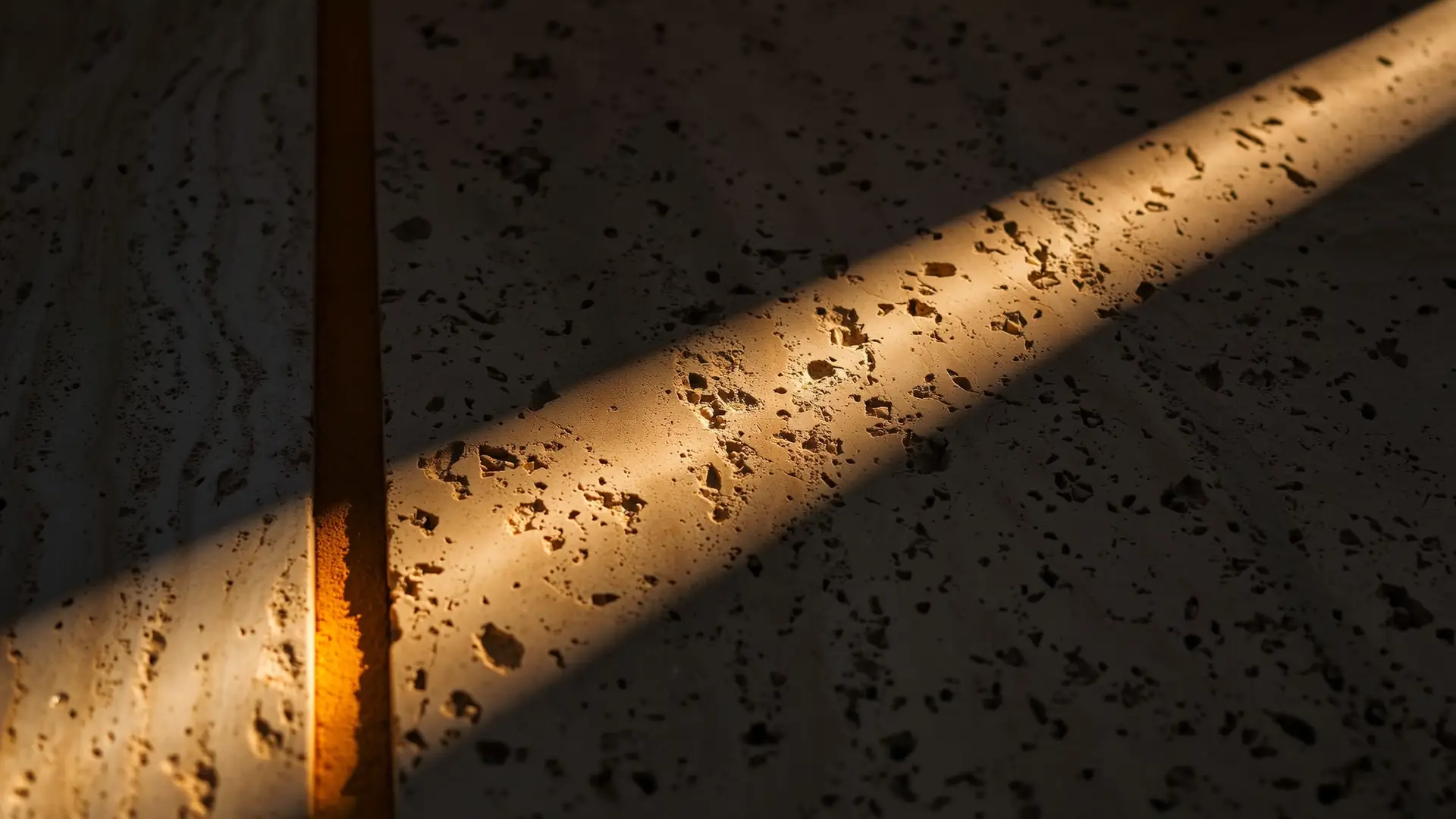
Two driveways look the same on day one. By month eighteen, one has joints holding firm and color reading rich; the other has weed lines, washout, and a milky film. The variable isn’t time — it’s joint angular sand, sealer chemistry, and prep discipline. Below: travertine at golden hour, the joint glowing where the sand was packed correctly.
Contractor Vetting
What to ask your paver contractor before sanding or sealing
Florida heat, humidity, organic growth, irrigation, and storm wash-out expose weak prep fast. These five questions separate a surface-level sealing job from a real restoration process.
Do you use hardening joint sand or joint angular sand?
Red flag: hardening joint sand in Florida joints. FCPE specifies joint angular sand because compacted angular grains interlock mechanically, drain predictably, and avoid the brittle crust-and-void failure that humid pool decks and driveways expose.
What sealer grade do you use, residential or commercial?
The answer should be a professional-grade penetrating or breathable sealer matched to the surface, not a one-product answer for every patio, driveway, and stone deck.
Do you clean before sealing, or seal over dirt?
A quality sealing process starts with full cleaning, surface prep, and dry-time verification. Sealing over organic film traps the failure beneath the finish.
What is your process for stripping failed sealers?
Failed coatings need removal, neutralization, and moisture control before new sealer is applied. Skipping the strip is how whitening, peeling, and trapped haze come back.
What is your guarantee policy?
Ask what is covered, what voids coverage, and what proof photos or prep documentation they keep. Vague guarantees usually mean vague process control.