
Paver Sealing in Ponte Vedra, FL — First Coast Property Experts
Walk any street on the inland side of Ponte Vedra — through the newer villages off Nocatee Parkway or down toward Palm Valley — and you are walking on pavers. Driveways, walkways, lanais, pool surrounds: this part of St. Johns County was built on them. What the builder rarely mentions at closing is that the sand between those pavers starts leaving with the first rainy season, and the factory-fresh color starts fading the first summer. First Coast Property Experts completes what the builder started: a deep clean, joints rebuilt with true angular sand, and a two-coat breathable sealer that keeps a Ponte Vedra driveway looking like the neighborhood it lives in.
Geography first, since the name gets borrowed: this page is for inland Ponte Vedra — the preserve-and-lagoon side. Homes east of the Intracoastal are covered on our Ponte Vedra Beach paver sealing page, where salt air changes the conversation.
The Life of an Unsealed Ponte Vedra Driveway
- Year one to three: the joints thin out. Builder-installed joint sand is the first casualty of our summer storm pattern. Once it drops below the chamfer line, water moves freely through the joints, the bedding washes, and individual pavers begin to rock underfoot.
- The sprinklers leave their signature. Much of inland Ponte Vedra irrigates from wells, and iron-rich water paints orange arcs across unsealed pavers — stains that soak into open pores and refuse ordinary cleaning.
- Shade grows things. Preserve edges and maturing street trees put lanais and north-facing walkways in shadow, where mildew films the surface and greens the joint lines.
- Sun takes the color. The exposed apron of the driveway fades first, and the contrast with the garage-shaded section becomes the first thing you notice every time you pull in.
Sealing does not just pause this sequence — done properly, it reverses the visible part and locks the structure in place.
Polymeric Sand Versus Joint Angular Sand — the Honest Version
You will hear polymeric sand recommended often; it is the default in much of the industry. We take the opposite position, on evidence: in Northeast Florida’s heat and humidity, polymeric sand hazes paver faces during install, crusts and cracks as pavements flex, traps moisture in the joint, and eventually washes out through its own fractures. We have stripped enough failed polymeric joints to make our choice permanent — FCPE does not install it.
What we install is joint angular sand consistent with ASTM C144 — sharp, clean grains that interlock mechanically under compaction and then get stabilized by the sealer itself. The joint stays flexible, drains properly, and holds. It is the system interlocking pavement was designed around, and the deeper technical case is in our ASTM C144 joint sand guide.
The Sealer: Breathable, Two Coats, Two Finishes
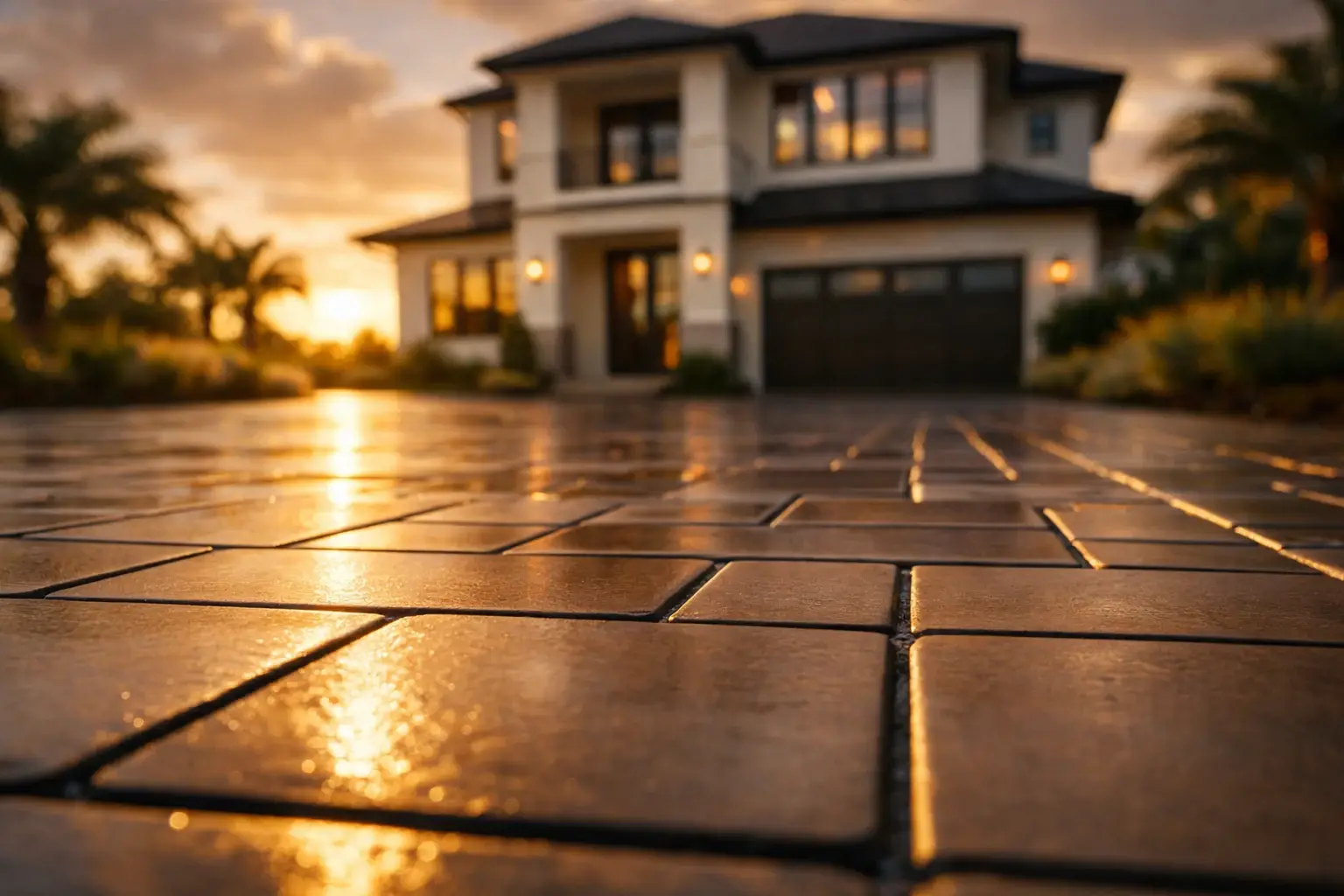
Ponte Vedra’s high water table and pond-laced ground make breathability essential. A film-forming sealer traps rising moisture and blushes white — the hazed driveways you occasionally see around the area are exactly that failure. Our two-coat penetrating breathable sealer bonds within the paver, lets water vapor escape, locks the fresh joint sand, and deepens or preserves color depending on the finish you choose: Wet Look for that rich just-rained tone, or Natural Matte for protection you cannot see. Pool decks and lanais get a traction additive on request. The product philosophy is explained in our breathable versus film-forming guide.
Our Process, Start to Finish
Consultation
We review the surface in person — condition, joints, staining, any prior sealer, drainage — and give you one firm written price for the complete scope. Nothing is estimated from the curb.
Deep clean
Down to sound, bare paver: mildew, organics, irrigation rust addressed, and failed joint material cleared.
Efflorescence treatment
Where the white mineral bloom shows — common near ponds and low ground — it is neutralized first, never sealed over.
Joint rebuild
Angular sand installed and consolidated until every joint is full and tight.
Seal and cure
Two coats, weather-windowed. You will have foot traffic back in about two days and vehicles in about three, with exact guidance and photographs when we hand the surface back.
What Moves the Number
Surface condition, the extent of staining and joint loss, whether a previous sealer must be stripped, and the finish you select — those, not a formula, set the scope. Remediating someone else’s failed sealer is real restoration work and is scoped on site as part of the consultation. Your figure arrives in writing, covers everything, and does not move. For the fuller picture of what drives paver sealing projects across the region, see our Northeast Florida cost guide.
The Tells on a Ponte Vedra Driveway
Because most surfaces here started identical, deviation is easy to spot once you look for it:
- The apron-versus-garage contrast. Compare the sun-baked end of the driveway with the section the garage shades: if they are two different colors, the exposed pigment is fading and the clock is running.
- Joints below the chamfer. When you can see the full bevel of every paver edge, the sand has dropped — interlock is weakening and storm water is working on the bedding.
- Orange arcs that no longer rinse off. Well-water irrigation stains that have moved from the surface into the pores — treatable now, stubborn later.
- A soft green film on the shaded walk. The preserve side of the house grows it first; it is mildew colonizing open pores and joints, and it gets slick when wet.
- Ant hills rising between pavers. Open joints are excavation-ready; sealed, consolidated joints are not.
When Ponte Vedra Seals
The work needs dry pavers and a protected cure, so the calendar matters. Fall is the season we fill first — after the summer storm pattern fades, inland Ponte Vedra gets long, dry, mild stretches that suit the clean-treat-sand-seal sequence perfectly, and the driveway carries its refreshed finish into holiday hosting. Spring runs a close second, ideally after the pollen flush has been rinsed through the neighborhood. For new builds, the smart moment is early: once construction residue and first-season efflorescence have been dealt with, sealing in the first year or two locks the surface at its best. Summer projects simply get planned around the afternoon storms — the standard never changes, only the choreography.
Close to Home in St. Johns County
The Ponte Vedra service area anchors this work, alongside Palm Valley and the Nocatee villages — which have their own page at paver sealing in Nocatee. FCPE’s exterior disciplines cover the full three-county First Coast: St. Johns here, Duval through Jacksonville and the Beaches, and Nassau County north to Amelia Island and Fernandina Beach.
Ponte Vedra Paver Questions
Our home is new. Why does the driveway already need attention?
Because builders install pavers, not protection. The joint sand that came with the house washes down season by season, and unsealed pigment fades from the first summer. Sealing in the first few years locks the driveway at its best — it is easier to preserve new than to restore old.
Can you remove the orange irrigation stains?
In most cases, yes — rust treatment is part of the deep-clean stage, and the sealer then keeps new staining from soaking in. If your system still runs well water, expect surface rust to rinse off a sealed driveway rather than sink into it.
What is wrong with polymeric sand? Our neighbor’s installer swears by it.
In this climate: haze during installation, crusting and cracking as the pavement flexes, trapped moisture, and eventual washout through the cracks. Joint angular sand under a breathable sealer stabilizes the same joints without those failure modes. We name the product freely because the difference is the point.
How long will the sealing last here?
Typically three to five years, and often longer on screened lanais and covered entries where sun and rain reach less. Exposure sets the cycle; we will give you an honest cadence for your particular surfaces at the consultation.
Do you handle lanais and pool decks as well as driveways?
Yes — and they are often the most rewarding surfaces to do, because they live closest to your daily life. Traction additive for wet zones, finish matched to the space, and our pool deck restoration service for surrounds that need the full treatment.
Request a Consultation
First Coast Property Experts is family-owned, fully insured, and BBB A Rating, with more than a century of combined expertise behind every project — and honored as a 2026 Best of Florida Winner — Exterior Cleaning Services. Your streets set a standard; your driveway can meet it. The Gold Standard, Every Time.
Request a Consultation or call (904) 466-1622. Browse the sanding & sealing hub or the detailed paver sanding & sealing page.