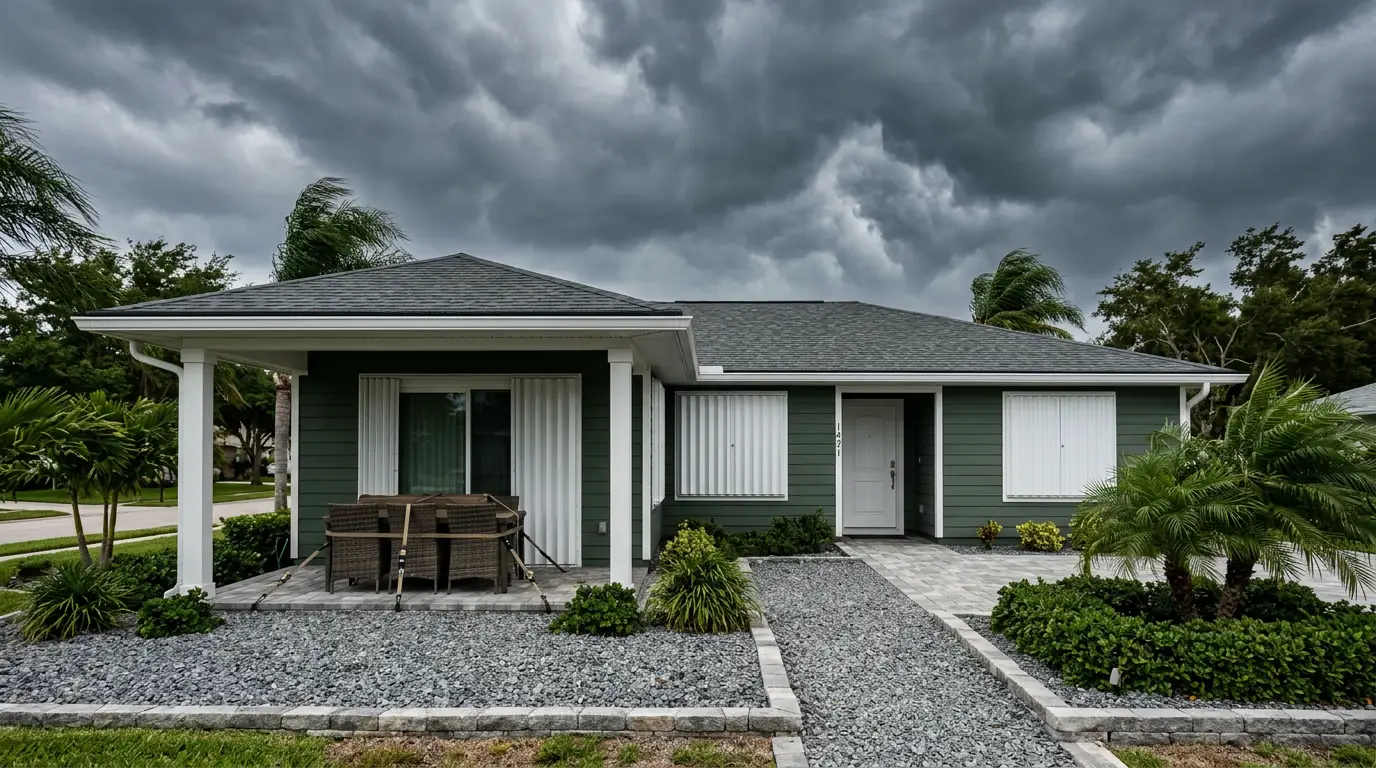
Hurricane Season Prep: Protecting Your Home’s Exterior
Last updated: April 2026 · First Coast Property Experts
June 1 marks the official start of Atlantic hurricane season, and in Northeast Florida, that date should prompt a specific set of actions on your home’s exterior. Most hurricane prep content focuses on the obvious — boarding windows, stocking water, knowing your evacuation zone. All critical. But your home’s exterior condition going into hurricane season determines how much damage a storm causes and how quickly you recover afterward.
A well-maintained exterior sheds water, resists wind-driven debris, and bounces back from a storm with minimal intervention. A neglected exterior absorbs water, conceals vulnerabilities, and turns minor storm effects into expensive repairs.
Here’s how to get your home’s exterior hurricane-ready, with a focus on what cleaning, maintenance, and inspection should happen before June 1.
Why Pre-Storm Cleaning Matters
Cleaning your home’s exterior before hurricane season isn’t about vanity. It serves three practical purposes:
1. Moisture Management
Biological growth — mold, mildew, algae, lichen , holds moisture against whatever surface it’s attached to. A stucco wall covered in mildew retains water longer during and after a storm than a clean wall. That retained moisture accelerates deterioration, promotes further growth, and can migrate inward through cracks and failing caulk.
A pre-season soft wash strips all of that growth and starts the season with clean, dry surfaces that shed water as designed.
2. Damage Detection
You can’t inspect what you can’t see. Months of biological growth, dirt, and staining hide cracks in stucco, deteriorated caulk, damaged flashing, loose siding panels, and other vulnerabilities that become serious problems during a storm. Cleaning the exterior first reveals what needs repair before the first tropical system spins up.
3. Post-Storm Documentation
If a storm causes damage and you file an insurance claim, having a clean, well-documented exterior before the storm establishes a clear baseline. Photos of a clean, maintained home before the storm contrasted with damage photos after the storm make for straightforward claims. Photos of a home that was already dirty and deteriorated give adjusters room to argue that the damage predated the storm.
The Pre-Hurricane Season Exterior Checklist
Roof Inspection and Cleaning
The roof is your home’s primary defense against a hurricane. Everything that can go wrong in a storm goes worse if the roof is compromised.
- Clean the roof. Professional roof cleaning removes algae and debris that retain moisture and add weight. A clean roof also makes it possible to spot damaged, lifted, or missing shingles.
- Inspect shingles or tiles. Look for cracked, curling, or lifted shingles. On tile roofs, check for cracked or broken tiles. These are the first to go in high winds and create openings for water intrusion.
- Check flashing. Flashing around vents, chimneys, skylights, and where the roof meets walls is where most storm leaks originate. Loose or corroded flashing needs repair before June.
- Inspect the ridge cap. The ridge line at the peak of the roof is vulnerable to wind uplift. Ensure ridge cap shingles or tiles are secure.
- Examine soffits and fascia. Damaged or loose soffits allow wind to enter the attic space, which can pressurize and blow off the roof from the inside , one of the most common failure modes in hurricanes. According to the Federal Emergency Management Agency, maintaining the building envelope is one of the most effective ways to reduce hurricane damage.
Gutter and Drainage System
Hurricane rainfall is measured in inches per hour, not inches per day. Your drainage system needs to handle extreme volume.
- Clean gutters completely. Remove all leaves, pine needles, shingle granules, and debris. Florida’s live oaks and pines fill gutters year-round.
- Flush downspouts. Use a garden hose to run water through every downspout and confirm it flows freely. Clogged downspouts cause water to back up under shingles and overflow against the foundation.
- Check gutter attachments. Ensure every bracket and fastener is secure. Gutters that detach during a storm become heavy, swinging projectiles that damage siding and windows.
- Extend downspout outlets. Downspouts should discharge water at least 4-6 feet from the foundation. Add extensions if needed.
- Clear yard drainage. Swales, French drains, and catch basins should be free of debris and functioning. Test them with a hose before you need them.
House Exterior (Siding, Stucco, Paint)
- Soft wash the entire exterior. Remove all biological growth, dirt, and staining. This is both cleaning and inspection prep , once the house is clean, defects become visible.
- Inspect caulking. Every joint where different materials meet , windows to stucco, doors to trim, siding to soffits , should have intact caulk. Failing caulk allows wind-driven rain to enter the wall cavity. Re-caulk any gaps, cracks, or missing sections.
- Check for cracks in stucco. Even hairline cracks let water in during sustained heavy rain. Fill cracks with appropriate stucco patch or caulk.
- Tighten loose siding. Vinyl or fiber cement siding panels that are loose or improperly fastened can lift in high winds, exposing the wall underneath to rain.
- Inspect paint condition. Peeling or blistering paint indicates moisture problems underneath. These areas are vulnerable to further water intrusion during storms. Address them before hurricane season.
Windows and Doors
- Inspect weatherstripping on all exterior doors. Replace deteriorated seals. Florida heat and humidity break down weatherstripping faster than other climates.
- Check window seals. Run your hand around window frames and feel for air movement. Any gap that lets air through will let wind-driven rain through.
- Test hurricane shutters. If you have accordion, roll-down, or panel shutters, test them now. Corroded tracks, stuck panels, and missing hardware are better discovered in May than when a storm is 48 hours out.
- Clean window tracks. Sliding windows and doors with debris-clogged tracks don’t seal properly. Clean tracks and lubricate with silicone spray.
- Verify impact glass condition. If your home has impact-rated windows, inspect for cracks, seal failures, or frame damage.
Hardscaping and Outdoor Surfaces
- Pressure wash driveways, walkways, and pool decks. Clean hardscaping drains better than dirty hardscaping , biological growth and debris impede water flow across flat surfaces.
- Inspect paver joints. Full joint sand prevents pavers from shifting during flooding. If joints are low or empty, refill them with fresh joint angular sand before storm season.
- Seal pavers if due. Sealed pavers resist staining from storm debris, mud, and standing water. Sealed joints also hold up better against heavy rain washout. Schedule sealing before the rainy season makes the 48-hour cure window unreliable.
- Secure loose items. This is standard hurricane prep, but worth emphasizing: anything that isn’t bolted down is a projectile. Patio furniture, planters, decorative stones, and loose screens should have an interior destination when a storm threatens.
Trees and Landscaping
- Trim dead branches. Dead branches are the first to become airborne. Have an arborist remove deadwood from any tree within striking distance of your home.
- Thin dense canopy. Trees with dense canopies act like sails in high winds. Thinning allows wind to pass through rather than pushing against the entire canopy. The University of Florida IFAS Extension publishes detailed guidelines on hurricane-proofing trees.
- Clear debris from beds and yards. Rocks, mulch chunks, and loose landscaping materials become projectiles at high wind speeds.
- Check irrigation. Ensure the system is functioning properly. Broken heads that spray on the house add unnecessary moisture to the building envelope.
Screen Enclosures and Lanais
- Inspect screen panels. Torn or loose screens should be replaced before storm season. A failing panel can pull adjacent panels out during wind events.
- Check fasteners and frame connections. Screen enclosure frames are designed to flex in wind. Corroded or loose fasteners compromise the structure’s ability to handle wind loads.
- Clean the enclosure. Beyond maintenance, a clean screen enclosure is easier to inspect and gives you a clear view of conditions during and after a storm.
- Know your enclosure’s wind rating. Most screen enclosures in NE Florida are rated for 100-130 mph winds when properly maintained. Deferred maintenance reduces that rating significantly.
Timeline: When to Do What
Don’t try to do everything in one weekend. Spread the work across April and May:
| When | What |
|---|---|
| Early April | Schedule professional exterior cleaning (soft wash + pressure wash) |
| Mid-April | Coordinate a licensed tree service and landscaping cleanup |
| Late April | Gutter cleaning and drainage inspection |
| Early May | Paver sealing (needs 48hr cure before rain season) |
| Mid-May | Caulking, weatherstripping, and exterior repairs |
| Late May | Hurricane shutter test, supply inventory, final walkthrough |
Post-Storm: What to Do After a Hurricane
If a storm hits, exterior cleaning and assessment become immediate priorities:
- Document everything before cleaning. Walk the entire property and photograph all damage , roof, siding, windows, hardscaping, trees, fences. Date-stamp photos. This documentation is essential for insurance claims.
- Remove debris carefully. Don’t drag tree branches or debris across pavers or driveways , the scratches are permanent on sealed surfaces.
- Rinse salt from all surfaces. If the storm brought saltwater surge or salt-laden wind, rinse the entire exterior , siding, windows, screens, pavers, roof edges , with fresh water as soon as possible. Salt left on surfaces causes rapid corrosion and staining.
- Schedule a soft wash within 2 weeks. Storm debris, standing water, and salt deposits create an explosion of biological growth in the warm, humid post-storm environment. A prompt cleaning prevents staining and reduces long-term damage.
- Inspect drainage paths. Storms can shift grading, block drainage routes, and deposit debris in swales and catch basins. Ensure water drains away from your foundation.
Get Hurricane-Ready with First Coast Property Experts
We handle pre-hurricane exterior cleaning for homes across St. Johns, Duval, and Nassau counties. Our team provides soft washing, pressure washing, roof cleaning, gutter cleanouts, and paver sealing , everything your exterior needs before June 1.
May is our busiest pre-season month. Don’t wait until the first tropical disturbance appears on the radar. Call (904) 466-1622 or request a free estimate today. The Gold Standard, Every Time.