
Rust & Stain Removal
Professional-grade chemical treatment for rust, oil, and embedded stains on concrete, pavers, and hardscapes — restoring surfaces that pressure washing alone cannot fix.
Every stain has a chemistry — we match the right treatment to every one
Not all stains are created equal. A rust stain from well water irrigation requires a completely different chemical approach than an oil drip from a vehicle or a tannin stain from oak leaves. Using the wrong product — or relying on pressure alone — often makes the problem worse by driving the contaminant deeper into porous surfaces.
At First Coast Property Experts, we use the best stain removal chemicals available — professional-grade products that are not sold at retail stores. Each treatment is selected based on the specific stain type, surface material, and severity of the discoloration. When heat is needed to break down stubborn compounds like oil and grease, we bring hot water extraction to accelerate the chemical reaction and lift contaminants that cold water cannot touch.
From iron-rich Florida groundwater that feeds rust-colored streaks across driveways and walkways, to automotive fluids that bond into concrete pores, to organic tannins that leave dark outlines on every surface they touch — we have a targeted solution for each one.
Rust & Iron Stains
Orange and brown streaks from well water irrigation, sprinkler overspray, fertilizer with iron content, and metal furniture or planters leaving rust rings on concrete and pavers.
Oil & Grease
Motor oil drips, transmission fluid, hydraulic fluid, brake dust, and grill grease that penetrate porous concrete and pavers within hours of contact.
Organic & Tannin Stains
Dark outlines from oak leaves, berries, pine needles, algae, and other plant material that release tannins and pigments into concrete and stone surfaces.
Battery Acid, Tire Marks & Paint
Battery acid etching, rubber tire marks, fertilizer burns, and paint overspray that require specialized chemical treatment beyond standard cleaning methods.
Why stains won’t come off with regular pressure washing
Understanding the science behind embedded stains explains why chemical treatment is the only effective approach.
Chemical Bonding
Rust, oil, and tannin stains bond chemically to the minerals in concrete and natural stone. The stain becomes part of the surface at a molecular level, which is why scrubbing and rinsing have no effect.
Porous Absorption
Concrete, pavers, and natural stone are porous materials. Staining agents wick deep into the surface through capillary action, far below what any pressure washer nozzle can reach.
Pressure Pushes Deeper
High-pressure water without the right chemistry forces contaminants further into the pores of the material. This spreads the stain, making it larger and harder to remove with each failed attempt.
Chemical Treatment Works
Professional-grade stain removers break the molecular bond between the contaminant and the surface. Once the bond is dissolved, the stain can be rinsed away cleanly without damage to the material.
How professional stain removal works
A systematic approach that identifies the stain, selects the right chemistry, and delivers a clean surface without damage.
Stain Assessment
We identify each stain type — rust, oil, organic, chemical — and evaluate the surface material to determine the correct treatment product and method for each area.
Chemical Application
The appropriate professional-grade stain remover is applied directly to each stain. Rust removers, degreasers, tannin lifters, and alkaline cleaners are matched precisely to the contaminant.
Dwell & React
The chemical agent is given appropriate dwell time to react with and dissolve the molecular bond between the stain and the surface. Rushing this step reduces effectiveness significantly.
Hot Water Extraction
When needed for oil, grease, and stubborn embedded stains, hot water pressure is used to accelerate the chemical reaction and lift contaminants that cold water cannot remove.
Rinse & Neutralize
All treated areas are thoroughly rinsed and neutralized to remove chemical residue, protect the surface, and leave a clean, safe finish. Sealing is offered if requested for long-term protection.
Stain removal for every hardscape surface on your property
We match the chemical treatment and pressure settings to each surface material for effective results without damage.
Concrete Driveways
Poured concrete, stamped concrete, and exposed aggregate driveways with rust streaks, oil drips, tire marks, and embedded organic staining from years of exposure.
Brick & Concrete Pavers
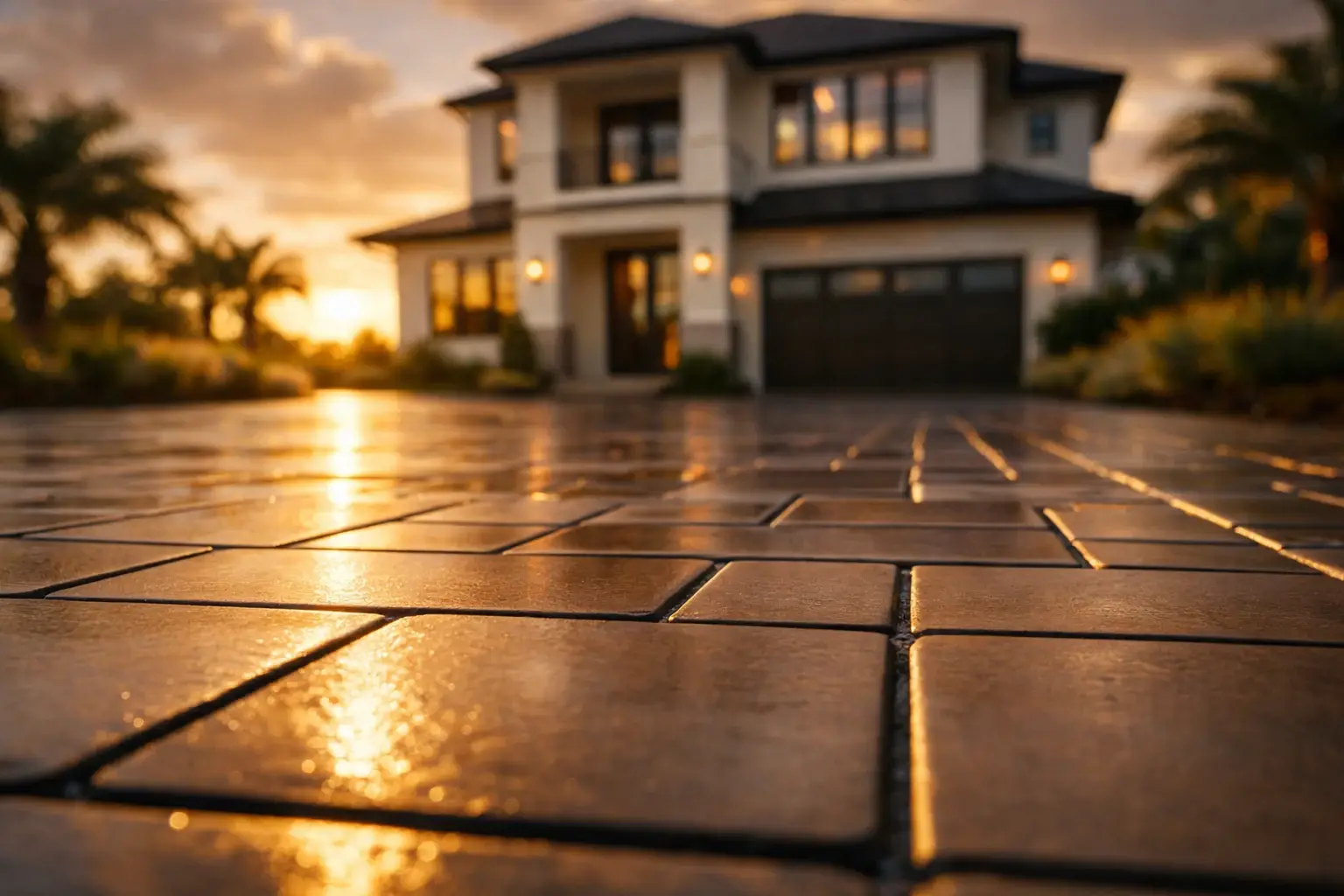
Interlocking pavers on driveways, walkways, patios, and pool decks that develop rust stains from irrigation, oil absorption, and organic discoloration between joints.
Pool Decks & Patios
Concrete, travertine, and cool-deck pool surrounds with rust rings from metal furniture, calcium deposits, sunscreen buildup, and algae staining.
Commercial Surfaces
Parking lots, loading docks, warehouse floors, sidewalks, and storefronts with heavy oil accumulation, rust staining, and high-traffic wear patterns.
Why rust stains are so common in Northeast Florida
If you live in Northeast Florida and have well water or an irrigation system, rust stains on your concrete and pavers are almost inevitable. Florida’s groundwater naturally contains high levels of dissolved iron. When this iron-rich water is sprayed onto hardscape surfaces by irrigation systems, the iron oxidizes on contact with air and bonds to the porous surface as visible rust staining.
Sprinkler heads that overshoot landscape beds and hit driveways, walkways, and pool decks are the number one cause of the orange and brown streaks Florida homeowners see on their concrete. The St. Johns River Water Management District reports that iron concentrations in local groundwater frequently exceed the levels that cause visible staining on surfaces.
Beyond irrigation, fertilizers with iron content leave burn marks and rust-colored residue on concrete wherever granules land. Metal patio furniture, planters, grills, and decorative items leave rust rings that worsen with every rain event. Each of these sources requires the same solution: professional-grade chemical treatment that dissolves the iron oxide without damaging the surface underneath.
Why bleach makes rust stains worse: This is the single most common DIY mistake we encounter. Homeowners spray bleach (sodium hypochlorite) on rust stains expecting them to lighten. The opposite happens. Bleach is an oxidizer — it adds oxygen to the iron molecules, which is the exact chemical reaction that created the rust stain in the first place. The result is a stain that turns darker, penetrates deeper into the porous surface, and becomes significantly harder to remove professionally. If you have rust stains, do not use bleach, chlorine-based pool chemicals, or any oxidizing cleaner on them. Call us first.
The FCPE rust removal process uses targeted chemistry matched to both the stain type and the surface material. For iron oxide (rust) stains on concrete, we apply oxalic acid or a professional-grade fluoride-based rust remover such as F9 BARC, which chelates the iron molecules and lifts them out of the pores without etching the concrete surface. On pavers, we adjust concentration and dwell time because the denser surface and joint sand require different handling. Stucco receives the gentlest treatment protocol since its porous cement substrate is sensitive to acid contact time. Pool decks demand careful attention to prevent chemical runoff into the pool water. After treatment, we neutralize the surface to stop the chemical reaction and flush residue thoroughly.
Preventing recurring rust stains: Treatment without addressing the source means the stains will return. We recommend adjusting irrigation heads so sprinkler overspray no longer hits hardscape surfaces, switching to a non-iron fertilizer (or a slow-release formulation that does not scatter granules onto concrete), placing protective pads under metal furniture legs, and applying a penetrating sealer after stain removal that creates a barrier making future stains easier to clean before they bond permanently.
Well Water Irrigation
High iron content in Florida well water oxidizes on contact with concrete and pavers, leaving orange and brown streaks wherever sprinklers overshoot landscape beds onto hardscape surfaces.
Fertilizer Iron
Lawn and landscape fertilizers containing iron leave rust-colored burn marks on concrete driveways, walkways, and curbs wherever granules land and dissolve in rain or irrigation water.
Metal Contact Stains
Patio furniture, planters, grill legs, metal decorations, and even nails or screws leave rust rings on concrete and pavers that deepen with every rain cycle and irrigation event.
Professional oil and grease removal from concrete and pavers
Hot water extraction and professional degreasing agents break down automotive fluids and cooking grease that cold pressure washing leaves behind.
Automotive Oil
Motor oil, transmission fluid, power steering fluid, brake fluid, and coolant leaks that drip onto garage floors and driveways and absorb into concrete within hours.
Hot Water Extraction
Oil and grease stains respond to heat. Hot water pressure washing breaks down petroleum compounds far more effectively than cold water, lifting stains that have been embedded for months or years.
Degreasing Agents
Professional alkaline cleaners and degreasing agents are applied before extraction to emulsify oil and grease, breaking them into particles small enough to be flushed from the concrete pores.
Lasting Results
Proper chemical degreasing combined with hot water extraction removes oil stains at the source rather than masking them. The result is a clean surface that stays clean, not a temporary improvement.
Stain removal for homes and businesses across the First Coast
The same professional-grade chemical treatments and hot water methods serve both residential properties and commercial facilities.
Single-Family Homes
Driveway rust stains, garage floor oil spots, patio furniture rings, and walkway discoloration that homeowners across Nocatee, Ponte Vedra, and St. Augustine want eliminated.
Commercial Properties
Parking lot oil stains, loading dock grease, storefront sidewalk discoloration, and warehouse floor buildup that affect the professional appearance of your business.
HOA Communities
Common area walkways, community pool decks, entrance features, and shared driveways with rust, oil, and organic staining that affect the entire neighborhood’s appearance.
Pre-Sale Preparation
Rust-stained driveways and oil-spotted garage floors are among the first things buyers notice. Professional stain removal delivers immediate curb appeal improvement before listing.
Why homeowners trust us with their toughest stains
A licensed, insured, family-owned team with the best stain removal chemicals available, hot water capability, and a proven reputation across the First Coast.
Best Chemicals Available
We invest in the highest-quality professional-grade stain removal products on the market — products that are not available at retail stores and deliver results that consumer-grade cleaners cannot.
Hot Water When Needed
Our equipment includes hot water pressure washing capability for oil, grease, and stubborn embedded stains that require heat to break down and extract from porous surfaces.
Family-Owned Accountability
You work with a local, family-run company that lives and operates in the same First Coast market it serves. Communication stays direct, fast, and accountable.
Written Scope First
Pricing and scope are clarified up front so expectations, stain types, surface coverage, and scheduling are aligned before any chemicals or equipment touch your property.
Stain-Specific Approach
Every stain type requires a different chemical treatment. We identify the contaminant, select the right product, and apply the correct method rather than using a one-size-fits-all approach.
Insured — COI Available
For homeowners, property managers, and HOA boards who need documentation, a certificate of insurance can be provided on request before work begins.
One Standard, Full Exterior
Stain removal can be combined with driveway cleaning, paver sealing, pool deck cleaning, softwashing, and any other exterior service under one coordinated scope.
5-Star Momentum
Consistent five-star reviews, a growing referral base, and verified trust credentials reflect the standard clients experience on every stain removal service.
What homeowners say about our stain removal work
Real feedback from First Coast families who trust us with their toughest rust, oil, and embedded stain challenges.

Meet the Logan family behind First Coast Property Experts
When Ponte Vedra Connection featured the Logan family, it highlighted what clients already knew — FCPE is a local, family-run company built on hands-on accountability and premium workmanship.
From stain removal and driveway cleaning to roof care, softwashing, and full-property maintenance programs, the same family-owned commitment that earned the feature drives every service we deliver across the First Coast.
Industry Standards & Resources

Give the gift of a gold-standard clean
Surprise a homeowner, new neighbor, or loved one with a First Coast Property Experts gift card. Available in any amount and redeemable for any service we offer — from stain removal to full-property exterior cleaning and paver restoration.
Order online and we’ll email a digital copy or mail a physical card — directly to you or straight to whoever you’re gifting.
Rust & stain removal questions, answered clearly
The answers homeowners ask most before scheduling a stain removal service with First Coast Property Experts.
Why does bleach make rust stains worse?
Bleach (sodium hypochlorite) is an oxidizer — it adds oxygen to iron molecules, which is the exact chemical reaction that creates rust in the first place. When you spray bleach on a rust stain, you are accelerating the oxidation process, driving the iron deeper into the porous surface and turning the stain darker. This makes the stain significantly harder to remove professionally. Never use bleach, chlorine-based pool chemicals, or any oxidizing cleaner on rust stains. The correct approach uses a reducing agent (like oxalic acid) or a chelating agent (like F9 BARC) that removes oxygen from the iron and lifts it out of the surface.
Are different surfaces treated differently for rust removal?
Yes. Poured concrete, pavers, stucco, and pool decks each require a different approach. Concrete can tolerate stronger acid concentrations and longer dwell times. Pavers need careful attention to protect the joint sand from chemical washout. Stucco is a porous cement substrate that is sensitive to acid contact time and requires diluted solutions with shorter dwell periods. Pool decks demand precise chemical containment to prevent runoff into pool water. FCPE assesses the surface material and stain severity during our estimate and selects the exact product, concentration, and dwell time for your specific situation.
What are the most common causes of rust stains in Northeast Florida?
The number one cause is well water irrigation — Florida groundwater contains high levels of dissolved iron that oxidizes on contact with air when sprinklers overshoot landscape beds onto driveways, walkways, and pool decks. Iron-based lawn fertilizer is the second most common source, leaving rust-colored burn marks wherever granules land on concrete. Metal patio furniture, planters, grills, and decorative items leave rust rings that worsen with every rain event. Battery acid from golf carts and vehicles also creates orange-brown staining on garage floors and driveways.
Can you remove rust stains from my driveway caused by well water?
Yes. Rust stains from well water and irrigation systems are one of the most common calls we receive in Northeast Florida. We use professional-grade rust removal chemicals that dissolve the iron oxide staining at the molecular level without damaging the concrete or paver surface. Most well water rust stains can be fully eliminated or dramatically reduced in a single treatment.
Why won’t my rust stains come off with regular pressure washing?
Rust stains bond chemically to porous surfaces like concrete and pavers. Pressure alone cannot break that molecular bond — it only pushes the stain deeper into the pores. Effective rust removal requires a chemical agent that reacts with and dissolves the iron oxide before the surface is rinsed. Without the right chemistry, no amount of water pressure will remove the stain.
Can you remove old oil stains from my garage floor or driveway?
Yes. We use professional degreasing agents combined with hot water extraction to break down and lift oil, transmission fluid, and other automotive stains from concrete. Fresh stains respond best, but even older, set-in oil stains can be significantly improved or fully removed with the right pre-treatment and cleaning method.
What types of stains can you remove from concrete and pavers?
We treat rust stains from irrigation and well water, oil and grease from vehicles, organic stains from leaf tannins and berries, battery acid marks, fertilizer burns, tire marks, and paint overspray. Each stain type requires a different chemical approach, and we select the appropriate professional-grade product for the specific contaminant and surface material.
Will stain removal chemicals damage my pavers or concrete?
No. The professional-grade products we use are formulated to target specific stain types without etching, discoloring, or damaging the underlying surface. We assess the surface material and stain type before selecting the appropriate treatment, and we neutralize the area after treatment to ensure no chemical residue remains.
How do I prevent rust stains from coming back?
Recurring rust stains are usually caused by irrigation water with high iron content hitting concrete or paver surfaces. We recommend adjusting sprinkler heads to avoid overspray onto hardscapes, installing an iron filter on your well water system, and applying a protective sealer after stain removal to create a barrier that makes future stains easier to clean.
Complementary services to consider
Pair stain removal with these related services for a comprehensive exterior restoration under one coordinated scope.
Get Estimate
Tell us about the stains on your concrete, pavers, or hardscape surfaces — what type of stain, how long it has been there, and what surface material is affected. We will respond with a clear written scope and transparent pricing — no pressure, no surprises.
Serving St. Johns County, Duval County, Nassau County, and communities across the First Coast with premium interior and exterior property care.
Exterior Vetting
What to ask your exterior cleaning contractor
Exterior cleaning around Northeast Florida homes requires the right method for each surface, not one pressure setting for everything.
When do you soft wash versus pressure wash?
Siding, stucco, painted trim, screens, and roofs need soft washing. Concrete and some hardscape can handle controlled pressure when the operator knows the surface.
How do you protect plants, pools, and runoff paths?
Ask about pre-wetting, controlled application, rinsing, and water movement around landscaping, pool decks, and drainage areas.
What chemistry do you use for organic growth?
The answer should be specific to algae, mildew, tannins, rust, or irrigation staining. One generic cleaner is not a property-care system.
Are the exterior specialists trained only for exterior scope?
FCPE keeps exterior discipline separate so the tools, chemistry, safety expectations, and surface knowledge stay focused.
Do you document the finished work?
Before and after photos, scope notes, and surface observations create accountability after the truck leaves.