#1 Rated Cleaning Co. NE Florida 2025 Serving St. Johns, Duval, & Nassau County
Surface Protection Specialists
Northeast Florida's subtropical climate — 50+ inches of rain, extreme UV, salt air, and year-round biological growth — demands more than a coat of sealer sprayed over the surface. We engineer each project around the material itself: its porosity, mineral composition, joint system, and exposure conditions. The result is protection that works with the stone, not against it.
Serving Nocatee · Ponte Vedra · Jacksonville · St. Augustine · Amelia Island · Palencia
Each surface demands a specific approach — click to learn exactly how we protect yours
We don't use one sealer for everything. Different materials absorb differently, expand and contract at different rates, and react differently to Florida's climate. Below are the six exterior surface types we specialize in — each with a dedicated page explaining our material-specific process.
The wrong sealer on the right surface is worse than no sealer at all
Every exterior surface has a unique internal structure — pore size, mineral composition, absorption rate, and thermal expansion profile. A sealer that works beautifully on concrete can trap moisture inside travertine, causing spalling. A coating that enhances brick pavers may create a dangerous film on slate's cleft texture. And any sealer that doesn't breathe in Florida's climate will eventually fail — blistering, whitening, or peeling as trapped moisture pushes outward.
This is why we don't use a "one-sealer-fits-all" approach. Each surface type on this page links to a dedicated guide explaining exactly how we evaluate, clean, prepare, and seal that specific material. We follow manufacturer guidance, Natural Stone Institute best practices, and the material science that governs long-term performance in Northeast Florida's subtropical conditions.
We exclusively use water-based breathable sealers for exterior applications. Unlike solvent-based acrylics, breathable sealers allow water vapor to escape the substrate — preventing the hydrostatic pressure that causes coating failure, whitening, and delamination in Florida's wet climate.
For surfaces with joints — pavers, flagstone, natural stone — we use angular ASTM C-144 compliant joint sand that interlocks under compaction. Round-grain play sand washes out within months. Angular sand locks and stays — the foundation of joint stability.
Temperature, humidity, and dew point dictate when sealer can be applied. We monitor conditions in real-time and use propane torch drying where appropriate to ensure the substrate is truly dry before sealer application — a step that separates professional results from premature failure.
Regardless of surface type, every project follows this foundation
We identify the exact material, its condition, previous treatments, joint system, exposure orientation, and any existing damage before recommending a sealer or approach.
Surface-specific cleaning protocol — soft washing for delicate stone, surface cleaning for concrete, manual detailing for intricate patterns. All organics, stains, and contaminants are removed before any sealer touches the surface.
For jointed surfaces: failed sand is vacuumed out completely. Joints are cleaned to full depth. Fresh angular ASTM-grade sand is packed, vibrated, and compacted in layers until joints are properly filled and load-ready.
Material-specific breathable sealer applied in a two-coat D1/D2 system: flood coat (D1) saturates the substrate, finish coat (D2) builds the protective barrier and desired sheen. Application only proceeds when temperature, humidity, and surface moisture are within spec.
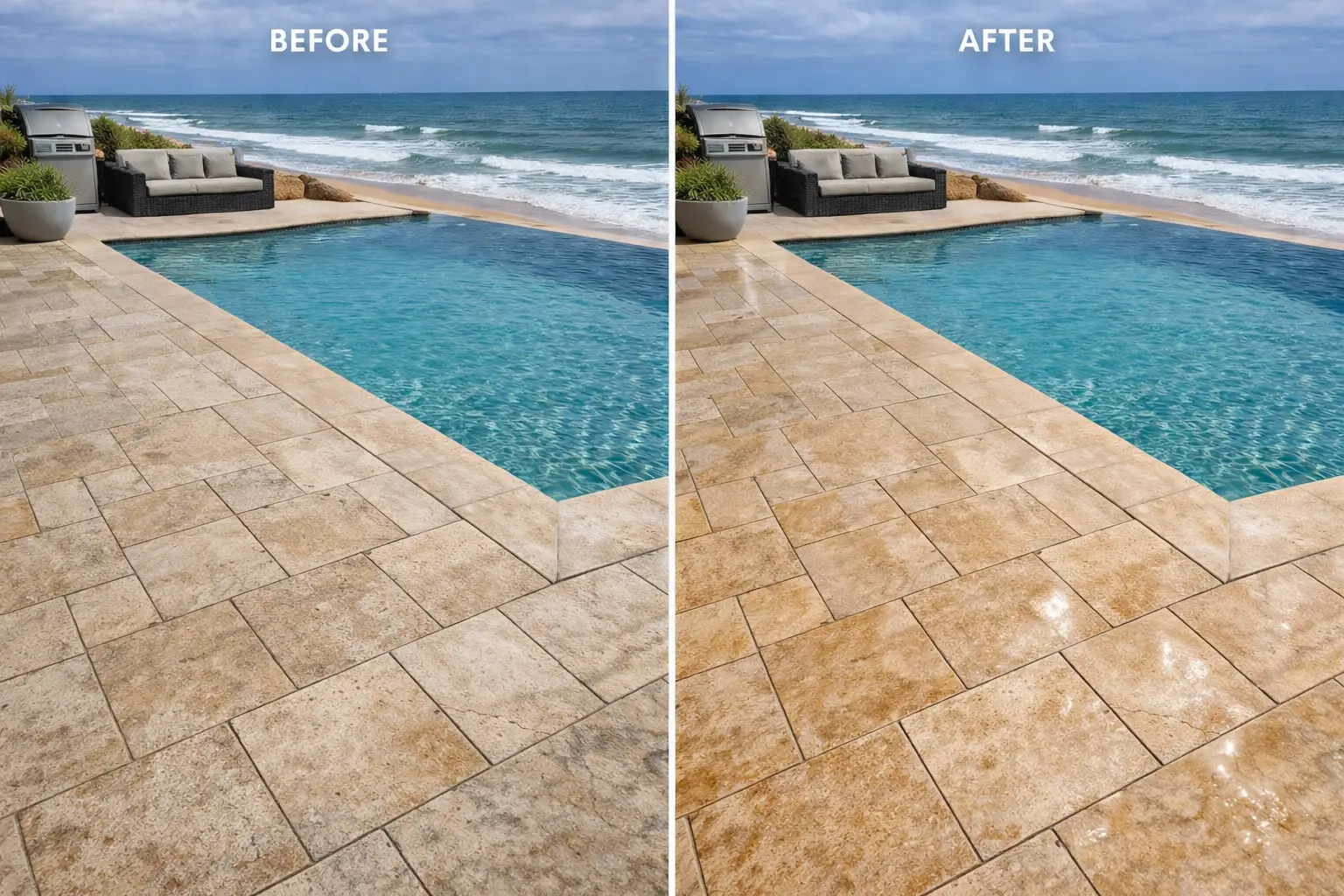
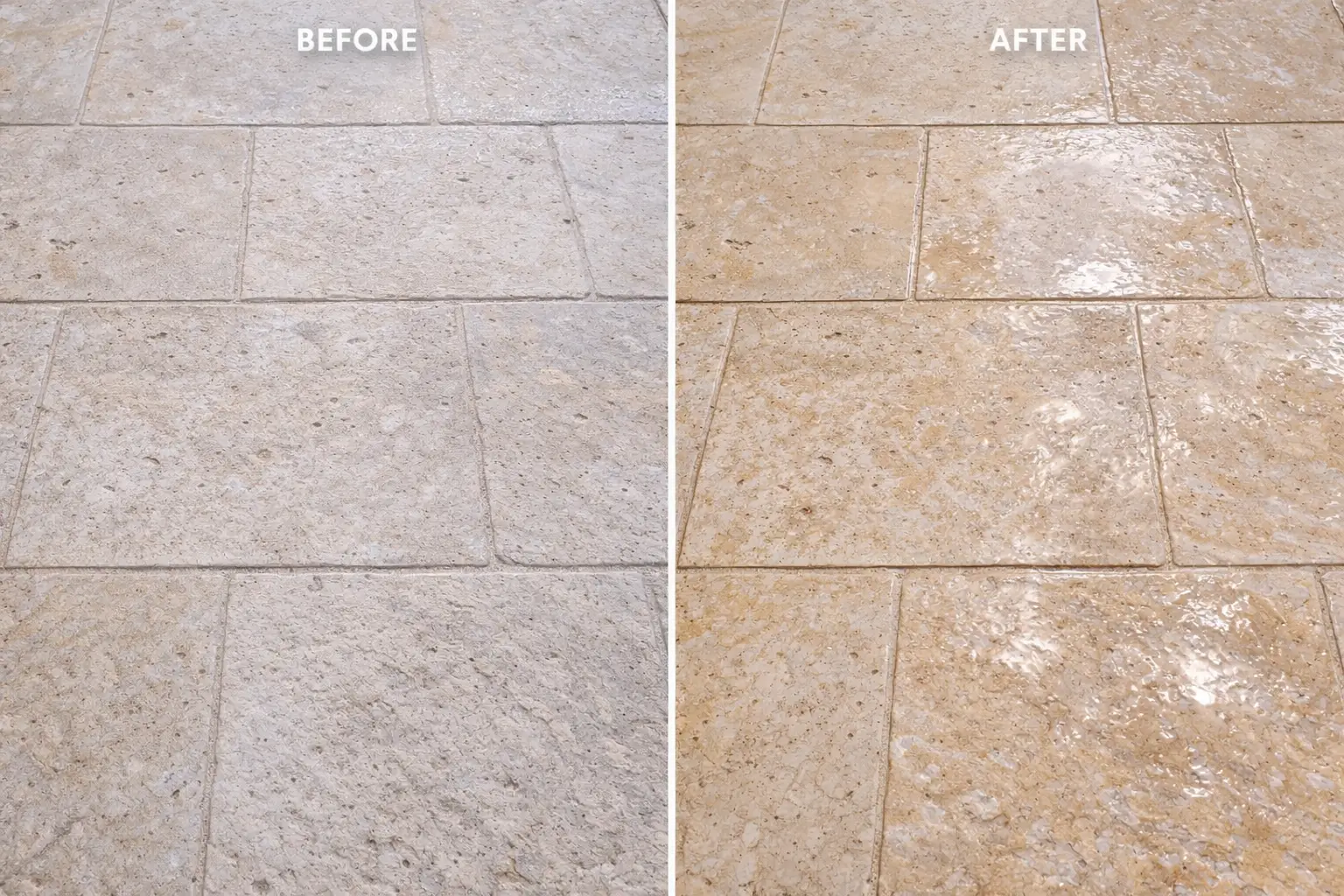
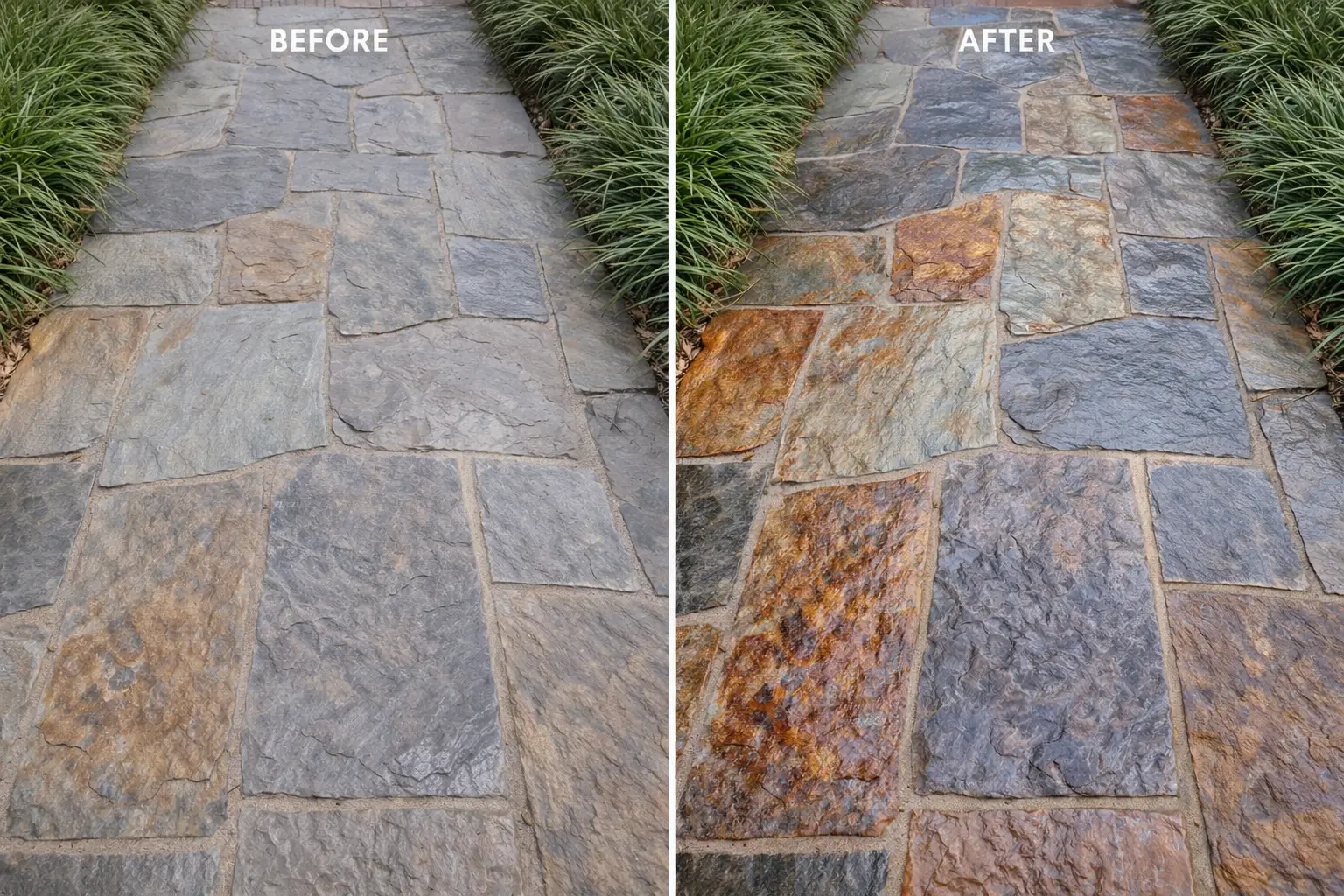
Real projects. Real surfaces. Real results.
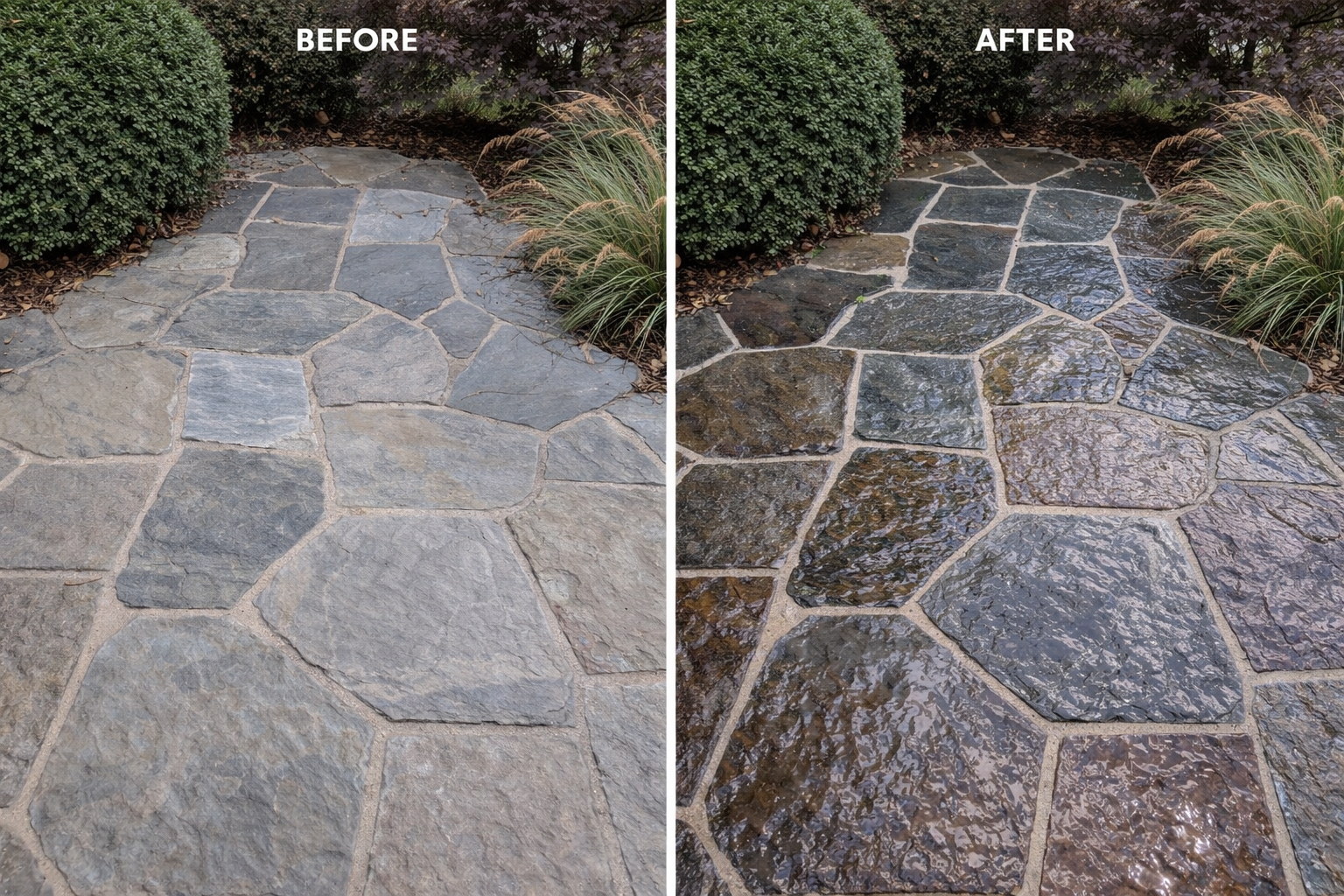
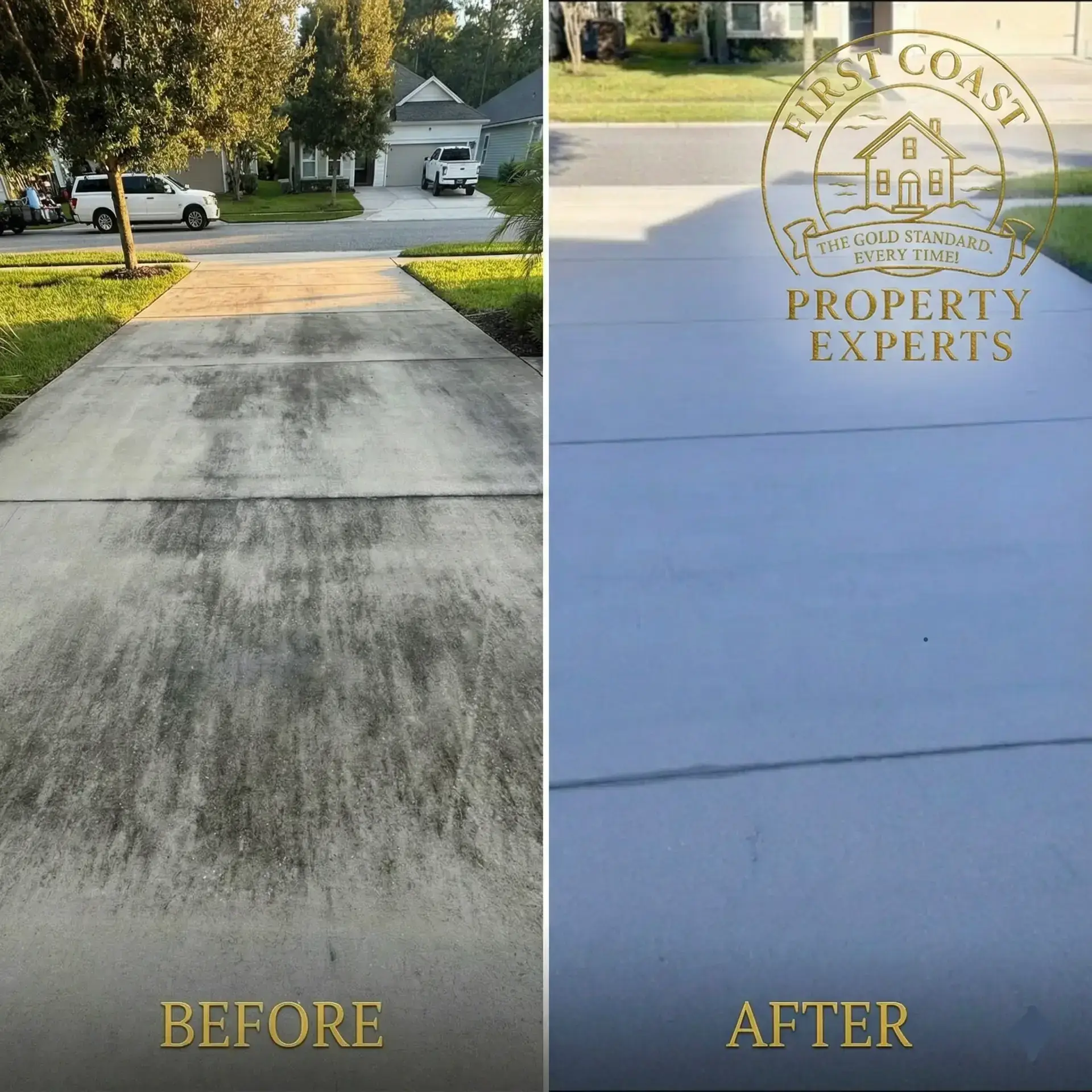
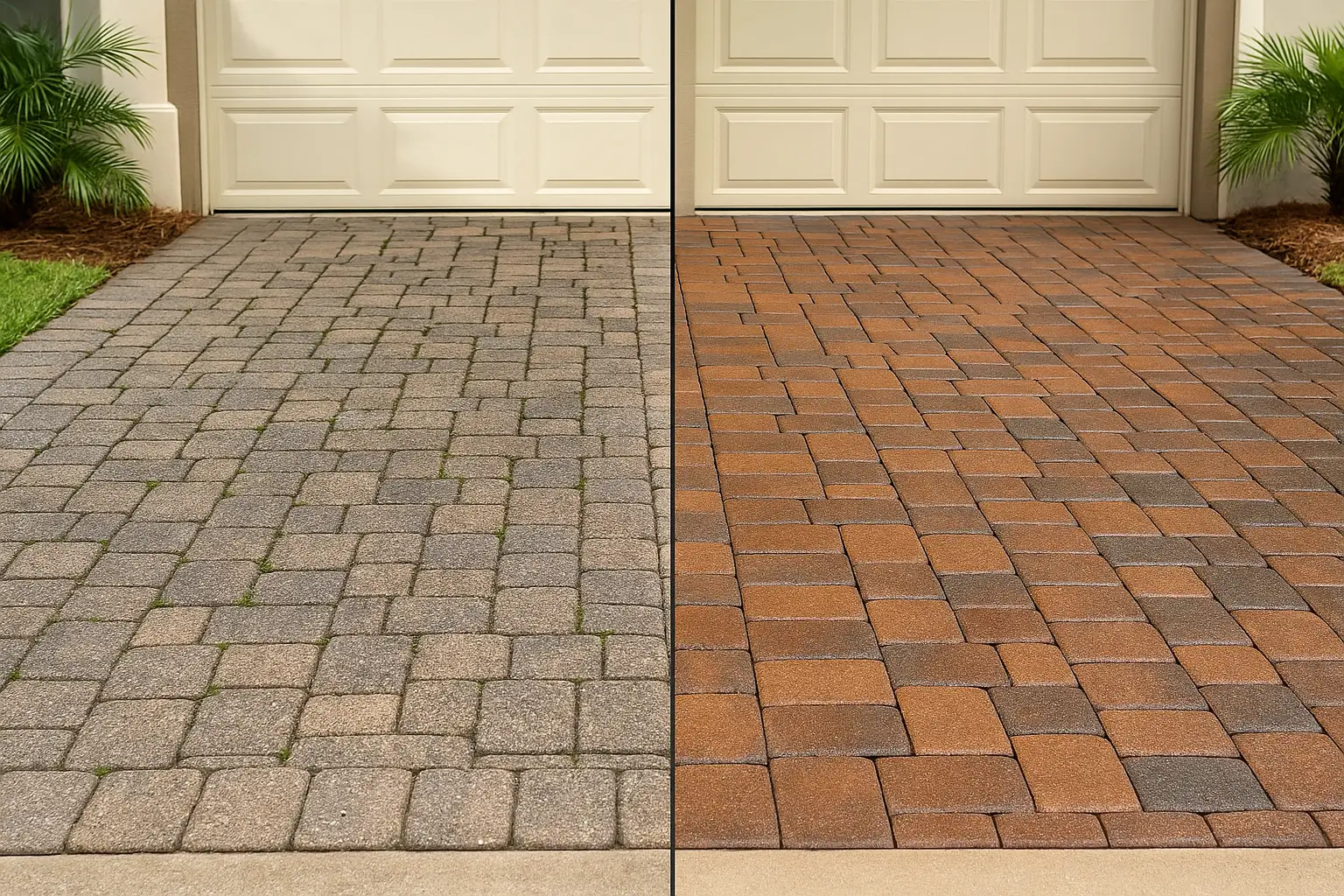
Every image below is from a property we've restored in Nocatee, Ponte Vedra, Amelia Island, Jacksonville, or St. Augustine. No stock photos — just our work.
More than a sealing company — your surface protection partner
We don't treat travertine like concrete or seal pavers the same way we seal slate. Each material gets the chemistry, cleaning approach, and sealer system it was designed for — following Natural Stone Institute and ICPI guidance.
We use Trident angular joint sand meeting ASTM C-144 and C-33 specifications — not polymeric sand, not round-grain play sand. Angular particles interlock under compaction, creating structural stability that round sand simply cannot achieve.
We exclusively apply water-based breathable sealers for exterior surfaces. Film-forming acrylics trap moisture in Florida's climate, leading to whitening, peeling, and coating failure. Breathable sealers protect from within while allowing the stone to exhale — the only responsible approach for subtropical exteriors.
Our dual-dilution application system — flood coat (D1) followed by finish coat (D2) — ensures maximum penetration depth while building a protective barrier at the surface. Many contractors apply a single coat at one dilution. Two coats, two dilutions, dramatically better performance.
Florida's humidity means surfaces can test "dry" while still holding moisture in their pores. We use propane torch drying to eliminate residual subsurface moisture and sterilize joints before sealer application — ensuring the sealer bonds to clean, dry substrate for maximum adhesion and longevity.
Sealing is one piece of a larger property care program. We also provide soft washing, roof cleaning, RO/DI window cleaning, pool deck cleaning, driveway restoration, and solar panel cleaning — all from one trusted team.
Sealing is just one part of protecting your property. Explore our full range of exterior services.
Gentle exterior cleaning for stucco, siding & painted surfaces
ARMA-compliant algae & moss removal
RO/DI pure-water spot-free glass detailing
Professional flatwork & surface restoration
Pool-safe cleaning for all deck surfaces
DI-water panel cleaning for peak output
We provide professional surface sealing throughout St. Johns, Duval, and Nassau counties — from waterfront estates on Amelia Island to luxury communities in Nocatee and Ponte Vedra Beach.
Nocatee
Ponte Vedra Beach
St. Augustine
Palencia
Palm Valley
World Golf Village
Fruit Cove
Jacksonville
Jacksonville Beach
San Marco
Mandarin
Riverside
Neptune Beach
Atlantic Beach
Common questions about our sealing services
We seal six primary exterior surface types: brick and interlocking pavers, travertine, limestone, slate, bluestone, and concrete. Each surface receives a material-specific cleaning protocol, joint preparation (where applicable), and breathable sealer system selected for that stone or substrate.
Polymeric sand contains binders that harden when wet. In Florida's frequent rain cycles, polymeric sand can haze on paver faces, crack and chunk out of joints, and create a rigid layer that doesn't accommodate thermal expansion. We use angular ASTM C-144 compliant Trident joint sand that interlocks mechanically, remains flexible, and allows the breathable sealer to penetrate and bond the sand without the issues associated with polymeric products.
With proper application, a high-quality breathable sealer typically provides 3–5 years of protection depending on exposure, traffic, and surface type. South-facing surfaces with full sun exposure may require maintenance sooner. We provide maintenance guidance with every project and offer periodic resealing programs.
Film-forming sealers (typically solvent-based acrylics) create a coating on the surface that traps moisture underneath. In Florida's high humidity and frequent rain, this trapped moisture builds hydrostatic pressure and causes the sealer to whiten, blister, peel, or delaminate. Breathable sealers penetrate into the pore structure, repel water and stains from within, but allow water vapor to pass through — preventing all of these failure modes. We exclusively use breathable sealers for exterior applications.
We offer multiple finish levels: natural matte (minimal color change), satin/enhanced (slight deepening of color), and wet-look (rich color enhancement). The finish depends on the sealer dilution ratio and application technique. We'll discuss finish preferences during the estimate so you see exactly the result you want. Many homeowners in Ponte Vedra and Nocatee prefer the satin enhanced finish for a refined, not glossy, appearance.
Pricing depends on surface type, square footage, condition of existing joints, and scope of preparation needed. Concrete sealing is typically the most affordable per square foot, while natural stone surfaces (travertine, limestone, slate, bluestone) require more specialized materials and protocols. We provide detailed estimates after an on-site assessment — request yours here or call (904) 466-1622.
The Gold Standard, Every Time.
Licensed · Insured · Background-Checked · Google Guaranteed · Locally Owned by the Logan Family
Get Your Free Sealing EstimateTell us about your surface, and we'll schedule a free on-site assessment. Most estimates are returned within 24 hours.
Prefer to call? (904) 466-1622