
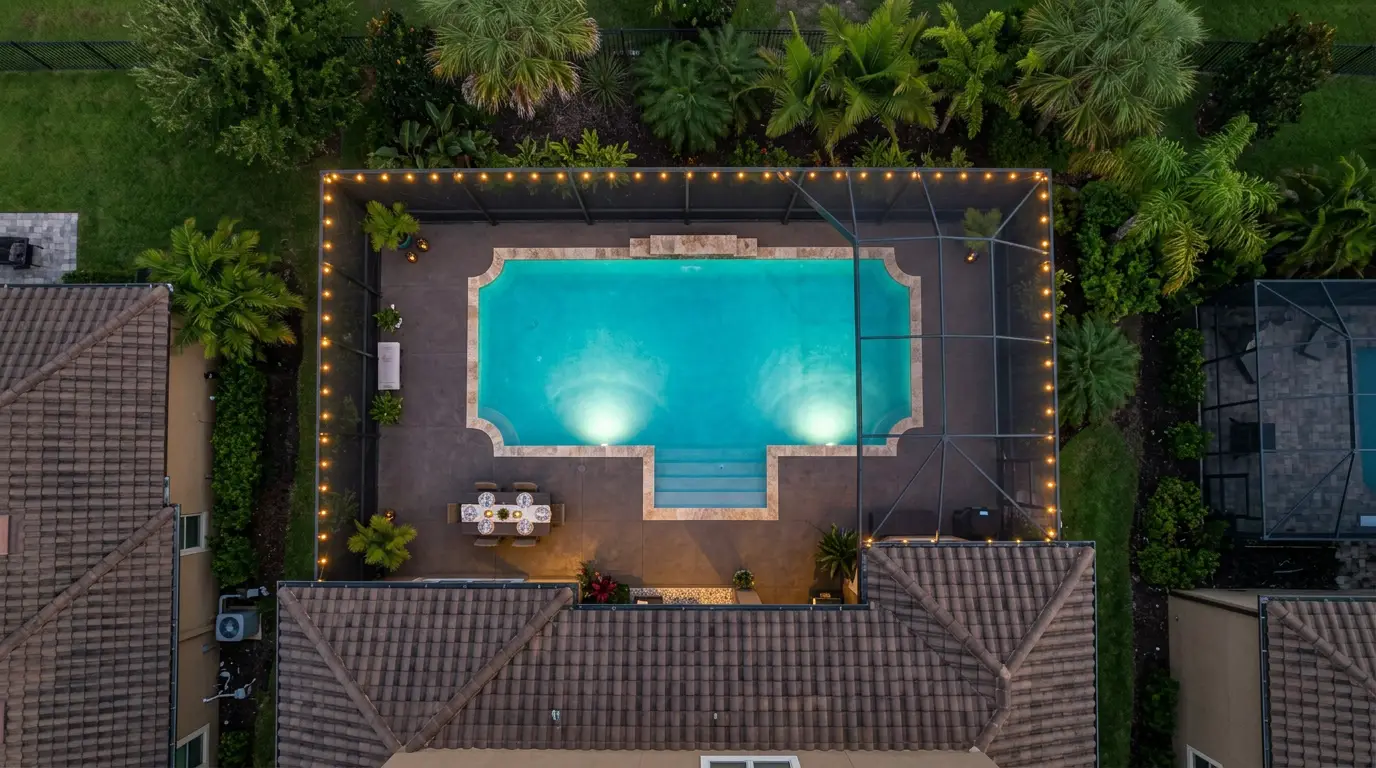
Pool Deck Cleaning and Sealing: The Complete Florida Guide
Last updated: April 2026 · First Coast Property Experts
If you have a pool in Northeast Florida, you have a pool deck that needs more maintenance than you probably expected. The combination of constant water exposure, chlorine or salt chemistry, Florida sun, and relentless humidity creates conditions that age pool decks faster than almost any other surface on your property. A deck that looked perfect at installation can look tired and stained within a year or two if it’s not cleaned and sealed properly.
This guide covers everything you need to know about maintaining a pool deck in NE Florida — from cleaning schedules to sealer types to the specific challenges that different deck materials face in our climate.
Why Florida Pool Decks Deteriorate So Fast
Pool decks deal with a unique combination of stressors that other surfaces don’t:
- Constant moisture. Between splash-out, rain, humidity, and morning dew, a pool deck is wet more hours than it’s dry. This creates a permanent breeding ground for algae, mold, and mildew.
- Chemical exposure. Chlorine and salt from the pool eat away at unsealed surfaces. Saltwater pools are especially aggressive — the salt crystallizes on pavers as the water evaporates, and those crystals are mildly corrosive.
- UV bombardment. Jacksonville gets more than 2,800 hours of sunshine per year. That UV exposure fades color, breaks down sealers, and accelerates surface degradation.
- Temperature cycling. Pool deck surfaces regularly hit 130F+ in direct summer sun, then cool rapidly during afternoon rainstorms. The expansion and contraction cycle stresses joints and sealer bonds.
- Organic debris. Leaves, pollen, insects, and bird droppings land on pool decks and decompose, leaving tannin stains and feeding biological growth.
Every one of these factors is amplified in Florida compared to states with less sun, less rain, or cooler temperatures. A pool deck maintenance schedule that works in North Carolina doesn’t cut it here.
Pool Deck Cleaning: Method and Frequency
Concrete Pool Decks
Poured concrete and stamped concrete pool decks are cleaned with pressure washing. A surface cleaner , the disc-shaped attachment that uses rotating nozzles , delivers even results without the streaking a single wand produces. For heavy algae growth, we pre-treat with a cleaning solution that kills the growth before pressure washing removes it.
Frequency: Every 6-12 months. Shaded decks and decks surrounded by heavy landscaping lean toward 6 months. Open, sunny decks can go 12.
Paver Pool Decks
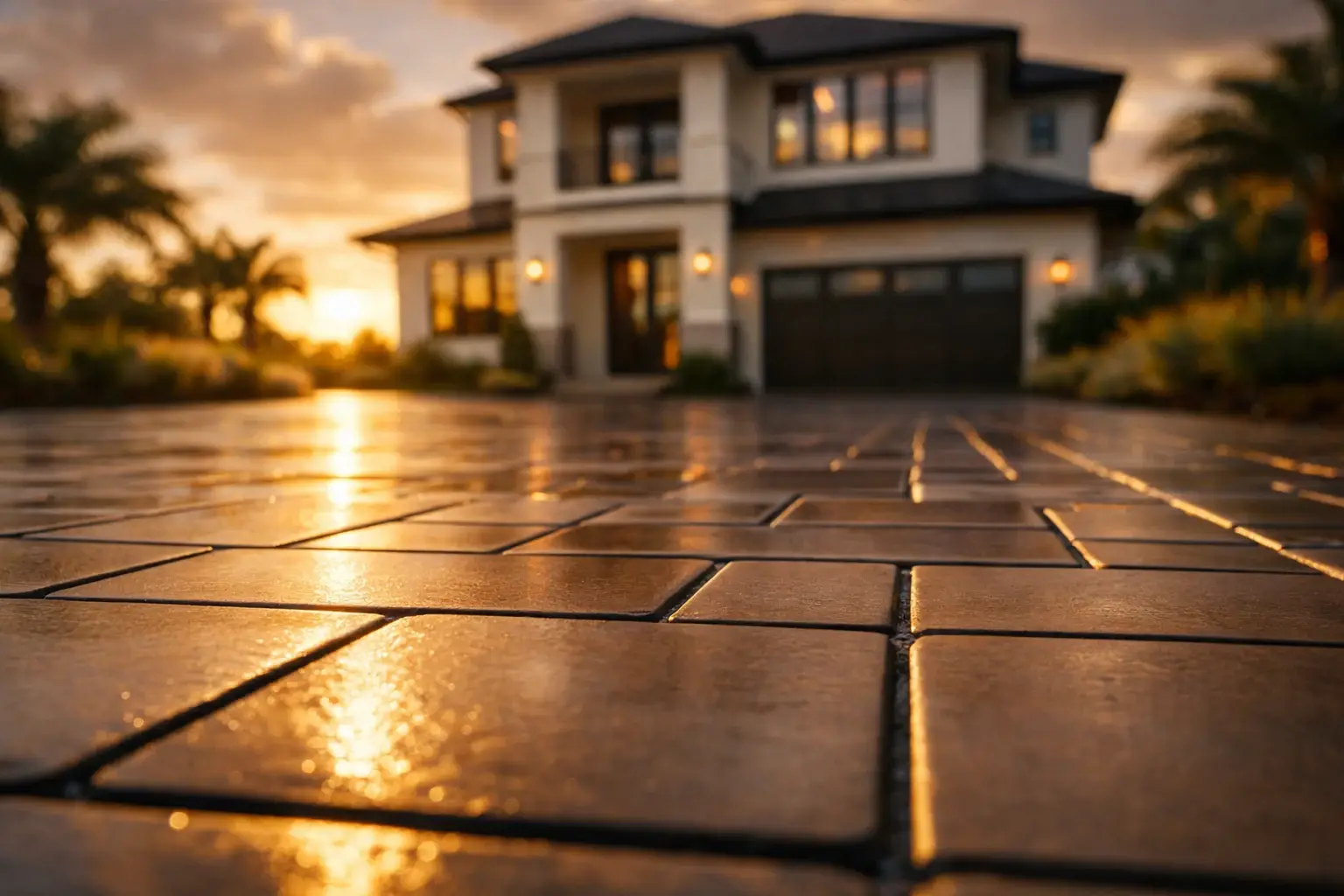
Concrete paver pool decks get the same pressure washing treatment as poured concrete, with one critical addition: we assess joint sand levels during every cleaning. Pressure washing removes loose sand from paver joints, and if the joints were already low, the cleaning can leave them nearly empty. Empty joints mean shifting pavers, weed growth, and ant problems.
After cleaning paver pool decks, we refill joints with fresh joint angular sand and compact it. If the deck is due for re-sealing, we handle both the sand and seal in the same visit.
Frequency: Every 6-12 months for cleaning. Every 3-5 years for re-sealing.
Travertine Pool Decks
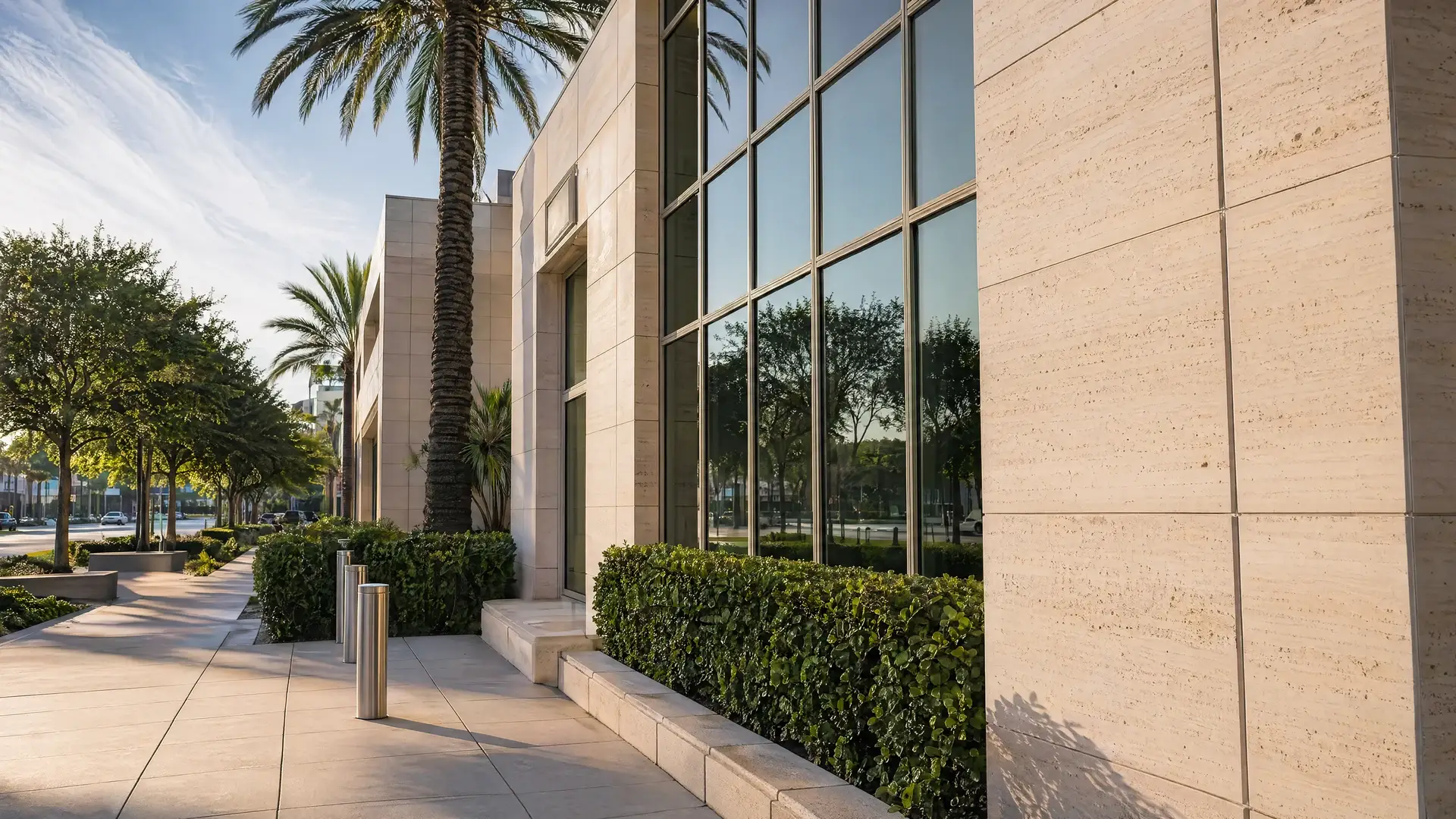
Travertine requires a gentler approach. It’s a natural limestone that’s softer and more porous than concrete pavers. High pressure can etch the surface, pit the natural holes and veins, and cause chipping along edges. We clean travertine pool decks with low-pressure washing combined with pH-neutral cleaning solutions designed for natural stone.
Travertine is also sensitive to acidic cleaners. No muriatic acid, no vinegar-based solutions, no citrus cleaners. These dissolve the calcium carbonate that travertine is made of, leaving a rough, dull surface. Travertine-specific care requires knowing what the stone can and cannot handle.
Frequency: Every 6-12 months for cleaning. Every 3-5 years for re-sealing with a penetrating natural stone sealer.
Cool Deck and Knockdown Finish
These textured concrete overlays are common around older Florida pools. The rough texture provides slip resistance but also traps dirt, algae, and stains in its pores. Cleaning requires a combination of chemical treatment and pressure washing , the texture makes it impossible to clean with chemicals alone, but pressure alone pushes debris deeper into the pores.
Frequency: Every 6-12 months. These surfaces show dirt quickly and develop algae in the textured valleys first.
Sealing Your Pool Deck: Why It Matters
Cleaning addresses what’s already on the surface. Sealing prevents future problems. A quality sealer applied after thorough cleaning provides:
- Stain resistance. Pool chemical splash, sunscreen, food and drink spills, rust from metal furniture , all of these stain unsealed surfaces. Sealer gives you time to clean spills before they absorb.
- Color preservation. UV rays bleach unsealed pavers and concrete. Sealer blocks UV penetration and locks in the original pigment. Many sealers actively enhance color, making faded pavers look new again.
- Chemical protection. Chlorine and salt erode unsealed surfaces over time. Sealer creates a barrier between pool chemicals and the deck material. This is especially critical for travertine and bluestone, which are chemically reactive to pool water.
- Algae inhibition. Sealed surfaces are less porous, giving algae and mold less to grip. Sealed pool decks stay cleaner longer between professional washings.
- Joint stabilization (pavers). Sealer bonds to joint angular sand and locks it in place. This prevents washout from splash-out and rain, reduces weed growth, and keeps fire ants from excavating the joints.
Choosing the Right Sealer for Pool Decks
For Concrete Pavers
Acrylic-based sealers are the standard for concrete paver pool decks. They’re available in wet-look (high gloss), semi-gloss, and matte finishes. For pool decks, we typically recommend semi-gloss or matte , high gloss can become slippery when wet, which is a safety concern around a pool.
If slip resistance is a priority, we can add a non-skid additive to the sealer. This creates a subtle texture in the finish that maintains traction on wet surfaces without looking or feeling gritty.
For Travertine
Travertine requires a penetrating (impregnating) sealer rather than a topical film-forming sealer. A penetrating sealer absorbs into the stone’s pores and provides protection from within. It doesn’t change the appearance of the stone , no sheen, no color change. It simply makes the stone less absorbent and more resistant to staining.
Topical sealers on travertine cause problems. They can peel, bubble, turn white from moisture, and create a slippery film on a surface that naturally has excellent slip resistance. Always use a penetrating sealer on travertine pool decks.
For Concrete
Poured concrete and stamped concrete pool decks can use either acrylic sealers or penetrating sealers. Stamped concrete typically gets an acrylic sealer to enhance the stamped pattern’s color and texture. Broom-finished concrete is more flexible , both types work. The American Concrete Institute provides extensive technical guidance on concrete sealer selection and application.
Salt Systems: The Pool Deck’s Biggest Enemy
Salt chlorine generators have become the dominant pool sanitization system in NE Florida. They produce chlorine from dissolved salt, eliminating the need to handle and store liquid chlorine or tablets. Homeowners love them. Pool decks do not.
Here’s the problem: saltwater that splashes onto the deck evaporates, leaving salt crystals behind. Those crystals are hygroscopic , they absorb moisture from the air and create a perpetually damp micro-environment on the deck surface. This accelerates biological growth and, on unsealed surfaces, causes salt crystallization damage where the salt expands inside the stone’s pores.
The signs of salt damage on unsealed pool decks:
- White, powdery deposits that return within days of cleaning
- Surface pitting and roughening, especially within 3 feet of the pool edge
- Flaking or spalling on concrete and paver surfaces
- Erosion of joint sand at a faster rate than non-salt pools
Sealing is the primary defense. A quality sealer prevents salt from penetrating into the surface pores. Regular rinsing (weekly or after heavy use) washes away salt deposits before they accumulate. If your pool has a salt system and your deck is unsealed, sealing should be a priority.
DIY Pool Deck Cleaning: What You Can Handle
For between professional cleanings, homeowners can do several things to maintain their pool deck:
- Weekly rinse. A garden hose sweep removes salt deposits, pollen, and loose debris before they accumulate.
- Blow debris daily. A leaf blower keeps organic matter from sitting on the deck and staining.
- Spot-clean stains immediately. Oil from sunscreen, food drips, and rust stains come up much easier when treated within hours rather than days.
- Brush problem areas. A stiff-bristle broom with a mild detergent can handle light algae growth in shaded corners between professional cleanings.
What homeowners should not try to DIY:
- Pressure washing. Without professional-grade surface cleaners and proper technique, it’s easy to leave wand marks, etch surfaces, and damage sealer.
- Chemical treatments. Muriatic acid, bleach at improper dilutions, and off-the-shelf “deck cleaners” can damage pool decks, kill landscaping, and alter pool water chemistry if runoff reaches the pool.
- Sealing. Improper sealer application is the most common pool deck problem we’re called to fix. Bubbling, peeling, white hazing, and tacky surfaces result from incorrect products or techniques.
Pool Deck Maintenance Calendar for NE Florida
| Task | Frequency | Notes |
|---|---|---|
| Blow debris | 2-3x per week | Daily during oak pollen season (Feb-Apr) |
| Garden hose rinse | Weekly | Essential for salt systems |
| Spot clean stains | As needed | Within 24 hours for best results |
| Professional cleaning | Every 6-12 months | Schedule in spring and/or fall |
| Joint sand check (pavers) | With every cleaning | Refill as needed |
| Re-seal | Every 3-5 years | Water bead test to check condition |
| Full inspection | Annually | Check for cracks, shifting pavers, drainage issues |
Common Pool Deck Problems We Fix
Beyond routine cleaning and sealing, these are the issues we address most frequently on NE Florida pool decks:
- Efflorescence on pavers. White mineral deposits that keep returning after cleaning. The fix involves deep cleaning, allowing the pavers to fully dry, and sealing to prevent future migration.
- Rust stains from metal furniture. Iron-based stains penetrate quickly on porous surfaces. We use rust-specific treatments that chelate the iron without damaging the deck surface.
- Failed previous seal jobs. Peeling, bubbling, or white-hazed sealer from improper application. Requires stripping the old sealer completely before re-sealing correctly.
- Settling and shifting pavers. Caused by eroded base material or washout from poor drainage. Requires lifting affected pavers, re-leveling the base, re-setting, and re-sanding.
- Algae in textured finishes. Cool deck and knockdown finishes trap algae in their texture. Requires chemical pre-treatment plus pressure washing with the correct nozzle and technique.
Get Your Pool Deck Ready for Summer
With pool season ramping up in May, now is the time to get your deck cleaned and sealed before the heavy-use months. First Coast Property Experts cleans and seals pool decks across Jacksonville, Ponte Vedra, Nocatee, St. Augustine, and all of St. Johns, Duval, and Nassau counties.
We handle concrete, pavers, travertine, and every other pool deck surface. Our team brings the right equipment and the right approach for your specific deck material.
Call (904) 466-1622 or request a consultation for pool deck cleaning and sealing. The Gold Standard, Every Time.
Further reading (industry sources)
More from the FCPE Journal
- Guide Pool Deck Protection
- Pool Deck Slip-Resistance: The One Additive We Never Skip
- Travertine Pool Deck Maintenance Guide for NE Florida
The service behind this guide: Pool Deck Restoration & Sealing