(904) 466-1622 Ranked #1 Cleaning Company in NE Florida 2025
Exterior Cleaning
Soiled solar panels lose 15–25% of their rated output. Pollen, bird droppings, salt film, and mineral-rich rain accumulate on your panels every week — blocking sunlight and silently draining your investment. We restore peak efficiency using deionized (DI) pure water and soft-bristle brush systems that leave a spot-free finish with zero chemical residue and no risk of damaging your panels' anti-reflective coating.
Serving St. Johns, Duval & Nassau Counties
Licensed · Insured · Background-Checked
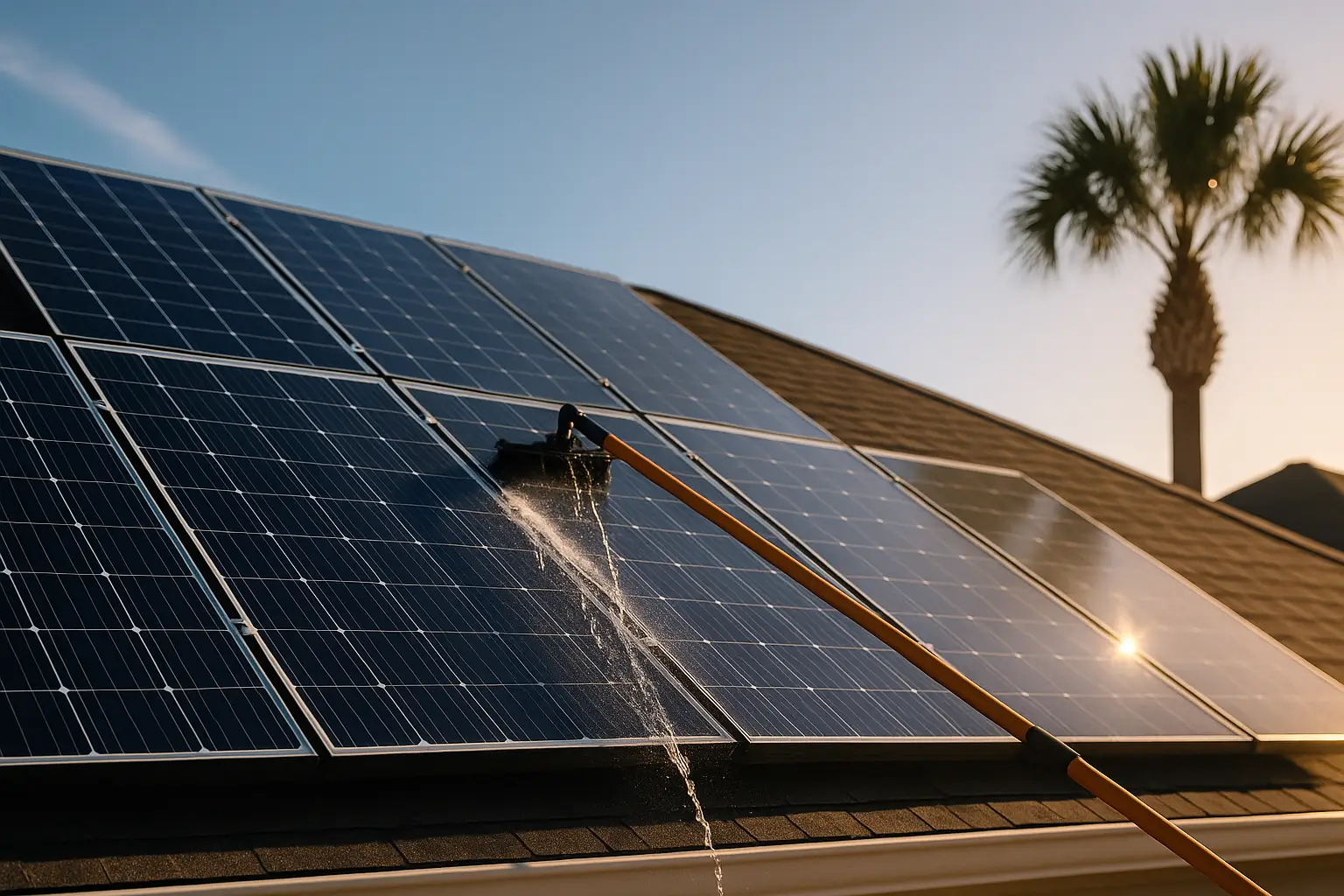
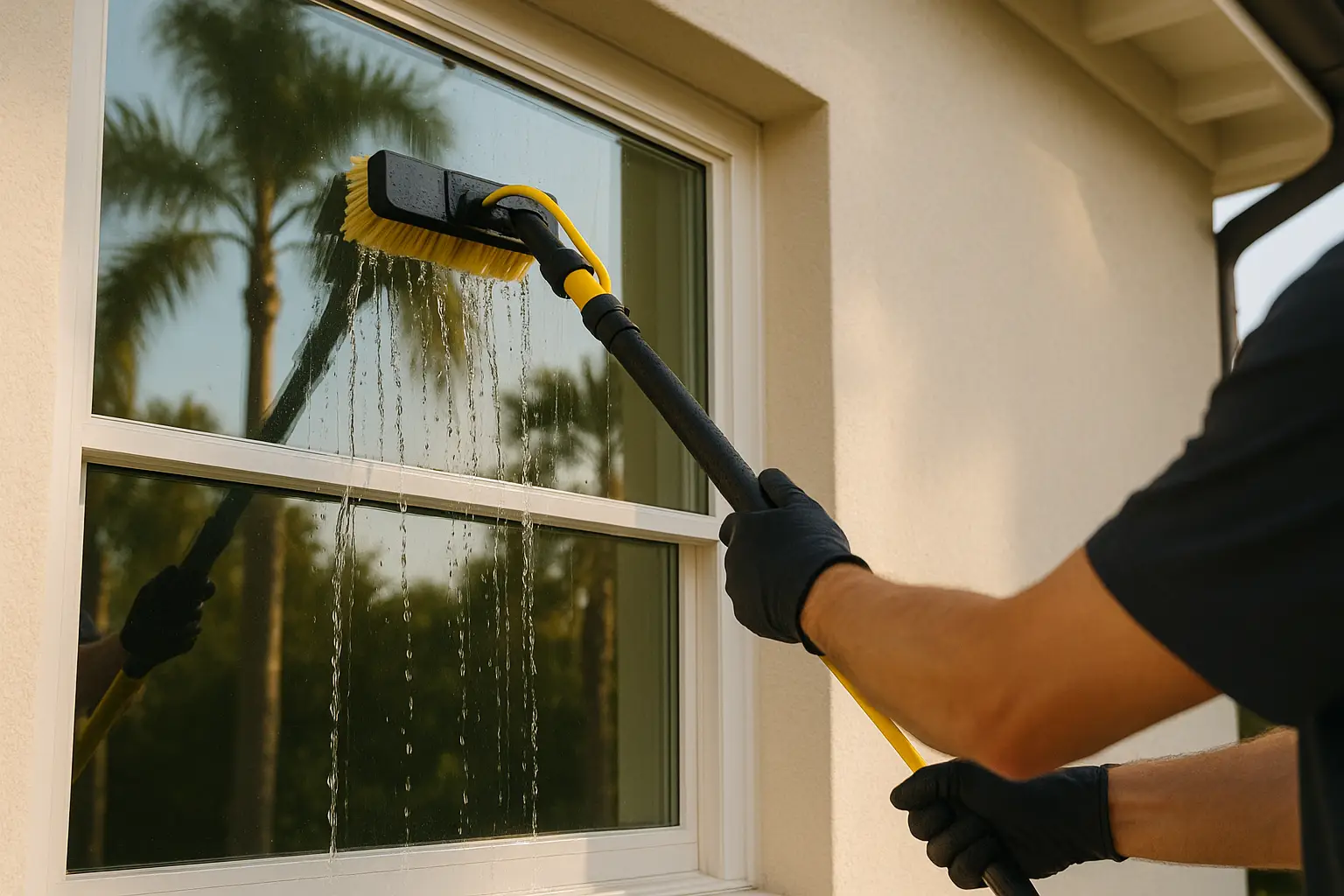
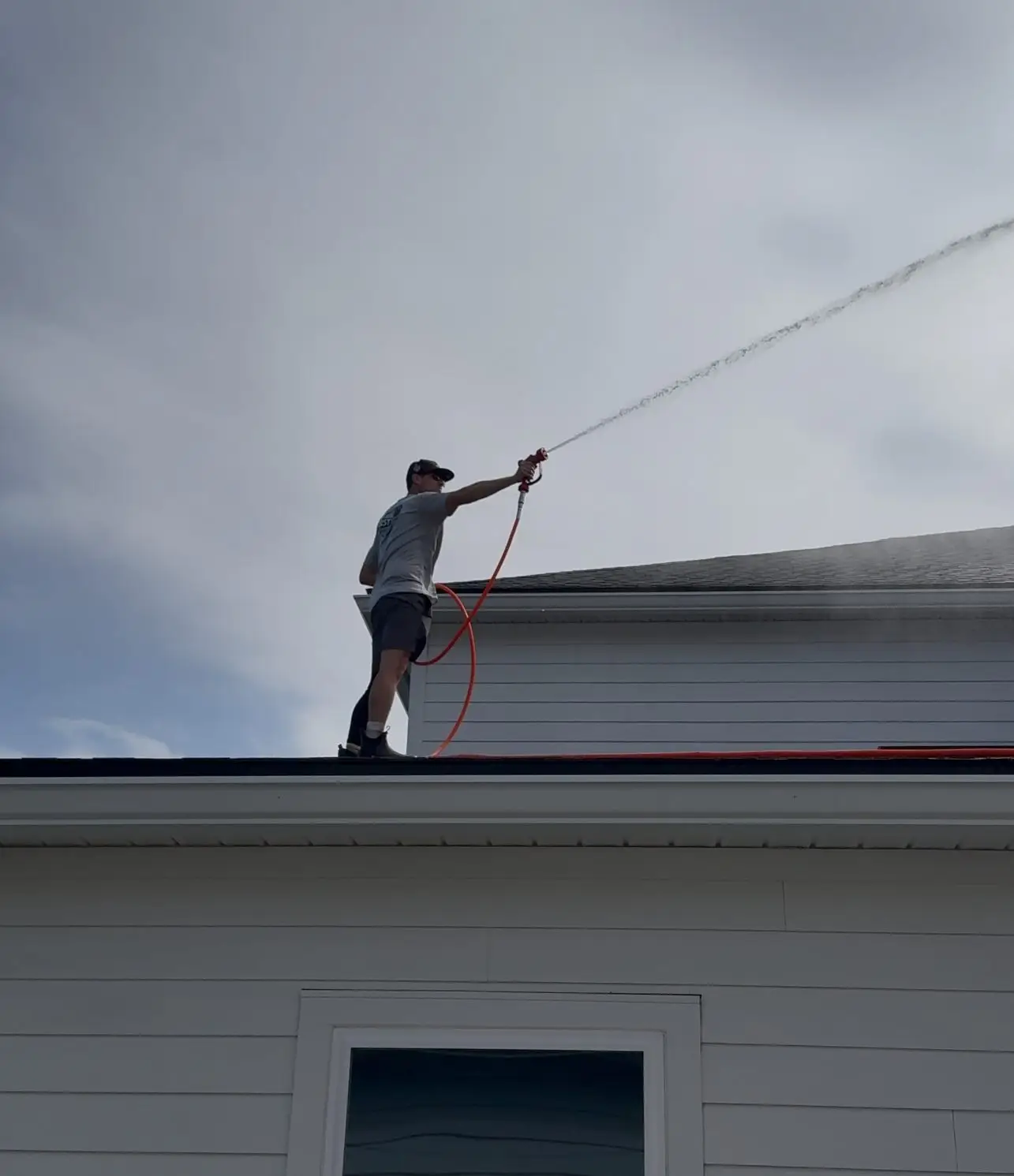
Our DI water-fed pole system cleans roof-mounted solar panels from the ground — no foot traffic on your roof or array.
Solar panels are a significant investment — and they only perform at their rated output when the glass surface is clean. Northeast Florida's year-round pollen cycles, coastal salt spray, bird activity, and mineral-rich rain all contribute to a gradual film that quietly reduces your energy production every day.
Most solar panel manufacturers — including SunPower, Tesla, LG, and Panasonic — recommend periodic professional cleaning to maintain performance and keep warranties valid.
The cost of professional cleaning is typically recovered in increased energy output within weeks — making it one of the highest-ROI maintenance items for any solar homeowner.
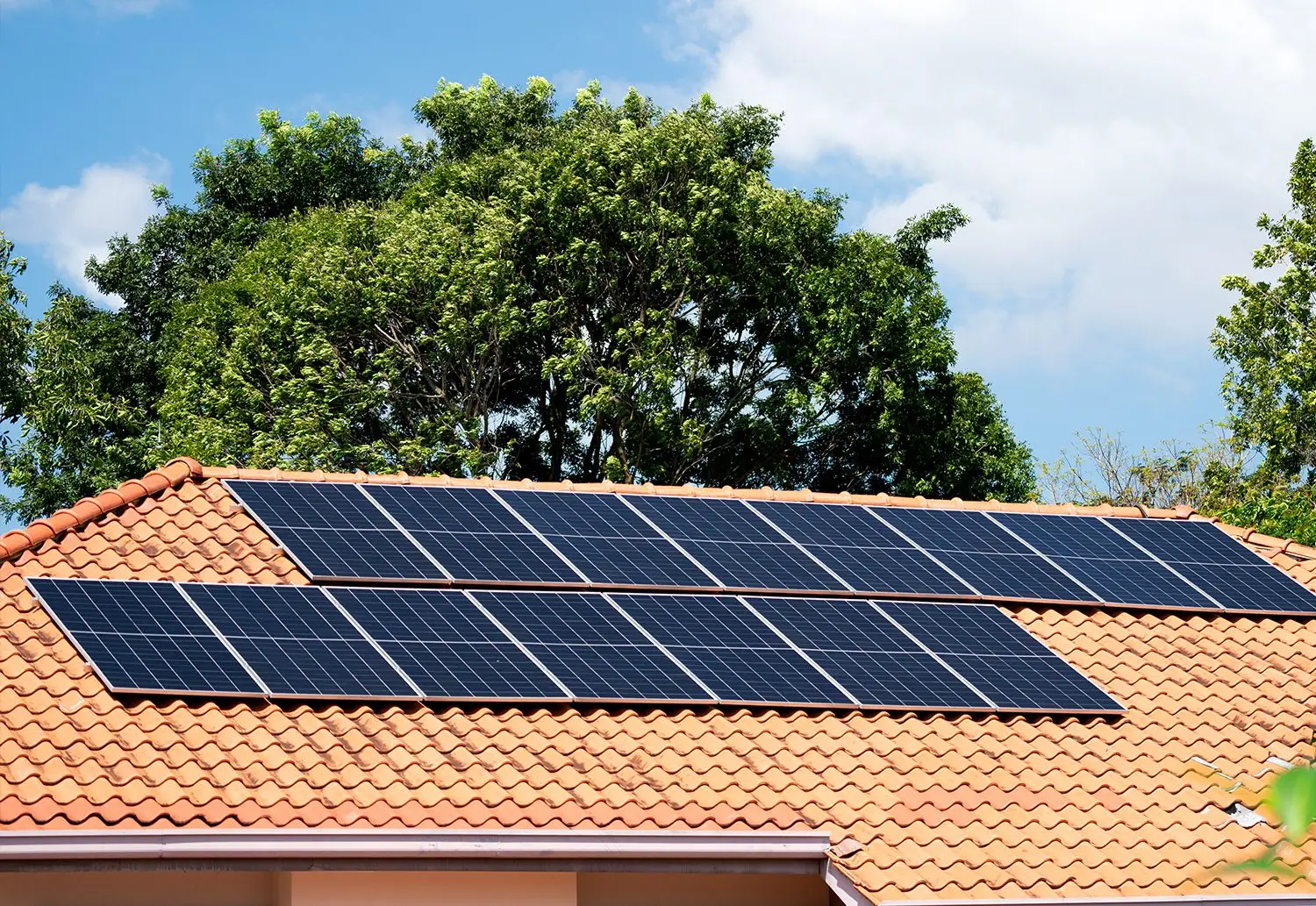
Clean panels produce more electricity — reducing utility costs and accelerating your solar ROI.
0–2
TDS Pure Water
Zero
Chemicals Used
25%
Output Recovered
5-Step
Process
DI water-fed pole in action
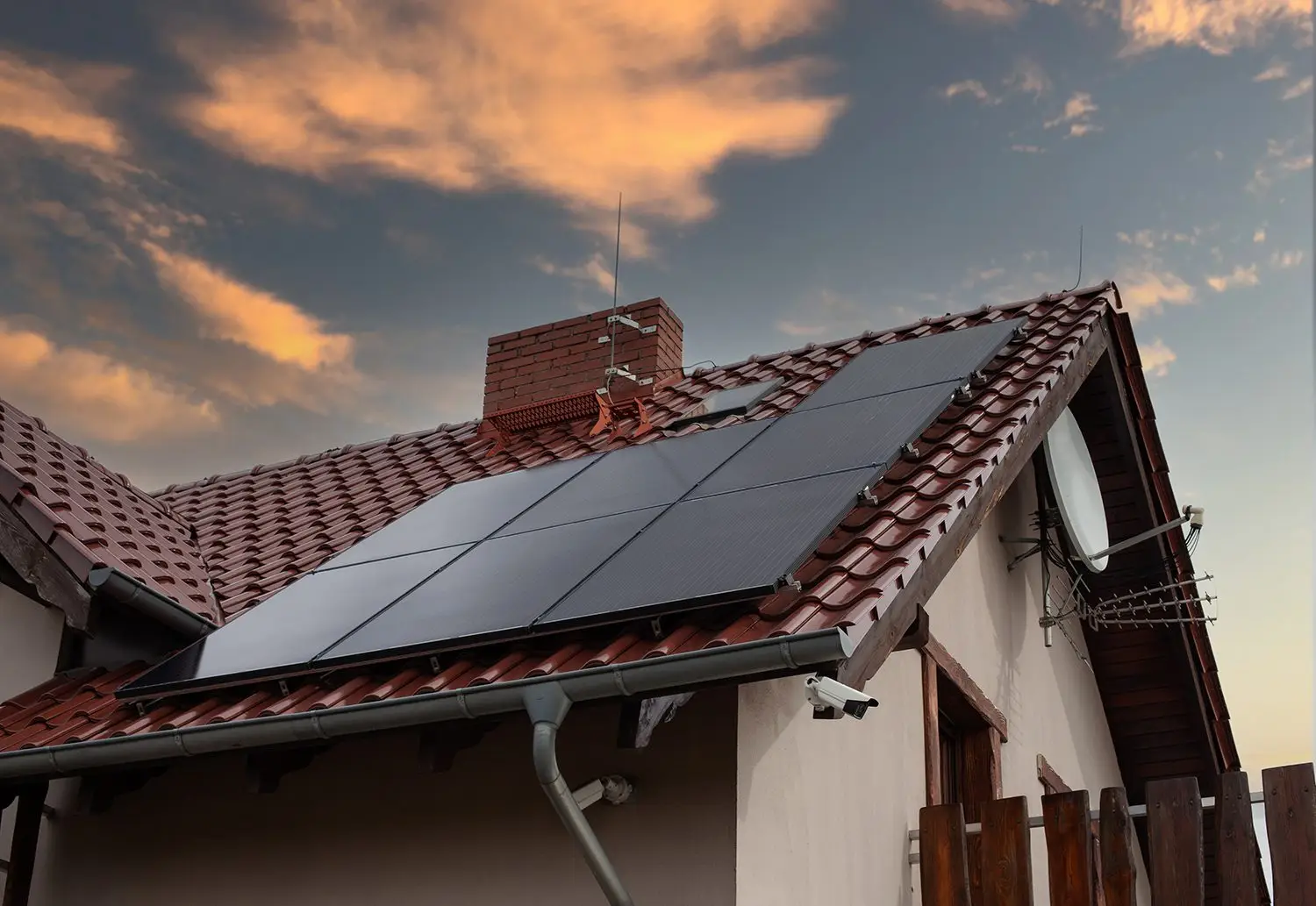
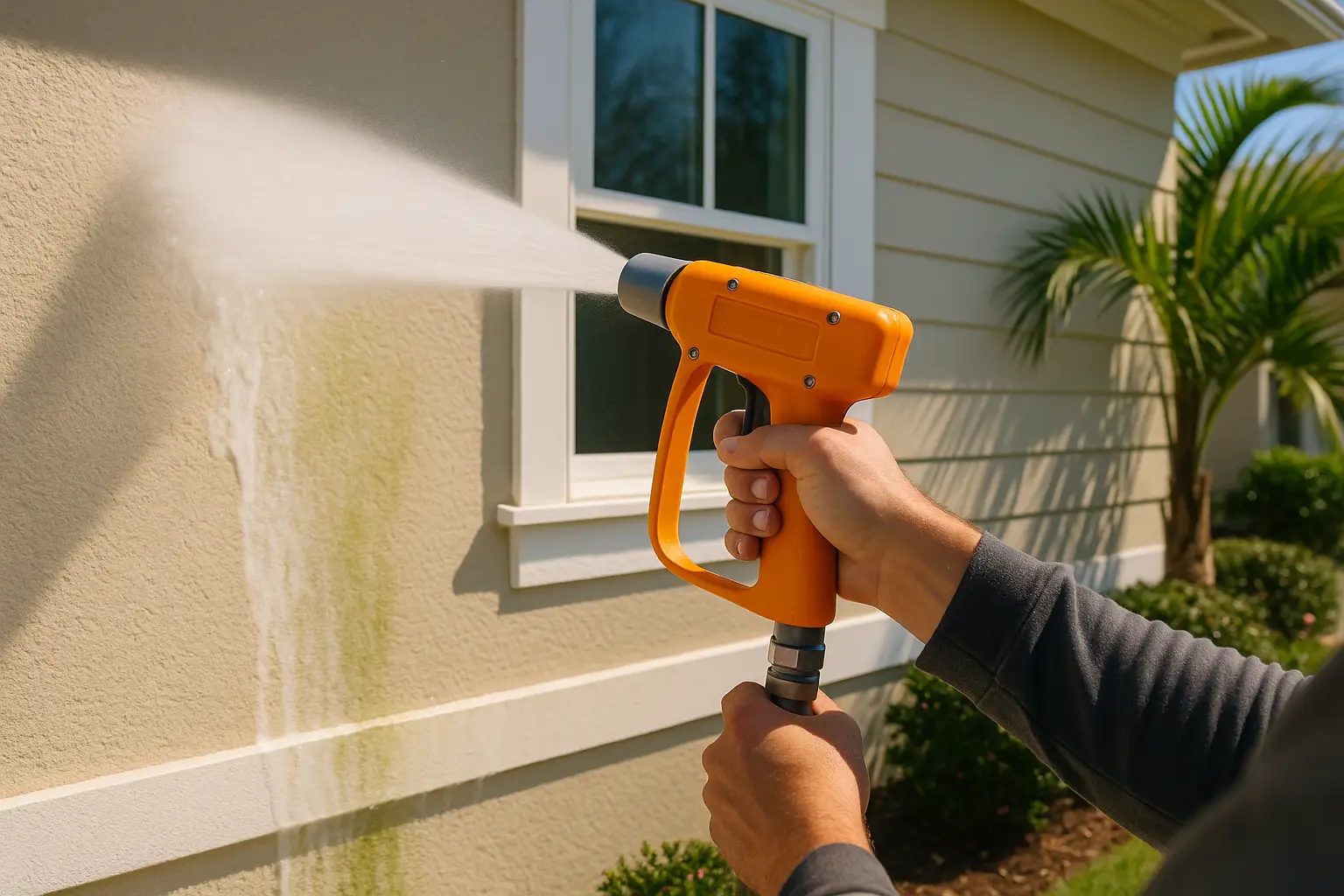
Residential array — tile roof
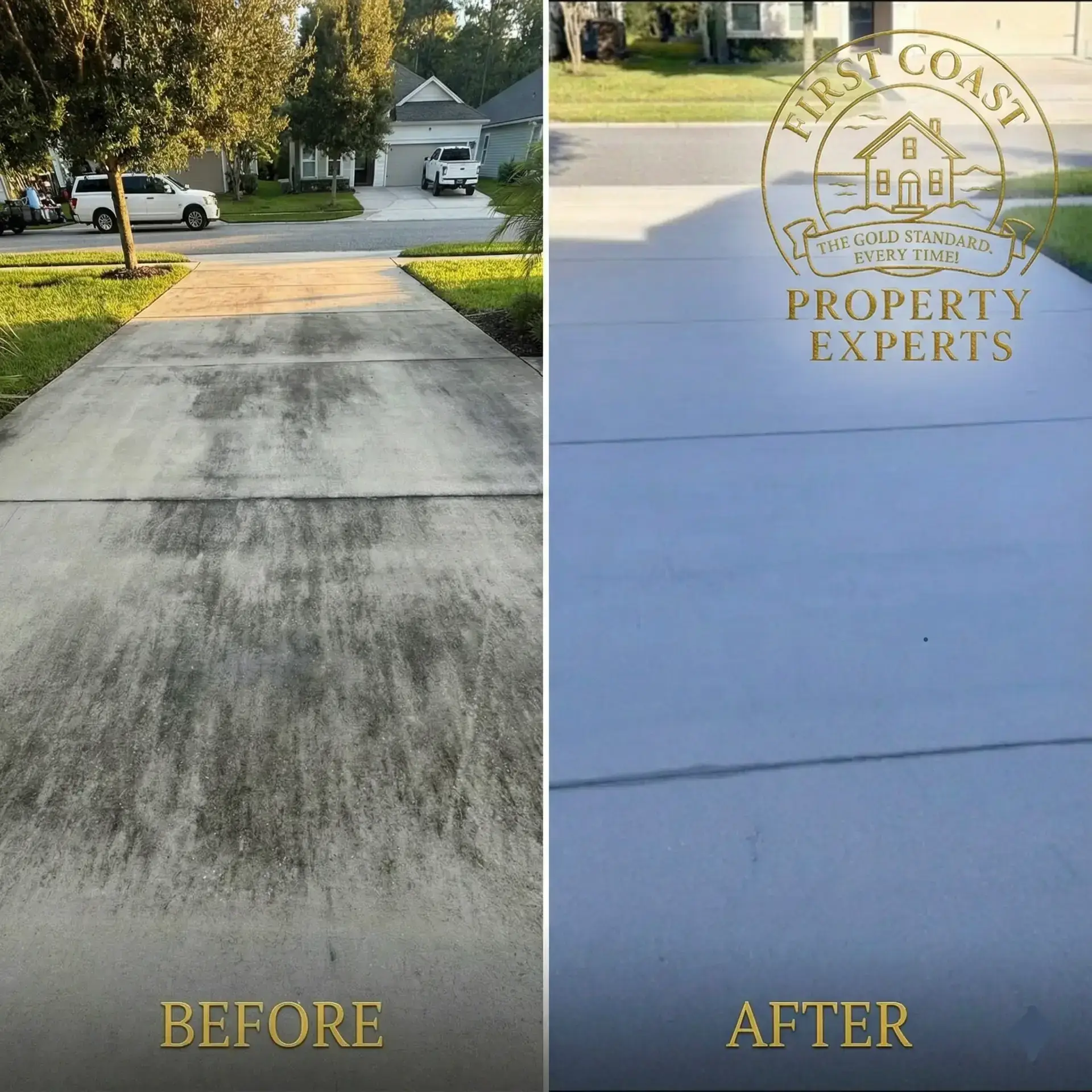
Clean panels, peak performance
Each contaminant affects efficiency differently — and rain alone won't remove most of them.
🌿
Northeast Florida's extended pollen season — oak, pine, and cedar — deposits a thick yellow-green film that cakes into panel frames and lower edges. Rain smears it rather than removing it.
🐦
The most damaging contaminant. Bird droppings create opaque spots that block sunlight completely and cause "hot spots" — localized overheating that can permanently damage cells if left uncleaned.
🌊
Coastal and near-coastal properties in Ponte Vedra, Amelia Island, and the Beaches experience salt spray that leaves a hazy film — reducing light transmission and output over time.
🌲
Pine sap, leaf tannins, and organic residue from overhanging trees bond to panel glass and become increasingly difficult to remove over time. Early cleaning prevents permanent staining of the anti-reflective coating.
💧
Florida rain carries dissolved minerals that deposit on panel glass when water evaporates. Every rain event adds another layer. Sprinkler overspray — common in Nocatee and Palencia — is even worse.
🏗️
Homes near active construction — common in Nocatee, Beacon Lake, and growing communities — experience concrete dust and particulate that bonds aggressively to panel surfaces when mixed with moisture.
We use the same vehicle-mounted RO/DI (Reverse Osmosis / Deionization) filtration system that powers our spot-free window cleaning service. Purified water with 0–2 TDS cleans without leaving mineral spots, streaks, or chemical residue on your panels.
Jacksonville's municipal water has 200–350 TDS. Well water can exceed 500 TDS. Those dissolved minerals leave white spots on glass when they dry — reducing the very efficiency you're trying to restore. Our RO/DI system strips water to 0–2 TDS, so it evaporates clean and spot-free. No towel drying needed, no mineral deposits left behind.
Solar panel glass has a specialized anti-reflective coating that improves light absorption. Pressure washing, abrasive pads, and harsh chemicals can damage this coating — permanently reducing efficiency and voiding warranties. We use soft-bristle brush heads on water-fed poles that agitate dirt gently while DI water rinses everything clean.
We never use soaps, detergents, or chemical cleaners on solar panels. Pure DI water and soft agitation are all that's needed. This eliminates chemical residue that can attract new dirt faster, and ensures no runoff issues with roofing materials, landscaping, or rainwater collection systems.
We inspect your panels from the ground for visible damage, heavy debris, bird nesting, or hot-spot discoloration. Any issues are documented and communicated before cleaning begins. Panel count and layout are confirmed against your estimate.
Leaves, twigs, pine needles, and bird droppings are gently removed before wet cleaning to prevent scratching or grinding debris across the panel surface. Frame channels and gutters are cleared so water drains properly.
Using our water-fed pole system, we apply purified DI water (0–2 TDS) while gently agitating with soft-bristle brush heads. The pure water dissolves and lifts pollen, mineral film, and organic residue without chemicals or abrasive contact. Panels are cleaned from top to bottom so runoff carries debris away cleanly.
A final DI water rinse ensures the panel surface is completely clean. Because DI water has virtually zero mineral content, it evaporates spot-free — no squeegee or towel contact required. This eliminates any risk of micro-scratching the anti-reflective coating.
We note any cracked panels, loose wiring, debris accumulation areas, or bird-related issues observed during cleaning. This gives you early warning on potential problems before they affect system performance — and documents your maintenance history for warranty compliance.
Understanding why tap water makes the problem worse.
Bottom line: Jacksonville tap water (200–350 TDS) deposits the same minerals on your panels that you're trying to remove. Every garden-hose rinse leaves another layer of mineral film — reducing efficiency rather than restoring it.
Timing depends on your location, tree coverage, and bird activity.
Semi-Annual
Most Systems
Twice per year — once after the heavy pollen season (late spring) and once before peak sun months (early fall). Keeps most residential systems performing at or near rated output.
Quarterly
High Soiling
Systems near heavy tree coverage, bird-active areas, construction zones, or coastal properties with salt exposure. Prevents compounding efficiency loss between cleanings.
Annual
Low Soiling
Systems with clear sky exposure, minimal tree coverage, and no bird issues. Annual cleaning after spring pollen maintains baseline performance and documents warranty maintenance.
Not with our method. We use only DI water and soft-bristle brushes — no pressure washing, no chemicals, no abrasive tools. This aligns with the cleaning guidelines published by major manufacturers including SunPower, LG, Tesla, and Panasonic. We provide documentation of our cleaning method for your warranty records.
Rain helps remove loose dust, but it deposits minerals (hard water spots) and doesn't remove sticky contaminants like bird droppings, tree sap, or baked-on pollen. Mineral-rich Florida rainwater can leave your panels hazier after it dries than before the rain started.
Research from the National Renewable Energy Laboratory (NREL) shows soiled panels commonly lose 15–25% of rated output. In extreme cases — heavy bird soiling, sap, or coastal salt buildup — losses can exceed 30%. You'll often see an immediate improvement on your monitoring system after professional cleaning.
In most cases, no. Our water-fed pole system allows us to clean roof-mounted panels from the ground or gutter line. This is safer for our crew and eliminates the risk of foot traffic on your roof or panel array. For panels that require closer access, we use safe access methods and protective measures.
You can rinse loose debris, but Jacksonville tap water (200–350 TDS) leaves mineral spots that reduce efficiency. Every spot left behind is a permanent micro-shadow on your panel. Our DI water (0–2 TDS) evaporates spot-free without any towel drying that could scratch the anti-reflective coating.
Early morning is ideal. Panels are cool, and the glass temperature is close to the DI water temperature — avoiding thermal shock to the tempered glass. We schedule all solar panel cleanings for early-morning windows whenever possible.
Yes. We clean ground-mounted residential arrays, carport-mounted systems, and commercial rooftop arrays across St. Johns, Duval, and Nassau counties. Contact us with your system details for a custom estimate.

The Gold Standard, Every Time.
Licensed · Insured · Background-Checked · Warranty-Safe Methods · DI Pure Water
Tell us about your solar system — panel count, roof type, and any specific concerns — and we'll provide a detailed cleaning estimate within one business day.
Fill out the form below and we'll respond within one business day.